









How Long Do Solar Cameras Last? Battery Life, Lifespan, and Key Factors

Solar-powered security cameras are designed to reduce dependence on fixed electrical wiring by combining a rechargeable battery with a solar panel. But how long do solar cameras last in real-world use?
The answer depends on what you mean by “last.” You may be asking how long the camera can operate without strong sunlight, how long the rechargeable battery remains useful, or how many years the complete camera system can stay in service.
These are different measurements.
A solar camera may continue operating for long periods when its solar panel regularly replenishes the battery. However, rechargeable batteries gradually lose capacity over time, while the camera housing, solar panel, image sensor, and electronics may have different service lives.
This guide explains solar camera runtime, battery lifespan, the factors that affect longevity, and how proper installation and maintenance can help extend practical operating time.
Read more on: Where to Place Security Cameras
What Does “How Long Do Solar Cameras Last?” Mean?
The lifespan of a solar camera can be divided into three main areas.
|
Measurement |
What It Means |
Main Factors |
|
Battery runtime |
How long the camera can operate using stored energy |
Battery capacity, recording frequency, night vision, temperature |
|
Battery lifespan |
How long the rechargeable battery remains effective |
Charging cycles, heat, cold, discharge depth |
|
Overall camera lifespan |
How long the full camera system remains usable |
Build quality, weather exposure, electronics, solar panel, battery |
Understanding these differences is important because a camera may have strong daily battery performance while its rechargeable battery still experiences gradual aging over several years.
Likewise, the camera body and solar panel may remain functional even after the battery begins holding less charge than when it was new.
How Long Can a Solar Camera Battery Run?
The operating time of a solar camera depends on how much energy the battery stores compared with how much energy the camera uses.
In simple terms:
Stored battery energy ÷ power consumption = approximate runtime
However, camera power consumption is not constant.
A solar camera may use relatively little energy while waiting for activity but consume more power when it:
-
Detects motion
-
Starts recording
-
Activates infrared LEDs
-
Turns on a spotlight
-
Sends notifications
-
Streams live video
-
Uses two-way audio
-
Transfers footage wirelessly
This is why there is no single answer to how long does a solar camera battery last.
A camera monitoring a quiet backyard may use far less power than the same camera facing a busy driveway where people and vehicles trigger recordings throughout the day.
Solar charging also changes the equation. When the panel receives sufficient daylight, it can continually replenish part of the energy the camera consumes.
Not sure how many cameras your home needs? Check out: How Many Security Cameras Do I Need?
Battery Runtime vs. Battery Lifespan
Battery runtime and battery lifespan are two different things.
Battery runtime refers to how long a camera can operate before its stored energy becomes too low.
Battery lifespan refers to how long the rechargeable battery remains capable of storing a useful amount of energy over months or years of use.
A battery may support several days of operation during limited sunlight when it is new. After years of repeated charging and discharging, its usable capacity may gradually decrease.
This is normal behavior for rechargeable batteries.
The rate of degradation depends on several factors, including:
-
Battery chemistry
-
Number of charging cycles
-
Operating temperature
-
Depth of discharge
-
Charging behavior
-
Storage conditions
For this reason, battery age alone should not be used to determine whether replacement is necessary.
Actual performance is more important.
Keep your security system working reliably. Check out: Security Camera Maintenance
How Long Do Solar-Powered Security Cameras Last Overall?
If you are wondering how long do solar powered security cameras last, it is better to evaluate the major components individually rather than expecting one lifespan number for the entire system.
A solar security camera includes several parts:
-
Rechargeable battery
-
Solar panel
-
Camera sensor
-
Processor
-
Wireless communication hardware
-
Housing
-
Storage components
-
Night vision system
Each component ages differently.
The rechargeable battery tends to experience more noticeable performance changes because repeated charging and discharging gradually reduce its capacity.
The solar panel and camera electronics can remain functional for longer periods depending on outdoor conditions, construction quality, and maintenance.
Because installation environments vary so widely, there is no universal number of years that applies to every solar-powered security camera.
Check out this guide to learn more: What to Look for in a Home Security Camera
What Determines How Long a Solar Camera Battery Lasts?
Several factors influence both daily runtime and long-term battery health.
1. Battery Capacity
Battery capacity determines how much energy the camera can store.
It is commonly expressed in milliamp-hours, or mAh.
A larger battery generally provides more stored energy, but battery size alone does not determine runtime.
For example, a high-resolution camera recording frequent events may consume more energy than a lower-activity camera with a smaller battery.
Battery capacity should therefore be considered together with:
-
Recording mode
-
Night vision use
-
Detection frequency
-
Wireless transmission
-
Live viewing
-
Environmental conditions
2. Daily Sunlight Exposure
Solar charging plays a major role in practical battery runtime.
A panel that receives useful sunlight for several hours per day can replenish significantly more energy than one installed in a heavily shaded location.
Charging performance can be affected by:
-
Panel orientation
-
Trees
-
Roof overhangs
-
Nearby buildings
-
Seasonal sun angle
-
Cloud cover
-
Dust and debris
-
Length of daylight
A camera that performs well during summer may experience different charging conditions during winter when daylight hours are shorter and the sun sits lower in the sky.
Want to understand the technology behind surveillance? Read more on: How Do Security Cameras Work?
3. Motion Detection Frequency
Every time a camera wakes up and records an event, it uses battery energy.
A camera monitoring a quiet side yard may activate only a few times per day.
A camera facing a street, busy entrance, or moving vegetation may activate much more frequently.
Frequent motion events may cause the camera to:
-
Wake from standby
-
Process movement
-
Record video
-
Activate night vision
-
Send a notification
-
Transfer footage
Reducing unnecessary triggers can help improve battery runtime.
Check out this guide to learn more: What to Look for in a Home Security Camera
4. Recording Duration
Longer recordings generally require more energy.
A short event clip consumes less power than a camera that remains active for several minutes after every motion event.
If the camera allows recording duration to be adjusted, this setting can significantly influence daily battery use.
Choose a recording duration that captures useful activity without keeping the camera active longer than necessary.
5. Continuous Recording vs. Motion Recording
Recording mode can have a major impact on battery consumption.
Motion-triggered recording allows the camera to spend more time in a lower-power state.
Continuous recording requires the camera's image sensor, processor, and storage system to remain active for much longer periods.
As a result, solar cameras configured for continuous recording generally require more energy than cameras primarily recording motion events.
When comparing models, check whether the camera's battery and solar panel are suitable for your preferred recording mode.
6. Night Vision
Nighttime monitoring also consumes battery power.
Infrared LEDs require electricity, while visible spotlights used for color night vision may add further power consumption.
A camera that records many events during the night may therefore use more battery than a camera that remains inactive for most of the evening.
The overall impact depends on:
-
Night vision type
-
Number of nighttime events
-
Recording duration
-
Spotlight use
-
Detection sensitivity
7. Live Viewing
Live streaming can also increase energy use.
When you open the camera feed, the device may need to keep several systems active at the same time:
-
Image sensor
-
Processor
-
Wireless connection
-
Video encoding
-
Audio
-
Night vision when needed
Occasional checks may have a limited effect.
However, frequent or extended live viewing can noticeably increase daily battery consumption.
8. Wireless Signal Quality
Wireless connectivity can affect power consumption as well.
A camera operating with a weak or unstable connection may spend additional energy maintaining communication or reconnecting.
This is especially important for cameras installed far from the house, such as:
-
Detached garages
-
Barns
-
Gates
-
Large gardens
-
Farms
-
Workshops
When choosing a solar camera for a large property, wireless range should be considered alongside battery capacity.
9. Outdoor Temperature
Rechargeable batteries are affected by temperature.
Cold conditions may temporarily reduce available battery capacity, while long-term exposure to excessive heat may contribute to faster battery aging.
For outdoor installations, check the manufacturer's recommended operating temperature before choosing where to mount the camera.
Environmental conditions should be considered as part of long-term battery performance, not only short-term runtime.
How Long Can Solar Cameras Work Without Sunlight?
Solar cameras do not normally require direct sunlight every moment they operate.
The solar panel collects energy during daylight and charges the internal battery.
When sunlight becomes unavailable, such as at night or during cloudy periods, the camera uses stored battery energy.
How long it can continue operating depends on:
Battery capacity + remaining charge + camera activity + environmental conditions
A camera with low recording activity may operate considerably longer than one recording frequently throughout the day and night.
Therefore, there is no single “number of days” that applies to all solar security cameras.
What Happens During Several Cloudy Days?
Cloudy weather does not necessarily mean a solar camera stops charging completely.
Solar panels may still collect some energy from available daylight, although charging performance can be lower than under stronger sunlight.
During extended cloudy periods, the camera depends more heavily on its battery reserve.
If energy consumption exceeds the amount being replenished, the battery percentage will gradually decrease.
Factors that become particularly important during cloudy weather include:
-
Battery capacity
-
Solar panel size
-
Camera activity
-
Recording frequency
-
Night vision usage
-
Panel placement
A well-positioned solar panel provides the system with more opportunity to recover once sunlight improves.
How Long Does a Solar Camera Battery Last Before Replacement?
Rechargeable batteries gradually lose capacity with age.
This usually happens progressively rather than suddenly.
A battery that originally lasted through several low-sunlight days may eventually discharge faster or require more frequent charging.
Signs of battery aging may include:
-
Faster battery percentage drops
-
More frequent low-battery warnings
-
Reduced nighttime runtime
-
Slower recovery after cloudy weather
-
Increased need for manual charging
However, these symptoms do not always mean the battery itself is failing.
Poor solar exposure, dirt on the panel, increased motion activity, seasonal changes, or weaker wireless connectivity can create similar behavior.
Check the full installation before deciding that the battery needs replacement.
How Long Does a Solar Panel Last?
The solar panel and battery age differently.
A rechargeable battery is affected by repeated charging cycles, while a solar panel primarily experiences gradual environmental wear.
Solar panel durability can depend on:
-
UV exposure
-
Heat
-
Rain
-
Moisture
-
Dust
-
Physical impact
-
Cable condition
-
Mounting quality
A solar panel may remain functional for many years when properly installed and maintained, but performance can gradually change depending on materials and environmental exposure.
Small camera solar panels should also be evaluated according to their specific product design rather than using lifespan estimates from large residential rooftop solar systems.
Does Solar Camera Battery Capacity Decrease Over Time?
Yes.
Rechargeable batteries gradually lose part of their original storage capacity.
This is a normal characteristic of battery aging.
Several factors can influence how quickly this occurs:
-
Repeated charging cycles
-
High temperatures
-
Deep discharge
-
Long periods at very low charge
-
Battery age
Over time, you may notice that the camera needs more sunlight to maintain the same battery percentage or that it reaches low battery faster during cloudy conditions.
These changes can indicate reduced battery capacity.
How Solar Panel Size Affects Battery Runtime
Battery size determines how much energy can be stored.
Solar panel output determines how quickly that energy can be replenished.
These two components need to work together.
A large battery combined with insufficient solar charging may still gradually lose power.
Likewise, a capable solar panel paired with a very small battery may provide less reserve during periods without sunlight.
The goal is to maintain a balance between:
Daily energy consumption and daily energy generation
Camera manufacturers typically design the battery and solar panel to work together, but real-world placement still has a major influence on results.
How CYVIO N1814 Manages Solar Camera Battery Life
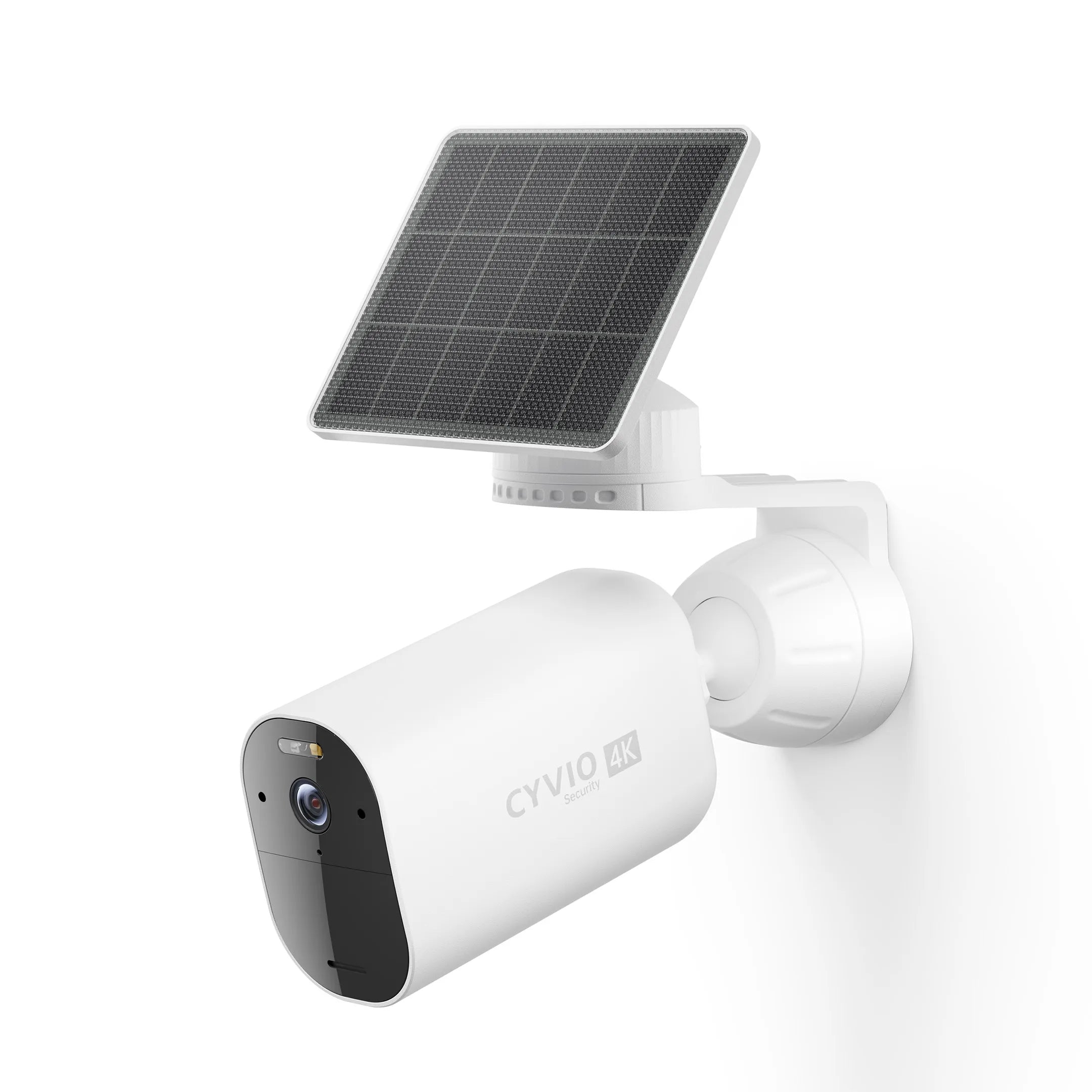
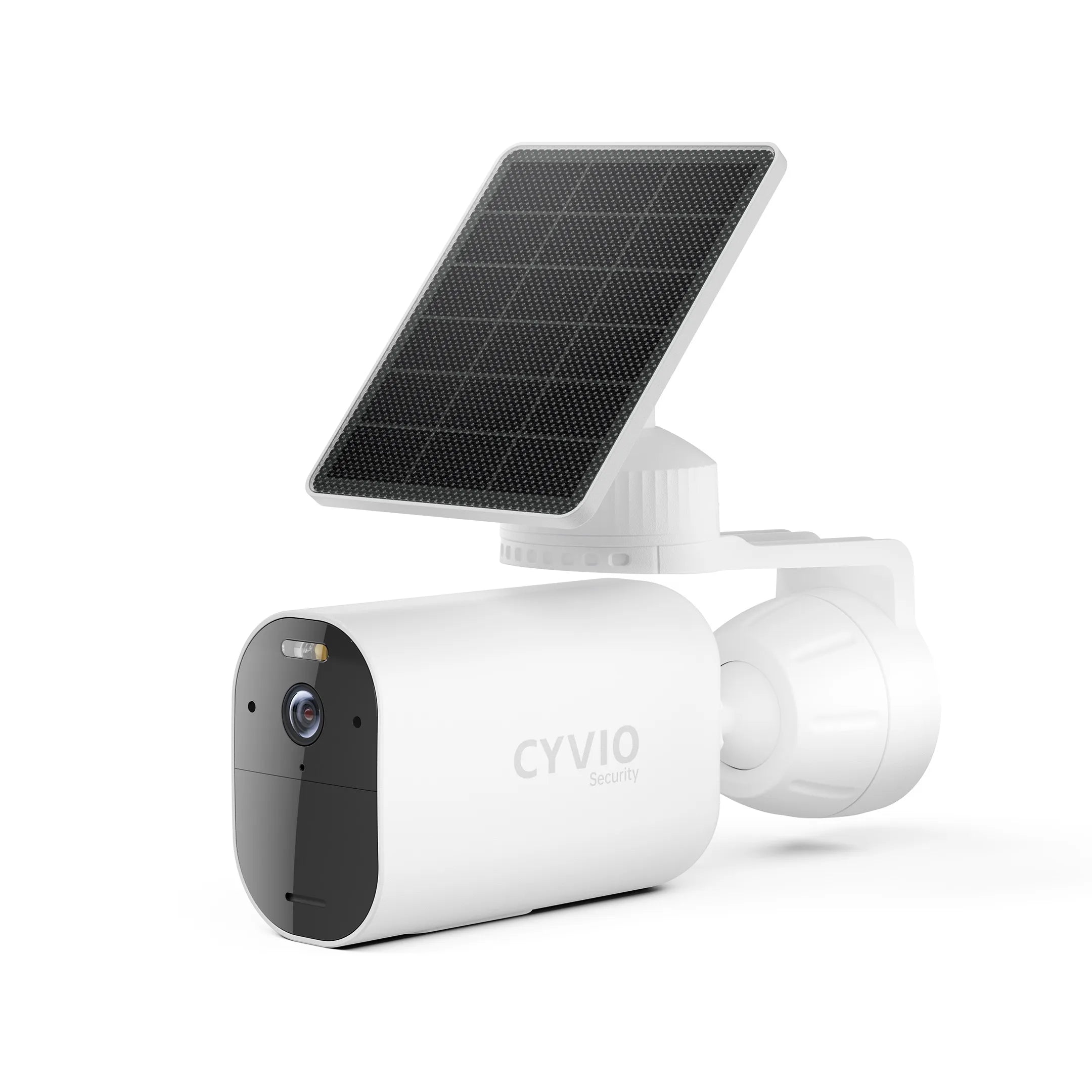
The CYVIO N1814 4K Solar Wireless Security Camera System provides an example of how solar charging and battery capacity can be combined for outdoor monitoring.

Each N1814 camera uses a built-in solar panel together with an 11,600mAh rechargeable battery.
The solar panel helps replenish battery energy during daylight, reducing dependence on manual charging when installation conditions provide suitable sunlight.
CYVIO states that under its specified usage conditions, approximately 2.5 hours of sunlight using a single solar panel can provide energy corresponding to around seven days of operation.
Actual performance can vary depending on:
-
Sunlight intensity
-
Camera activity
-
Recording mode
-
Night vision use
-
Temperature
-
Wireless conditions
-
Camera settings
This figure should therefore be treated as a product-specific reference rather than a fixed runtime for every installation.
CYVIO N1814 Battery Life Depends on More Than Battery Size
Battery capacity is only one part of the system.
The CYVIO N1814 also includes features that affect practical energy use, including:
-
3840 × 2160 4K video
-
Infrared night vision
-
Color night vision
-
Person detection
-
Vehicle detection
-
Two-way audio
-
Scheduled recording
-
Continuous recording support
-
Local storage
-
Long-range wireless communication
For example, a camera recording continuously will consume more energy than the same camera configured primarily for motion-triggered events.
Likewise, frequent nighttime recordings can increase energy use because night vision components need to remain active.
This is why runtime should always be evaluated based on actual camera configuration.
Does 24/7 Recording Reduce Solar Camera Runtime?
Continuous recording generally consumes more energy than event-based recording.
When a camera records continuously, several components stay active for long periods:
-
Image sensor
-
Processor
-
Storage system
-
Wireless communication
-
Night vision when required
The CYVIO N1814 supports multiple recording modes, including scheduled and continuous recording.
Users planning extended recording periods should therefore pay closer attention to:
-
Solar exposure
-
Battery level
-
Recording resolution
-
Storage capacity
-
Nighttime activity
A camera operating mainly through motion detection has a different energy profile from one recording continuously.
How Weather Affects Solar Camera Longevity
Outdoor weather conditions affect both charging performance and battery behavior.
Cloudy Weather
Cloud cover reduces available solar energy.
The camera can continue operating from its rechargeable battery, but prolonged cloudy periods may gradually reduce the remaining charge.
Winter
Winter can combine several challenges:
-
Shorter daylight hours
-
Lower sun angle
-
Longer nights
-
Reduced temperatures
-
Snow or debris covering the panel
Solar panel placement becomes especially important during these conditions.
Hot Weather
High temperatures can also affect rechargeable battery aging.
Avoid placing the camera in environments outside the manufacturer's recommended operating range.
For the CYVIO N1814, the listed operating temperature range is 0°C to 40°C (32°F to 104°F).
How to Extend Solar Camera Battery Life
Proper installation and configuration can help improve battery performance.
Position the Solar Panel Carefully
Observe the intended location throughout the day before installation.
Check for shade from:
-
Trees
-
Roofs
-
Fences
-
Buildings
-
Utility structures
Try to position the panel where it receives useful daylight during a significant part of the day.
Keep the Solar Panel Clean
Dust, pollen, leaves, and debris can reduce the amount of light reaching the panel.
Inspect the panel periodically and clean it when necessary.
The required frequency depends on the installation environment.
Reduce Unnecessary Motion Detection
If supported, adjust:
-
Detection sensitivity
-
Activity zones
-
Person detection
-
Vehicle detection
This can reduce recordings triggered by irrelevant movement.
Optimize Recording Duration
Use recording lengths that match your monitoring needs.
Longer recordings provide additional footage but consume more energy.
Limit Unnecessary Live Streaming
Extended live viewing can increase battery use.
Use live streaming when needed rather than leaving the camera feed open continuously.
Maintain Reliable Wireless Connectivity
Position the camera where it has a stable connection to its recorder, base station, or network.
A suitable wireless system is especially important for cameras installed far from the main building.
When Should You Replace a Solar Camera Battery?
Consider checking battery health when the camera shows a consistent decline in runtime.
Possible signs include:
-
Battery drains noticeably faster
-
Solar charging no longer maintains previous battery levels
-
Frequent low-battery warnings
-
Shorter nighttime operation
-
Increased need for manual charging
Before replacing the battery, first check:
-
Solar panel cleanliness
-
New sources of shade
-
Seasonal sunlight changes
-
Motion frequency
-
Recording settings
-
Wireless connection
If these conditions have not changed, battery aging may be contributing to the reduced runtime.
What to Look for When Buying a Long-Lasting Solar Camera
If battery life and durability are priorities, evaluate more than just the advertised battery capacity.
Battery Capacity
A larger battery can provide more stored energy during nights and low-sunlight periods.
Solar Panel Design
Consider panel position, size, mounting flexibility, and exposure to sunlight.
Recording Modes
Motion-based recording generally requires less power than continuous recording.
Night Vision
Infrared and color night vision provide different monitoring options and energy requirements.
Detection Features
Person and vehicle detection may help reduce unnecessary motion events.
Wireless Range
For larger properties, check whether the camera's communication system is suitable for the installation distance.
Storage
High-resolution and continuous recording require more storage space, so storage capacity should be considered together with battery life.
Weather Resistance
Outdoor cameras should have suitable protection against dust, moisture, and environmental exposure.
FAQ: How Long Do Solar Cameras Last?
How long can a solar camera run at night?
A solar camera uses energy stored in its rechargeable battery after sunset. Runtime depends on battery capacity, remaining charge, recording activity, night vision, and wireless communication.
How long can a solar camera work without sunlight?
It depends on battery capacity and energy consumption. A low-activity motion camera may operate longer than a camera recording frequently or continuously.
How long does a solar camera battery last before replacement?
There is no fixed replacement period for every camera. Rechargeable battery life depends on charging cycles, temperature, battery chemistry, usage, and environmental conditions.
Do solar cameras work during cloudy weather?
Yes, they can continue operating using stored battery energy. However, solar charging may be reduced, so prolonged cloudy periods can gradually lower the battery level.
Does night vision reduce battery runtime?
Night vision uses battery power. Frequent nighttime events or spotlight use may increase energy consumption.
Does 4K recording use more power?
Higher-resolution recording requires additional image processing and generates more data. Actual battery impact depends on recording duration, frequency, compression, and camera hardware.
How long does the CYVIO N1814 battery last?
The CYVIO N1814 uses an 11,600mAh rechargeable battery with solar charging. CYVIO states that under specified usage conditions, approximately 2.5 hours of sunlight with a single solar panel can provide energy corresponding to around seven days of operation. Real-world runtime can vary based on sunlight, recording activity, temperature, night vision, wireless conditions, and settings.
How often should a solar panel be cleaned?
There is no fixed cleaning schedule. Inspect the panel periodically and clean it when dust, leaves, pollen, or other debris begins covering the surface.
Conclusion: How Long Do Solar Cameras Last?
So, how long do solar cameras last?
There is no single lifespan that applies to every solar security camera.
Daily runtime depends on battery capacity, solar charging, recording frequency, night vision, wireless activity, and weather. Long-term battery lifespan depends on charging cycles, temperature, and normal battery aging, while the solar panel and camera electronics may remain usable for different periods.
For systems such as the CYVIO N1814, an 11,600mAh rechargeable battery works together with a built-in solar panel to reduce dependence on manual charging. Features such as 4K video, infrared and color night vision, person and vehicle detection, multiple recording modes, and long-range wireless communication also influence real-world energy consumption.
Ultimately, battery capacity alone does not determine how long a solar camera lasts. Proper solar panel placement, suitable recording settings, stable wireless connectivity, moderate motion activity, and regular maintenance all contribute to longer and more consistent camera operation.