









What Is FPS in Camera? A Simple Guide to Security Camera Frame Rates

When comparing security cameras, resolution usually gets most of the attention. You may see specifications such as 1080p, 2K, 5MP, or 4K—but another number can be just as important: FPS. Understanding what is fps in camera can help you determine how smoothly a camera records movement and how much video data your security system needs to process and store.
FPS stands for frames per second. A video is essentially a rapid sequence of individual images, or frames. A camera recording at 15 FPS captures 15 frames every second, while a camera recording at 30 FPS captures 30. Increasing the frame rate can make movement appear smoother, but it can also increase bandwidth, processing, and storage requirements.
For security cameras, the highest FPS is not necessarily the most practical choice. The right frame rate depends on what you are monitoring, how quickly subjects move, your camera resolution, and how much footage you need to store.
Want to connect your camera to your phone? Read more on: How to Connect WiFi Camera to Mobile
What Does FPS Mean on a Camera?
If you're wondering what is fps on a camera, FPS simply tells you how many individual images the camera records during one second of video.
For example:
-
10 FPS: 10 individual frames every second
-
15 FPS: 15 individual frames every second
-
20 FPS: 20 individual frames every second
-
30 FPS: 30 individual frames every second
-
60 FPS: 60 individual frames every second
When those individual images are displayed quickly in sequence, our eyes perceive continuous movement rather than separate photographs.
A higher FPS means that more moments are captured between the beginning and end of an action. This usually makes fast movement appear smoother, while a lower frame rate may make motion look less fluid.
What Is Frame Rate in Camera?
The term what is frame rate in camera refers to the frequency at which a camera captures individual video frames. Frame rate is normally measured in FPS.
Think of it like flipping through a stack of photographs.
If you flip through 15 pictures in one second, you see a moving sequence. If you have 30 pictures covering that same second, there are more visual steps between each movement, so the motion generally looks smoother.
However, frame rate should not be confused with resolution.
-
Resolution determines how many pixels are contained in each frame.
-
Frame rate determines how many of those frames are captured every second.
For example, a 4K camera could record at 15 FPS, while another 4K camera could record at 30 FPS. Both have the same nominal resolution, but their motion rendering may look different.
Planning a PoE camera setup? Check out this guide: Installing PoE Security Cameras
Why Does FPS Matter for Security Cameras?
Security footage serves a different purpose from movies, gaming, or slow-motion filmmaking. A security camera needs to provide enough visual information to understand what happened without unnecessarily consuming storage and network resources.

Frame rate can affect several aspects of surveillance footage.
Motion Smoothness
Higher FPS provides more frames during movement. Someone walking, a pet running through a room, or a vehicle crossing a driveway can therefore appear smoother at 30 FPS than at 10 FPS.
Captured Moments
More frames per second also means the system captures more points in time during an event. This can be useful in locations where objects move quickly.
Storage
Higher FPS generates more video information. Other settings being comparable, increasing frame rate can increase the amount of data that must be stored.
Bandwidth
Network cameras must transmit their video stream to an NVR, app, cloud service, or another device. Higher frame rates generally contribute to higher bitrate requirements when other factors remain similar.
The goal is therefore not simply to select the highest setting, but to find a suitable balance between motion detail and system efficiency.
Wondering about indoor camera laws? Read more on: Is It Illegal to Have Cameras Inside Your House?
Understanding the Security Camera Frame
A security camera frame is one individual image captured as part of a video recording. A 15 FPS camera records approximately 15 individual images during each second, while a 30 FPS camera records approximately 30.
Frame quality is affected by more than FPS. Resolution, shutter speed, exposure, compression, lighting, sensor performance, and motion can also affect what is visible in an individual frame.
For example, increasing FPS alone will not necessarily produce a sharp image of a fast-moving vehicle if poor lighting forces unsuitable exposure settings. This is why FPS should be considered together with the camera's overall imaging performance rather than treated as an isolated specification.
Worried about cold weather affecting your solar camera? Check out: Do Solar Security Cameras Work in Winter?
15 FPS vs 20 FPS vs 30 FPS vs 60 FPS Security Cameras
Different frame rates work better for different situations.
15 FPS: Practical for General Surveillance
15 FPS can provide sufficient motion information for many relatively stable surveillance environments, including:
-
Residential perimeters
-
Hallways
-
Warehouses
-
Parking spaces
-
Gardens
-
Entrances
-
Low-activity areas
It also reduces the amount of video data compared with higher frame rates under otherwise similar settings.
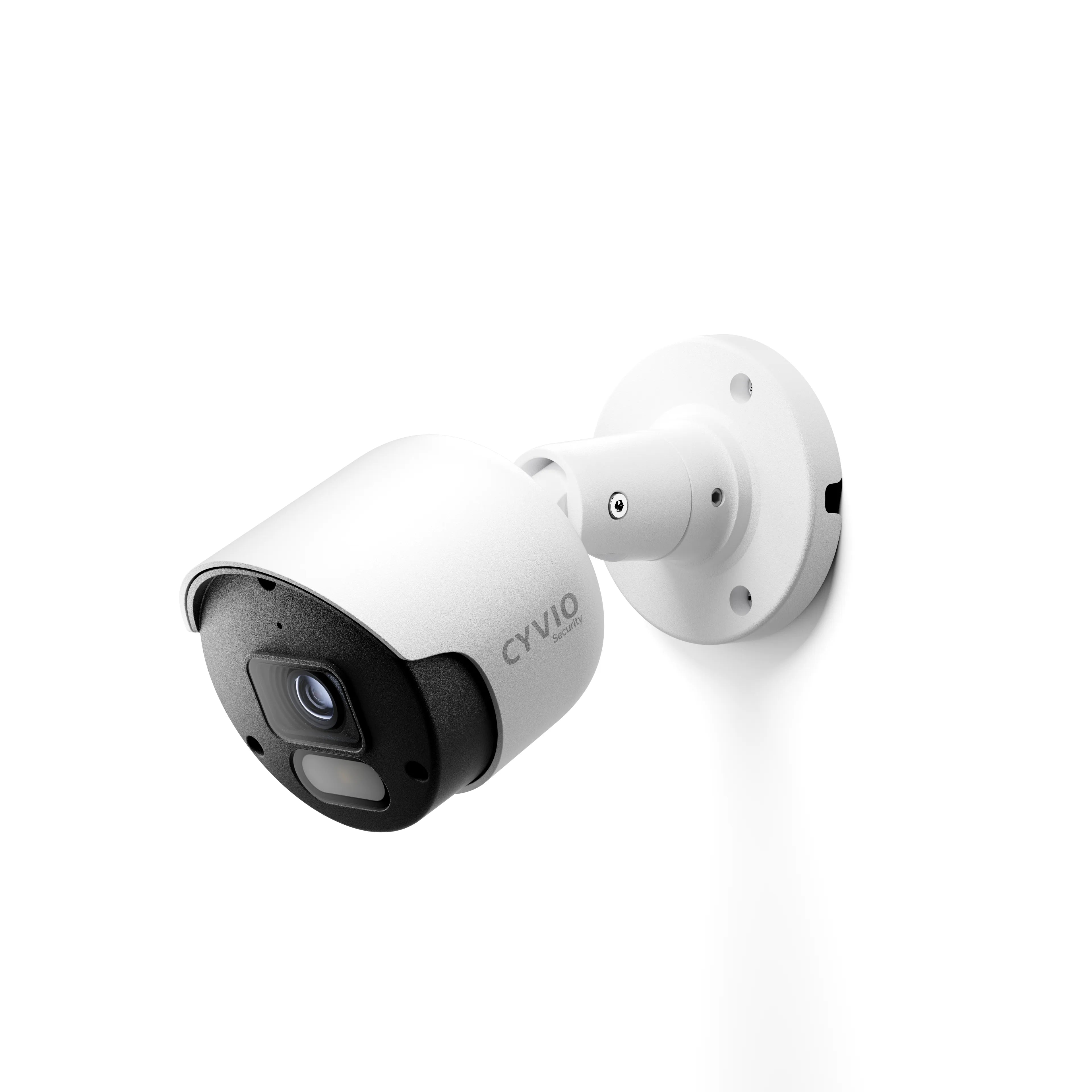
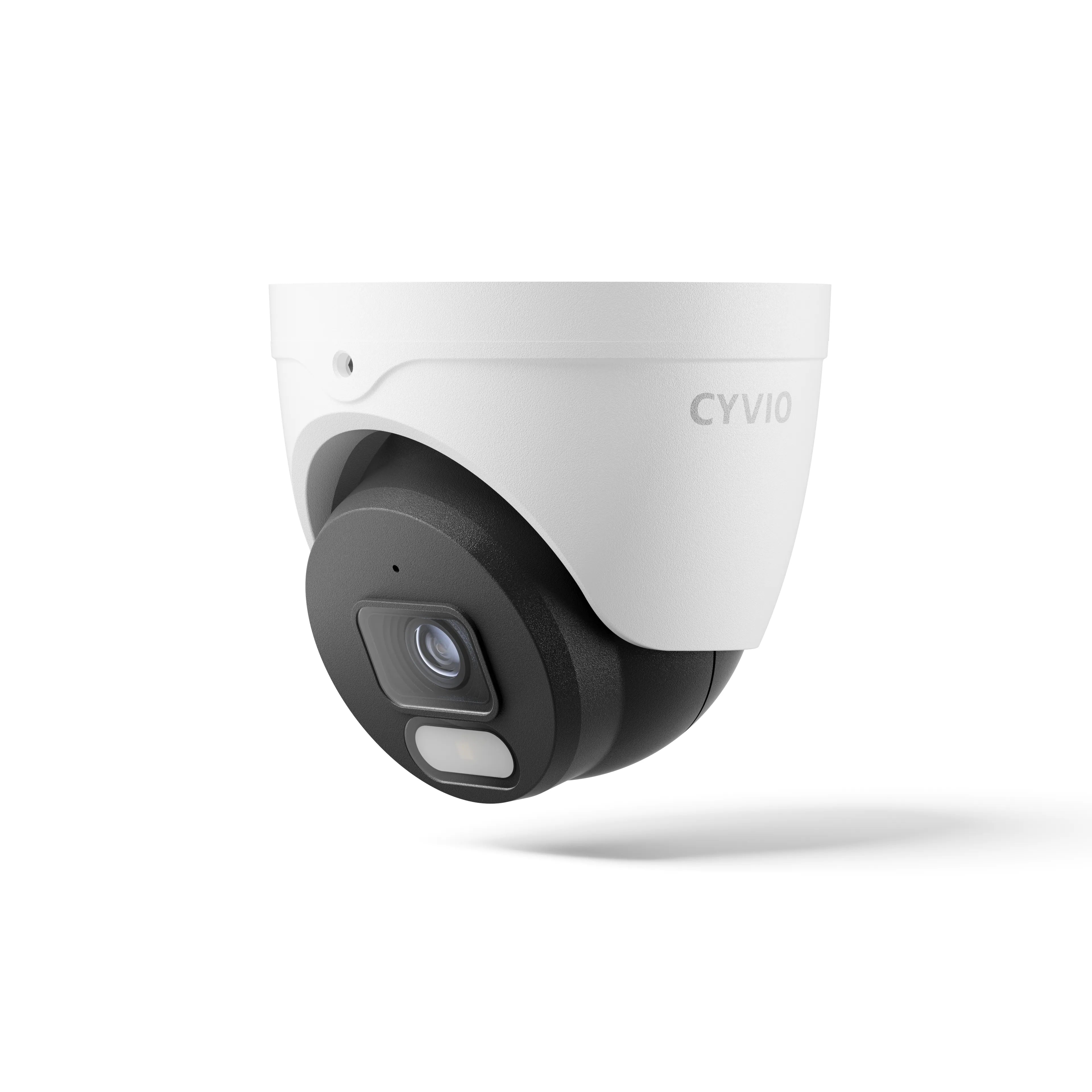
CYVIO notes that its N2834 PoE systems use a 15 FPS default for many standard monitoring situations, emphasizing the balance between capturing useful movement and storage efficiency.
20 FPS: A Step Up for More Active Areas
20 FPS adds more frames during movement without moving all the way to 30 or 60 FPS.
This can be useful for areas where motion occurs more frequently, such as:
-
Living rooms
-
Indoor play areas
-
Entryways
-
Pet monitoring
-
Pan-and-tilt camera applications
CYVIO identifies 20 FPS as useful for more dynamic indoor monitoring, where smoother representation of people, children, pets, or PTZ camera movement may be desirable.
30 FPS: Smoother Motion
At 30 FPS, movement generally appears noticeably smoother than at 15 FPS.
It may be useful for:
-
Busy entrances
-
Areas with faster movement
-
Driveways
-
Retail environments
-
Applications where users frequently review moving subjects
The tradeoff is that higher frame rates can increase the amount of video information the system must transmit and store.
60 FPS: Specialized Security Applications
60 FPS captures twice as many frames per second as 30 FPS, providing very smooth motion and more temporal information during fast events.
However, many residential monitoring situations do not require this level of frame rate. It can create additional bandwidth and storage demands, particularly when combined with high resolutions such as 4K.
60 FPS may be considered where fast-moving subjects are especially important, rather than simply as a default setting for every camera.
What Is the Best Frame Rate for Security Cameras?
There isn't one best frame rate for security cameras for every installation.
For many general surveillance situations, around 15–20 FPS can provide a useful balance between visible motion and efficient storage. More active scenes may benefit from 25 or 30 FPS, while higher settings can be reserved for specialized applications where smooth fast-motion capture is particularly important. CYVIO similarly recommends matching frame rate to the actual level of activity rather than assuming more FPS is automatically better.
A simple way to think about it is:
-
10–15 FPS: Lower-motion or storage-conscious monitoring
-
15–20 FPS: Everyday home and general surveillance
-
25–30 FPS: Busier areas and smoother motion
-
60 FPS or higher: Specialized fast-motion applications
The ideal setting also depends on resolution, available storage, network capacity, compression, and recording duration.
What Is the Best Frame Rate for Security Camera Use Outdoors?
If you're asking what is the best frame rate for security camera installations outside, consider what will actually pass through the camera's field of view.
For a backyard or quiet perimeter where activity is occasional and relatively slow, 15 FPS may provide enough information. For a driveway where vehicles move across the image, 20 or 30 FPS can provide smoother motion.
However, outdoor footage quality also depends heavily on:
-
Camera positioning
-
Distance from the subject
-
Shutter speed
-
Lighting
-
Night vision
-
Resolution
-
Lens field of view
A 30 FPS camera that produces blurry nighttime frames may provide less usable visual information than a properly configured 15 FPS camera with stronger low-light performance.
Typical Frame Rate of CCTV Security Cameras: 15–30 FPS Explained
When researching surveillance systems, you will frequently encounter the phrase typical frame rate of cctv security cameras 15 30 fps because many security applications operate somewhere in this general range.
15 FPS can work well where the objective is observing general activity while controlling data usage. Moving toward 30 FPS produces smoother video and captures more intermediate moments during movement.
Rather than treating 30 FPS as automatically superior, consider whether the additional frames provide practical value for your monitoring area.
For a quiet side yard, the difference may provide little benefit. For an active entrance where people regularly move across the camera's view, the smoother footage can be more useful.
High Frame Rate Security Camera: When Does It Make Sense?
A high frame rate security camera becomes useful when movement occurs quickly enough that additional frames provide meaningful information.
Possible applications include:
-
Fast vehicle movement
-
Busy commercial entrances
-
Certain industrial monitoring environments
-
Areas with rapid physical activity
-
Specialized event analysis
High frame rates also require consideration of resolution. Recording 4K video at a high FPS places significantly greater demands on processing, network throughput, and storage than recording lower-resolution video at a modest frame rate.
Some CYVIO PoE equipment illustrates this resolution/frame-rate relationship. CYVIO lists its N2834 Lite system as supporting 4K at 30 FPS, 4MP at 60 FPS, and 2MP at 120 FPS, demonstrating how achievable frame rate can increase when resolution is reduced.
Frame Rate Security Camera vs Resolution: Which Matters More?
When evaluating a frame rate security camera, FPS and resolution should be considered together.
Resolution affects spatial detail.
Higher resolution provides more pixels in each image, helping retain detail when looking at larger scenes or digitally zooming.
FPS affects temporal detail.
Higher FPS provides more images across a period of movement, making motion smoother and capturing additional moments during an event.
Suppose you are choosing between:
-
4K at 15 FPS
-
4K at 30 FPS
-
1080p at 60 FPS
The first prioritizes resolution with moderate motion capture. The second provides both high resolution and smoother motion but requires greater system resources. The third sacrifices spatial resolution for much higher temporal detail.
The appropriate choice depends on what you need the camera to capture.
Frame Rate vs Shutter Speed: They Are Not the Same
FPS is frequently confused with shutter speed.
Frame rate tells you how many frames a camera records per second.
Shutter speed determines how long the image sensor gathers light for each captured frame.
For example, a camera may record 30 frames every second while using a different exposure time for each frame depending on lighting conditions.
This distinction becomes especially important at night. Faster exposure can help reduce motion blur but allows less light to reach the sensor, while longer exposure can brighten dark scenes but may cause moving objects to blur.
Good surveillance performance therefore requires a balance between frame rate, exposure, lighting, and image processing.
Does Higher FPS Mean Better Security Camera Video?
Not necessarily.
Higher FPS makes movement smoother and provides more temporal samples, but video quality depends on many variables.
For example, image detail can also be influenced by:
-
Sensor quality
-
Resolution
-
Bitrate
-
Video compression
-
Lens quality
-
Available light
-
Exposure
-
Network performance
Increasing FPS while keeping available bitrate limited can even force more video information into the same data budget, potentially affecting compression quality.
For surveillance applications, it is usually more useful to ask, “How much frame rate does this scene require?” rather than “What is the highest FPS available?”
How Does FPS Affect Security Camera Storage?
Imagine two cameras configured identically except that one records 15 frames each second and the other records 30.
The 30 FPS stream has twice as many frames to process during the same period. Compression can reduce the difference in actual file size, but higher frame rates generally increase data requirements. Isarsoft notes that higher FPS increases stream bitrate requirements, while TechSmith also identifies reducing FPS as one way of reducing video file size.
Storage consumption also depends on:
-
Resolution
-
H.264 or H.265 compression
-
Bitrate
-
Motion in the scene
-
Continuous vs event recording
-
Number of cameras
-
Recording duration
This is one reason surveillance systems do not necessarily need cinematic or high-speed frame rates for every camera.
How Does FPS Affect Network Bandwidth?
A network security camera must transfer captured video to another device. This could be an NVR, smartphone, cloud service, or local computer.
More frames mean more visual data for the network to handle. Isarsoft's bandwidth explanation includes frame rate as one of the variables that contributes to total bandwidth requirements.
This becomes especially important when running several high-resolution cameras simultaneously.
For example, a property using eight 4K cameras at 30 FPS will generally place greater demands on its network and recording infrastructure than the same system running at 15 FPS, assuming other settings are broadly comparable.
Camera Frame Home Security: What Should Homeowners Focus On?
When considering camera frame home security performance, homeowners usually do not need to chase extremely high FPS numbers.
Instead, evaluate the complete camera system:
-
Can you clearly see the monitored area?
-
Does movement look sufficiently smooth?
-
Is nighttime footage usable?
-
Does the camera provide enough resolution?
-
Can your network reliably handle the stream?
-
How much footage can your storage retain?
-
Does the camera's frame rate match the activity in that location?
For a quiet garden, 15 FPS can be reasonable. For a busy indoor area, around 20–30 FPS may provide a smoother experience. The best configuration depends on the scene rather than a single specification.
=> Check out How to Test the Real Frame Rate of a Security Camera!
CYVIO Security Cameras and Practical Frame Rates
CYVIO uses different frame rates across its security camera lineup based on product type and intended monitoring scenario.
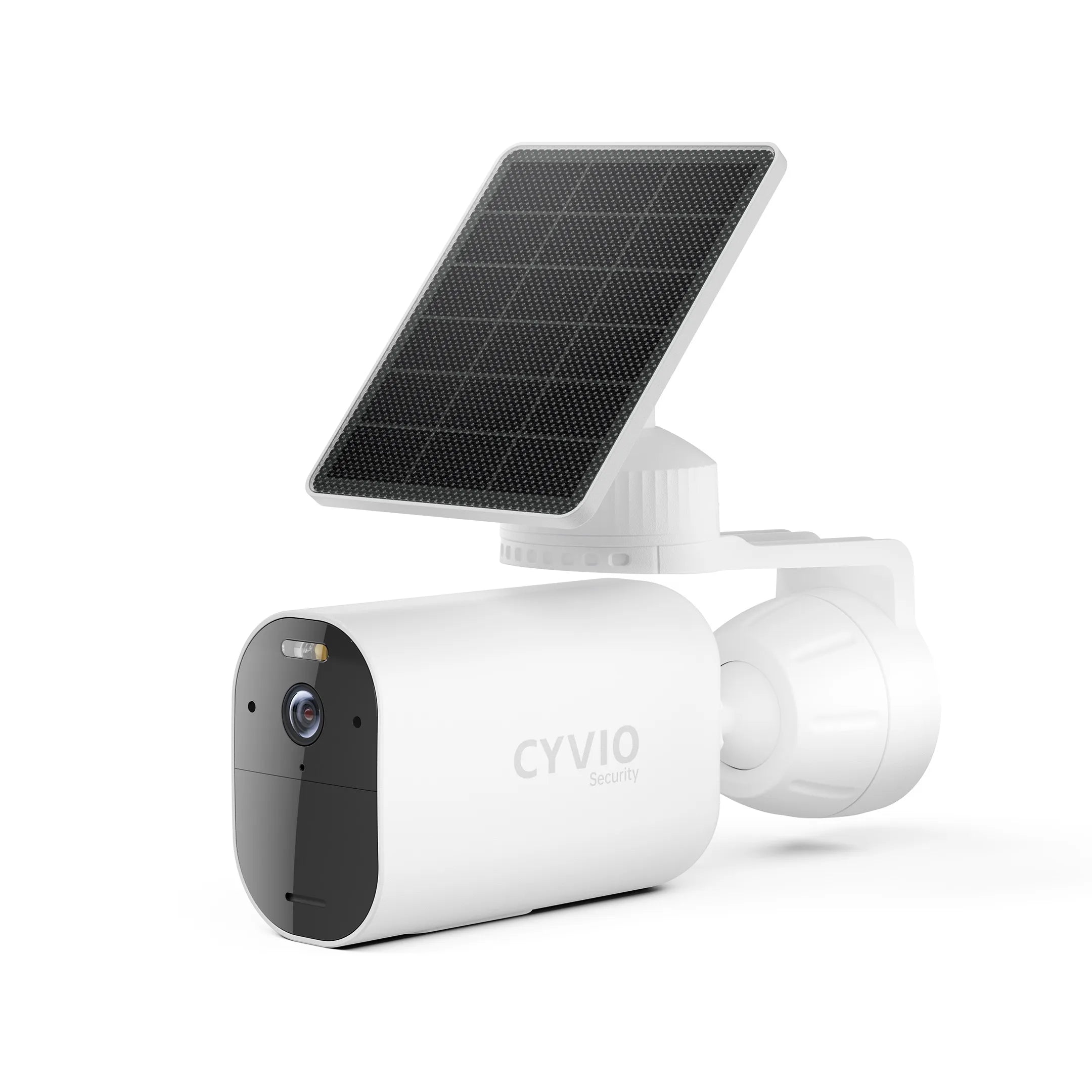
For example, the CYVIO B220 5MP solar battery camera is currently specified at up to 5MP at 15 FPS with automatic frame rate and bitrate management. It also uses H.265 video compression, a rechargeable 11,600mAh battery, and supports both infrared and color night vision.
For indoor environments where more fluid motion can be useful, the CYVIO C2 5MP PTZ indoor WiFi camera supports a main stream at up to 25/30 FPS, according to its current product specifications.
For more demanding wired applications, CYVIO's N2834-series PoE system supports different resolution and frame-rate combinations, including 4K at 30 FPS, 4MP at 60 FPS, and 2MP at 120 FPS.
These examples demonstrate an important point: the appropriate FPS depends on the camera's purpose. A battery-powered outdoor camera benefits from managing power and data efficiently, while a wired PoE camera can support more demanding recording configurations.
FPS for Battery-Powered vs Wired Security Cameras
Power source also matters when considering frame rate.
Battery-powered cameras need to balance video recording with energy consumption. Continuous high-frame-rate recording may not be practical for every battery-based application, which is why event-triggered recording and automatic frame-rate management are common approaches.
Wired security cameras have continuous power available, making them more suitable when higher frame rates and continuous recording are required.
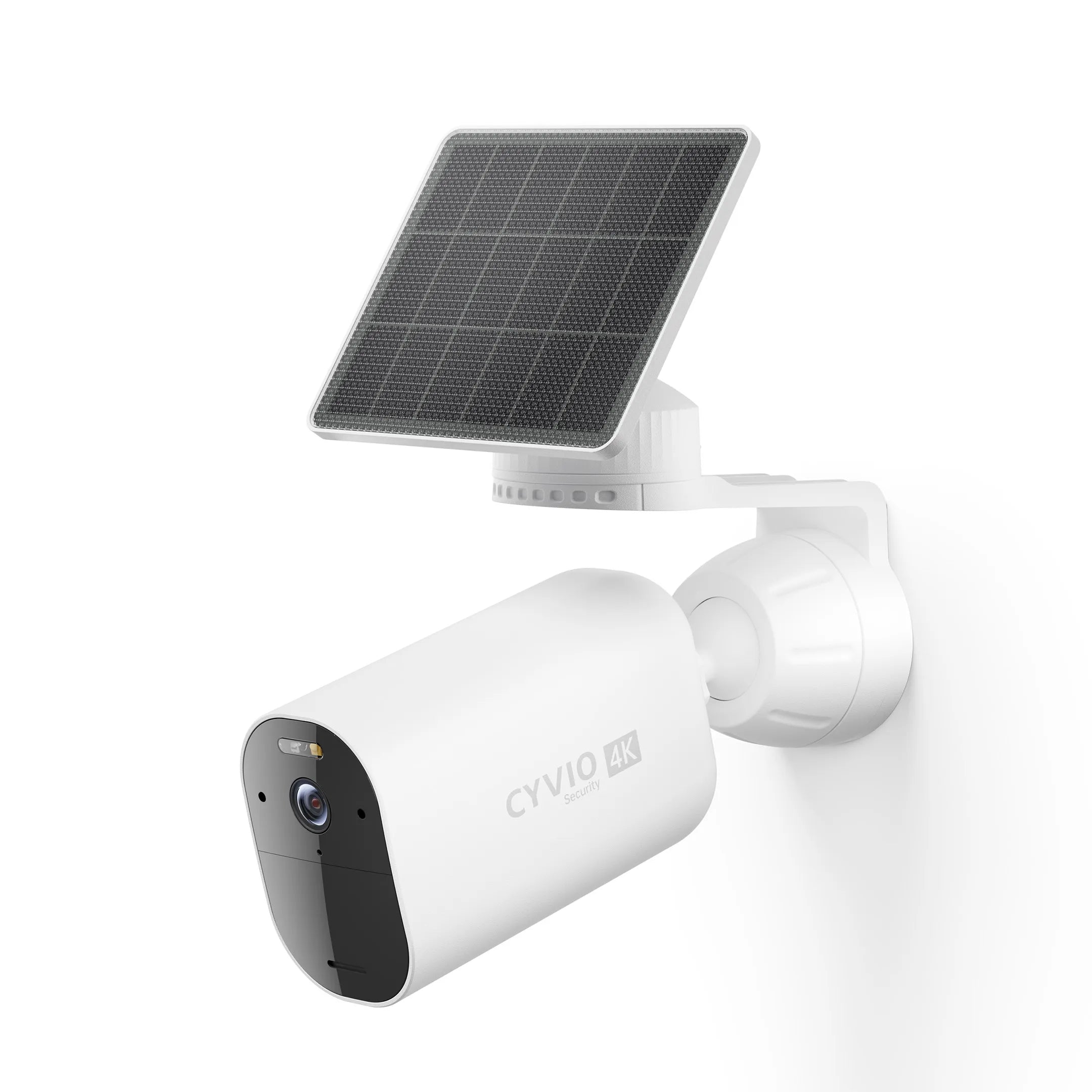
For example, CYVIO's B221 4K wireless solar battery camera is specified at up to 8MP/4K at 15 FPS with automatic FPS and adaptive bitrate, while CYVIO's wired N2834-series PoE systems can support considerably higher frame rates depending on the selected resolution.
=> Check out Wired vs Wireless Security Cameras: A Complete Guide to Choosing the Right System.
What About the Fastest Frames Per Second Camera?
People searching for the fastest frames per second camera may encounter numbers far beyond 30, 60, or even 120 FPS.
These cameras belong to a completely different category from home security systems. Specialized scientific and industrial high-speed cameras can record thousands or even millions of frames per second for applications such as ballistics testing, engineering analysis, scientific research, and extremely fast physical events.
For example, Vision Research states that its Phantom TE2010 can record more than 19,000 FPS at its full 1280 × 832 resolution and can exceed one million FPS at reduced resolution with a specialized option.
Those specifications are impressive, but they do not represent a useful target for ordinary home surveillance.
What Is the Highest Frames Per Second Camera?
The answer to highest frames per second camera depends heavily on what qualifies as a camera and whether we mean a commercially available high-speed system or an experimental imaging technique.
Commercial high-speed cameras can reach hundreds of thousands or even more than one million FPS when resolution is reduced.
Scientific experimental systems can go dramatically further. These systems are designed to visualize extremely fast physical phenomena rather than monitor a home, driveway, or business.
For security cameras, therefore, exceptionally high FPS figures are generally irrelevant. Frame rates such as 15, 20, or 30 FPS—and higher rates for specific applications—are much more useful numbers to compare.
Door Frame Security Camera: Does “Frame” Mean FPS?
A door frame security camera refers to a camera positioned on, near, or integrated around a doorway or door frame. Here, the word “frame” describes the physical door structure rather than video frame rate.
For entrance monitoring, FPS selection depends on the expected activity. A moderate frame rate can be sufficient for visitors walking toward a door, while smoother frame rates may be useful if the area experiences frequent or quicker movement.
Users primarily interested in monitoring visitors may also want to consider a video doorbell, which is designed specifically for entrance viewing and two-way communication.
Photo Frame Security Camera and FPS
A photo frame security camera generally refers to a camera designed to resemble or be incorporated into a photo-frame-style object. This terminology is unrelated to FPS.
The “frame” in photo frame describes the physical product, whereas a video frame is an individual image in a video sequence.
When evaluating any camera for legitimate monitoring applications, check its actual technical specifications—especially resolution, frame rate, field of view, recording method, and storage—rather than assuming the word “frame” indicates video performance.
Picture Frame Security Camera: Understanding the Terminology
Similarly, a picture frame security camera refers to a product form factor rather than frame rate.
If you're evaluating a camera based on video quality, look specifically for the FPS specification. A product description that states 15 FPS means it captures up to 15 video frames per second, regardless of the physical design of the camera housing.
For home monitoring, visible, appropriately positioned cameras can also make installation, maintenance, and field-of-view adjustment easier.
How to Choose the Right FPS for Your Security Camera
Instead of selecting frame rate based only on the highest available number, work backward from your monitoring needs.
Choose around 10–15 FPS when:
-
The area has relatively little movement
-
Long recording retention is important
-
Network bandwidth is limited
-
You monitor static areas such as storage spaces or property boundaries
Consider around 15–20 FPS when:
-
You need general residential surveillance
-
People walk through the monitored area
-
You monitor entrances, yards, or indoor spaces
-
You want a balance between smooth video and data efficiency
Consider 25–30 FPS when:
-
Movement occurs frequently
-
Smoother playback is valuable
-
Vehicles or people cross the scene more quickly
-
Your network and storage can support the additional data
Consider 60 FPS or more when:
-
You have a specialized fast-motion monitoring requirement
-
Capturing additional moments during rapid movement is important
-
Your recording hardware, bandwidth, and storage are designed for it
Frequently Asked Questions About Camera FPS
1. Is 15 FPS good for a security camera?
15 FPS can be suitable for many everyday surveillance applications, particularly areas with normal walking speeds or relatively low activity. CYVIO also uses 15 FPS configurations on several outdoor and battery-powered camera products where balancing recording detail, data use, and power efficiency is important.
2. Is 30 FPS better than 15 FPS?
30 FPS records twice as many frames during each second, so movement generally appears smoother and more intermediate moments are captured. However, it typically requires more data, meaning 15 FPS can still be the more practical choice in many surveillance environments.
3. Is 60 FPS necessary for home security cameras?
For most normal residential monitoring, 60 FPS is not essential. It is more useful when capturing particularly rapid movement. Lower frame rates can reduce network and storage requirements while still providing sufficient information for everyday monitoring.
4. Does higher FPS improve image resolution?
No. FPS and resolution measure different things. FPS determines how many frames are captured each second, while resolution describes how many pixels are contained in each individual frame.
5. Does a high FPS reduce motion blur?
Higher FPS provides more temporal samples, but motion blur is also strongly influenced by exposure time or shutter speed. Therefore, simply increasing FPS does not automatically eliminate blur.
6. What frame rate should I use for a driveway camera?
For normal driveway monitoring, approximately 15–30 FPS can be considered depending on vehicle speed, camera angle, lighting, and how much motion detail you need. Higher frame rates may be useful for faster movement, while 15–20 FPS can provide adequate general surveillance with lower data requirements.
What Is FPS in Camera and How Much Do You Really Need?
Understanding what is fps in camera is important because frame rate determines how many individual images your camera records every second. More FPS can make movement smoother and capture additional moments during fast action, but it can also increase bandwidth, processing, and storage requirements.
For many home security applications, approximately 15–20 FPS can provide a practical balance between motion capture and system efficiency, while 25–30 FPS may be useful for busier environments. Higher frame rates should generally be selected when the monitoring scenario actually benefits from the additional temporal detail rather than simply because a larger FPS number is available.
CYVIO's current camera lineup reflects this scenario-based approach, ranging from outdoor battery and solar cameras operating at up to 15 FPS to indoor cameras supporting up to 25/30 FPS and wired PoE systems capable of higher frame rates at selected resolutions.
When choosing your next security camera, consider FPS together with resolution, low-light performance, storage, connectivity, field of view, and camera placement. The right combination matters more than any single specification.