









How to Test the Real Frame Rate of a Security Camera: Why “30FPS” Is Often Not What You Actually Get

When shopping for a security camera, many people focus heavily on the specification sheet. One of the most eye-catching numbers is usually the frame rate: “up to 30FPS(Frames Per Second).” At first glance, this sounds professional and reassuring. After all, higher FPS means smoother video, right?
However, after installing the camera and checking the recorded footage, a lot of users feel disappointed. The video looks choppy, motion seems unnatural, and fast-moving objects appear blurred or skipped. This is when many people realize a painful truth: “30FPS” on the product page does not always mean you will actually get 30FPS in real life.
This article will help you understand what FPS really means, why actual performance often differs from advertised numbers, and how you can easily test the real frame rate of your camera at home.
1. What Is FPS? Understanding Frame Rate with a Simple Analogy
Although video feels continuous to the human eye, it is actually made up of many still images shown one after another. Each image is called a frame.
A good way to understand FPS (Frames Per Second) is to imagine flipping through a flipbook:
- Each page is one frame.
- The faster you flip the pages, the smoother the animation looks.
- The slower you flip, the more “jumpy” or “stuttered” the motion feels.
So FPS simply means how many frames are displayed every second.
Real-Life Experience at Different FPS Levels
Different frame rates create very different viewing experiences:
15 FPS
Similar to flipping a book slowly. You can still recognize what is happening, but moving objects (like people walking or cars passing by) feel jumpy. Motion looks unnatural and choppy.
20–25 FPS
This is the most common range for home security cameras. It feels reasonably smooth and is usually good enough to identify important events, such as someone entering a room or a vehicle parking.
30 FPS
This is close to what we perceive as “real-life smoothness.” It is comparable to TV programs, YouTube videos, or social media clips. Motion looks natural, and details during movement are much clearer.

In short:
Higher FPS = smoother video.
Lower FPS = more motion blur, stuttering, and visual discomfort.
2. Why You Must Test the Actual FPS (Not Just Trust the Specs)
Many camera brands advertise impressive numbers like “4K resolution, 30FPS.” But those values are usually measured under ideal laboratory conditions, not real-world home environments.
In real usage, FPS can be affected by:
- Network bandwidth
- Wi-Fi signal strength
- Video compression settings
- Storage speed (SD card or hard drive)
- CPU performance of the camera
- Night mode or AI features running in the background
So the “30FPS” you see in marketing is often just the maximum theoretical limit, not the guaranteed performance.
Why FPS Testing Matters for Users
Testing FPS is not about being overly technical. It helps you avoid two very common problems:
1. Verifying Real Performance
You can confirm whether the camera truly delivers what you paid for. If it claims 30FPS but only records at 18FPS in real conditions, you know the performance is overstated.
2. Troubleshooting Lag Issues
If your video looks choppy, it does not necessarily mean the camera is broken. The real cause might be:
- Weak Wi-Fi signal
- Wrong recording settings
- Slow SD card
- Insufficient upload speed
By measuring FPS, you can locate the real bottleneck instead of blindly replacing hardware.

3. Three Practical Methods to Test Camera FPS
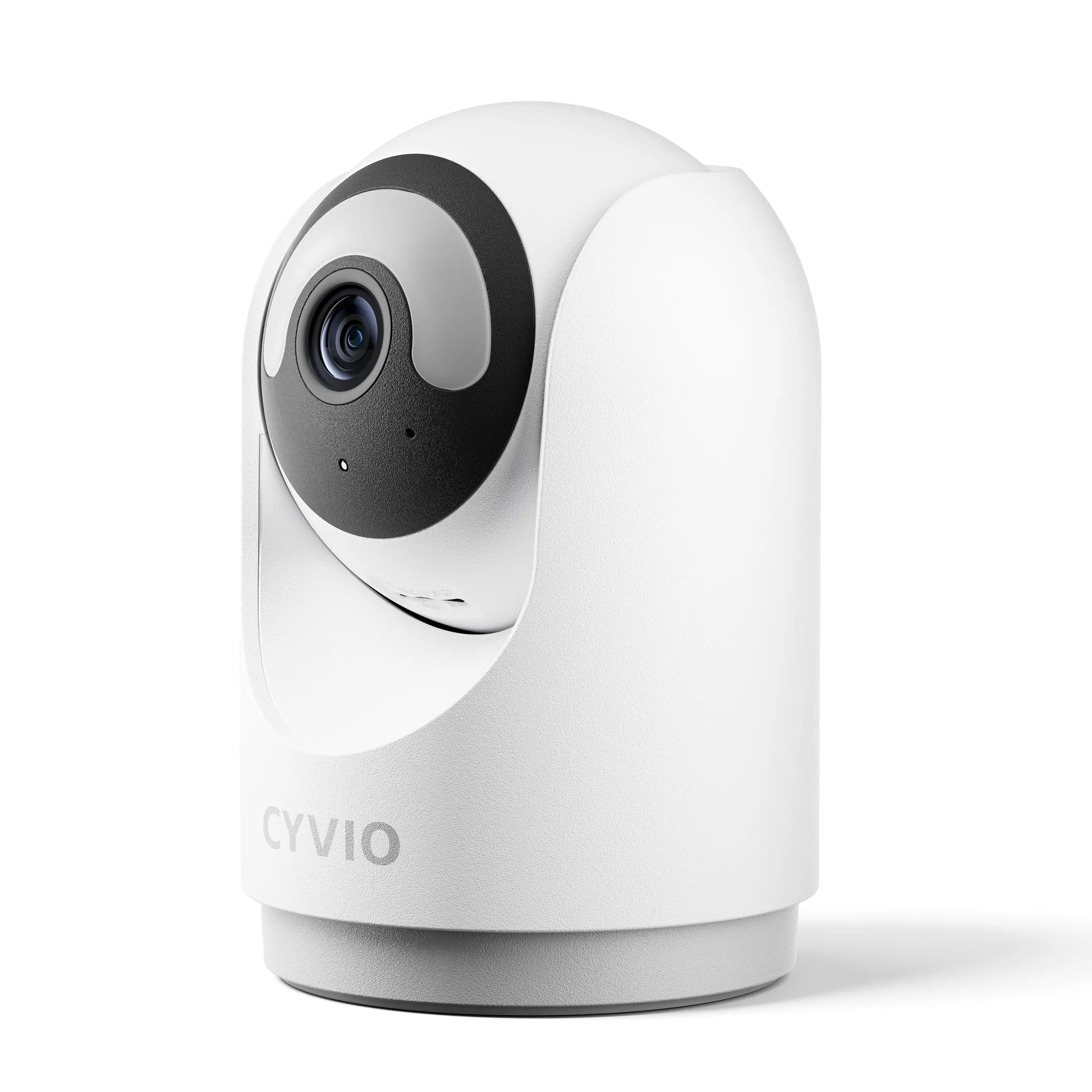
Below we use the CYVIO Indoor Wi-Fi PT Camera C2 as an example. Before testing, make sure to do these three preparations to avoid inaccurate results:
- Preparation Checklist
- Ensure stable network
Test in a place with strong Wi-Fi or wired connection.
- Set camera to fixed FPS

In the CYVIO app, go to settings and set:
- Main stream: 2880 × 1620 (5MP)
- Frame rate: fixed 20FPS
- Record at least 30 seconds
Longer videos produce more reliable data.
Method 1: Visual Playback Method (Easiest)
This method requires no extra software.
Steps:
- Transfer the recorded video to your computer.
- Play it in common players like VLC or Windows Media Player.
- Watch fast-moving objects: people walking, hands waving, cars outside.
Signs of low FPS:
- Motion looks jumpy.
- You see afterimages or motion trails.
- Your eyes feel uncomfortable after watching.
For a slightly more precise method:
- Import the video into a free editor like CapCut or DaVinci Resolve.
- Use the arrow key to move frame by frame.
- If a simple movement (like raising a hand) jumps in big steps, FPS is low.
Method 2: Professional Software Method (Most Accurate)
This method gives you exact numbers.
Using MediaInfo
MediaInfo is a free tool available on Windows, macOS, Android, and iOS.
Steps:
- Download MediaInfo.
- Drag your video file into the app.
- Look for the “Frame rate” field.
You will see something like:
- Frame rate: 20.000 FPS
If your setting was 20FPS and MediaInfo shows 20FPS, the camera is performing correctly.

Using PotPlayer (For Real-Time Monitoring)
PotPlayer can display current FPS during playback.
Steps:
- Open the video in PotPlayer.
- Press the Tab key.
- Watch the on-screen FPS indicator.
If the number frequently drops (for example from 20FPS to 12FPS), it means your system or network cannot sustain stable performance.
Method 3: Comparison Recording Method (No Computer Needed)
This method is perfect for dynamic testing.
What you need:
- A smartphone capable of 60FPS recording.
- A fast-moving reference object:
- Rotating fan
- Stopwatch seconds hand
- Scrolling timer on phone
Steps:
- Record the scene with your phone at 60FPS.
- At the same time, let the security camera record the same object.
- Compare both videos.
Example:
- Fan completes one full rotation in 1 second.
- Phone video shows 60 frames.
- Security camera video shows only 20 frames.
Conclusion: The camera is effectively recording at 20FPS, not 30. This method works even without professional tools and is surprisingly reliable.
4. Why Cameras Rarely Reach Their “Max FPS”
Even good cameras often fail to reach advertised FPS. Common reasons include:
High resolution compression
5MP or 4K requires heavy processing. The camera CPU may lower FPS to maintain stability.
Night vision and AI features
Smart detection, color night mode, face recognition — all consume resources.
Storage bottleneck
Slow SD cards cannot write data fast enough, forcing the camera to drop frames.
Network upload limit
Cloud recording depends heavily on your upload speed.
So in practice, many “30FPS cameras” operate around 18–25FPS most of the time.
5. What FPS Is Actually Enough for Home Security?
For most real-world use cases:
|
Scenario |
Recommended FPS |
|
Indoor monitoring |
20FPS |
|
Baby or pet camera |
20–25FPS |
|
Doorbell camera |
20FPS |
|
Outdoor security |
20–25FPS |
|
Sports recording |
30FPS+ |
For security, clarity and stability matter more than extreme smoothness. A stable 20FPS is often better than an unstable “30FPS on paper.”
Final Takeaway
Never judge a camera only by its specification sheet.
The number “30FPS” is often:
- A theoretical maximum.
- Achieved only in ideal lab conditions.
- Reduced in real-world usage.
By using simple tools and methods, anyone can verify the real performance of their camera. This not only protects your wallet but also helps you configure your system properly for the best real-life results.
At CYVIO, we encourage users to focus on real-world performance instead of paper specs. That’s why our cameras are designed to deliver stable and realistic frame rates in everyday home environments — not just impressive numbers in a product description.
FAQ: Security Camera Frame Rate
1. What does FPS mean in security cameras?
FPS stands for Frames Per Second. It measures how many images are shown every second in a video.
2. Is 30FPS really necessary for home security?
Not really. For most home scenarios, a stable 20FPS is already enough to identify people and actions.
3. Why does my 30FPS camera only record at 20FPS?
Because the advertised value is usually the maximum under ideal conditions. Real performance depends on network, resolution, and system load.
4. Does Wi-Fi speed affect FPS?
Yes. Poor network quality will force the camera to lower frame rate.
5. Can SD cards affect frame rate?
Yes. Slow cards cannot write data fast enough, causing frame drops.
6. Is lower FPS bad for evidence?
As long as it is above 20FPS, video is usually sufficient for security purposes.
7. How can I test FPS without a computer?
Use a smartphone at 60FPS and compare with a moving reference object.
8. Does night vision reduce FPS?
Yes. Night processing uses more computing power, which often lowers FPS.