









2K vs 4K Security Camera: Which Resolution Should You Choose?

When shopping for a security camera, resolution is often one of the first specifications you see—but does more resolution automatically mean a better camera for your needs? Comparing 2k vs 4k security camera options can help you understand how much image detail you actually need and whether the additional storage and bandwidth of 4K are worthwhile.
For many homes, 2K provides a useful balance between clear video and manageable storage requirements. 4K, on the other hand, captures substantially more pixels and can preserve more detail when viewing larger areas or digitally zooming into recorded footage. Arlo and eufy both emphasize resolution, viewing distance, storage, bandwidth, and monitoring area as important considerations when choosing between the two.
Below, we'll break down the differences and help you decide which resolution makes more sense for your home, driveway, yard, business, or other monitoring area.
What Does Security Camera Resolution Mean?
Security camera resolution describes the number of pixels used to create each frame of video. More pixels allow a camera to record more visual information, although actual image quality also depends on the camera sensor, lens, compression, lighting, frame rate, and processing.
Common surveillance resolutions include:
-
1080p: typically 1920 × 1080, or about 2.1 million pixels
-
2K/QHD: commonly 2560 × 1440 in consumer security cameras, or about 3.7 million pixels
-
4K UHD: typically 3840 × 2160, or about 8.3 million pixels
Security-camera manufacturers do not always use “2K” in exactly the same way, so checking the actual pixel dimensions or megapixel specification is useful when comparing products. Montavue, for example, identifies 2560 × 1440 as a common 2K/4MP surveillance format.
Worried about cold weather affecting your solar camera? Check out: Do Solar Security Cameras Work in Winter?
What Is the Difference Between 2K and 4K Resolution?
The most important difference between 2k and 4k resolution is the amount of image information captured. A common 2K security camera records around 2560 × 1440 pixels, while 4K UHD records around 3840 × 2160. That gives 4K more than twice the total pixel count of 1440p 2K video.
That extra resolution can become useful when you need to examine smaller portions of an image. For example, if a person, vehicle, gate, or package occupies only part of the frame, 4K footage generally gives you more pixels to work with when digitally zooming in.
However, higher resolution also creates more video data. Depending on compression, frame rate, recording length, and camera settings, 4K can require more storage capacity and network bandwidth than 2K.
2K vs 4K Camera: A Simple Comparison
When comparing a 2k vs 4k camera, think beyond the resolution number itself.
2K Security Cameras
2K cameras can be a practical choice when you need:
-
Clear general home monitoring
-
Indoor room coverage
-
Entrance or porch monitoring
-
Moderate digital zoom
-
Lower storage requirements
-
Less network bandwidth than 4K
Because 2K sits between 1080p and 4K, it can provide noticeably more detail than Full HD without generating as much data as a 4K stream.
Want to understand security camera storage time? Check out: How Many Days Can a Security Camera Record?
4K Security Cameras
4K cameras can be useful when you need:
-
More detail across larger monitoring areas
-
Better flexibility when digitally zooming into footage
-
Monitoring of driveways, yards, gates, or commercial spaces
-
Higher-detail video on large displays
-
Additional image information for reviewing recorded events
4K UHD commonly provides around 8.3 megapixels per frame, giving it considerably more image data than 1080p or typical 1440p 2K footage.
Planning a PoE camera setup? Check out this guide: Installing PoE Security Cameras
2K vs 1080p Security Camera: Is 2K Worth the Upgrade?
A 2k vs 1080p security camera comparison is often easier to notice when footage is displayed on a larger screen or when you zoom into recorded video.
1080p typically records at 1920 × 1080, while the 2K resolution commonly marketed in security cameras is 2560 × 1440. The additional pixels can provide more image detail without moving all the way to 4K-level bandwidth and storage requirements.

For monitoring a small room or a short-distance entrance, 1080p may still provide sufficient visibility. For outdoor spaces, wider scenes, or situations where you expect to inspect smaller details, 2K can provide additional flexibility.
1080p vs 2K vs 4K Security Camera: Which Is Better for Different Uses?
A 1080p vs 2k vs 4k security camera comparison is best approached by matching resolution to the monitoring environment instead of simply selecting the largest number.
1080p: Basic Monitoring
1080p can work well for smaller areas where subjects remain relatively close to the camera. It also produces smaller video files than higher-resolution formats.
It may suit:
-
Small indoor rooms
-
Close-range entrances
-
Basic live monitoring
2K: Balance Between Detail and Data
2K offers additional detail over 1080p while keeping data requirements below those of 4K in many configurations. It can be a practical middle ground for residential monitoring.
It may suit:
-
Front doors
-
Garages
-
Medium-sized yards
-
Indoor common areas
-
General outdoor monitoring
4K: More Detail for Larger Scenes
4K becomes particularly useful when a camera needs to cover a wider area while preserving more detail or when digital zoom is important. Higher-resolution footage can help retain more visible information when reviewing distant portions of the scene.
It may suit:
-
Long driveways
-
Large yards
-
Parking areas
-
Gates
-
Farms or detached buildings
-
Commercial properties
2K Security Camera vs 4K: Image Detail and Digital Zoom
The advantage of 4K becomes more noticeable when you crop or digitally zoom into recorded footage.
Imagine that a camera captures an entire driveway. If a vehicle occupies only a small portion of the image, zooming into that section removes much of the original frame. Starting with a higher-resolution image means there are more source pixels available in that cropped area.
This is one reason the 2k security camera vs 4k decision should consider viewing distance and scene size—not just how sharp the full-screen image looks.
Still, resolution cannot compensate for every limitation. Poor lighting, motion blur, excessive compression, lens quality, camera positioning, and distance can all affect whether a detail is actually visible.
What Is the Best Resolution for Outdoor Security Cameras?
There isn't one resolution that suits every outdoor installation. When asking what is the best resolution for outdoor security cameras, consider how large the area is and what level of detail you expect to review.
For a small porch or patio, 2K may provide plenty of detail. For a large driveway, yard, gate, or property boundary where subjects may appear farther away, 4K can provide more room for digital enlargement.
Resolution should be considered alongside:
-
Night-vision performance
-
Sensor quality
-
Viewing angle
-
Lighting conditions
-
Weather resistance
-
Wireless or wired connection quality
-
Frame rate
-
Storage capacity
A higher-resolution camera with poor lighting or positioning may produce less useful footage than a well-positioned lower-resolution camera with better low-light performance.
Does 4K Use More Storage Than 2K?
Generally, yes. Because 4K contains considerably more pixels per frame, recording at 4K can create larger amounts of video data than recording at 2K when other settings are similar. Actual file size varies based on codec, bitrate, frame rate, scene complexity, and recording mode.
Before choosing 4K, consider whether your system uses:
-
Continuous recording
-
Motion-triggered recording
-
Local microSD storage
-
NVR storage
-
Cloud storage
Motion-based recording can reduce the amount of footage stored compared with continuous recording, while efficient video compression can also help manage storage requirements.
Does 4K Require More Bandwidth?
Higher-resolution video generally needs a higher bitrate to maintain comparable image quality, which can increase network demands. This matters especially when multiple cameras stream simultaneously or when viewing recordings remotely.
For wired PoE systems, network capacity should be considered when planning multiple high-resolution cameras. For wireless systems, signal quality, distance, interference, and the wireless technology used can also influence performance.
If your property has limited network capacity, 2K may provide a practical balance between clarity and data usage.
Is 4K Better at Night?
Not necessarily.
Resolution describes how many pixels an image contains, but low-light performance depends heavily on other camera components, including the image sensor, lens aperture, infrared illumination, integrated lighting, and image processing.
A 4K camera can capture more spatial detail, but that does not automatically mean it will produce a brighter or cleaner image at night.
When comparing nighttime performance, look beyond resolution and consider features such as:
-
Color night vision
-
Infrared night vision
-
Built-in spotlights
-
Sensor size and sensitivity
-
Motion handling
-
Camera placement
This is particularly important when monitoring driveways, yards, and other outdoor areas after dark.
When Should You Choose a 2K Security Camera?
A 2K camera may make sense when you want clearer footage than 1080p but do not require the additional image data provided by 4K.
Consider 2K for:
-
Apartments
-
Indoor rooms
-
Small homes
-
Porches
-
Short driveways
-
Areas where subjects stay relatively close to the camera
-
Systems where storage or bandwidth is limited
For many everyday residential situations, 2K provides a useful combination of image detail and manageable data requirements.
When Should You Choose a 4K Security Camera?
Consider 4K when preserving fine detail across a larger scene is more important.
4K may be useful for:
-
Large properties
-
Wide outdoor spaces
-
Long driveways
-
Vehicle monitoring
-
Gates and entrances at greater distances
-
Farms and detached buildings
-
Small businesses
-
Situations where digital zoom is frequently used
If the camera needs to capture both a broad overview and smaller details within that scene, the extra pixels offered by 4K can be valuable.
A Practical 4K Option from CYVIO
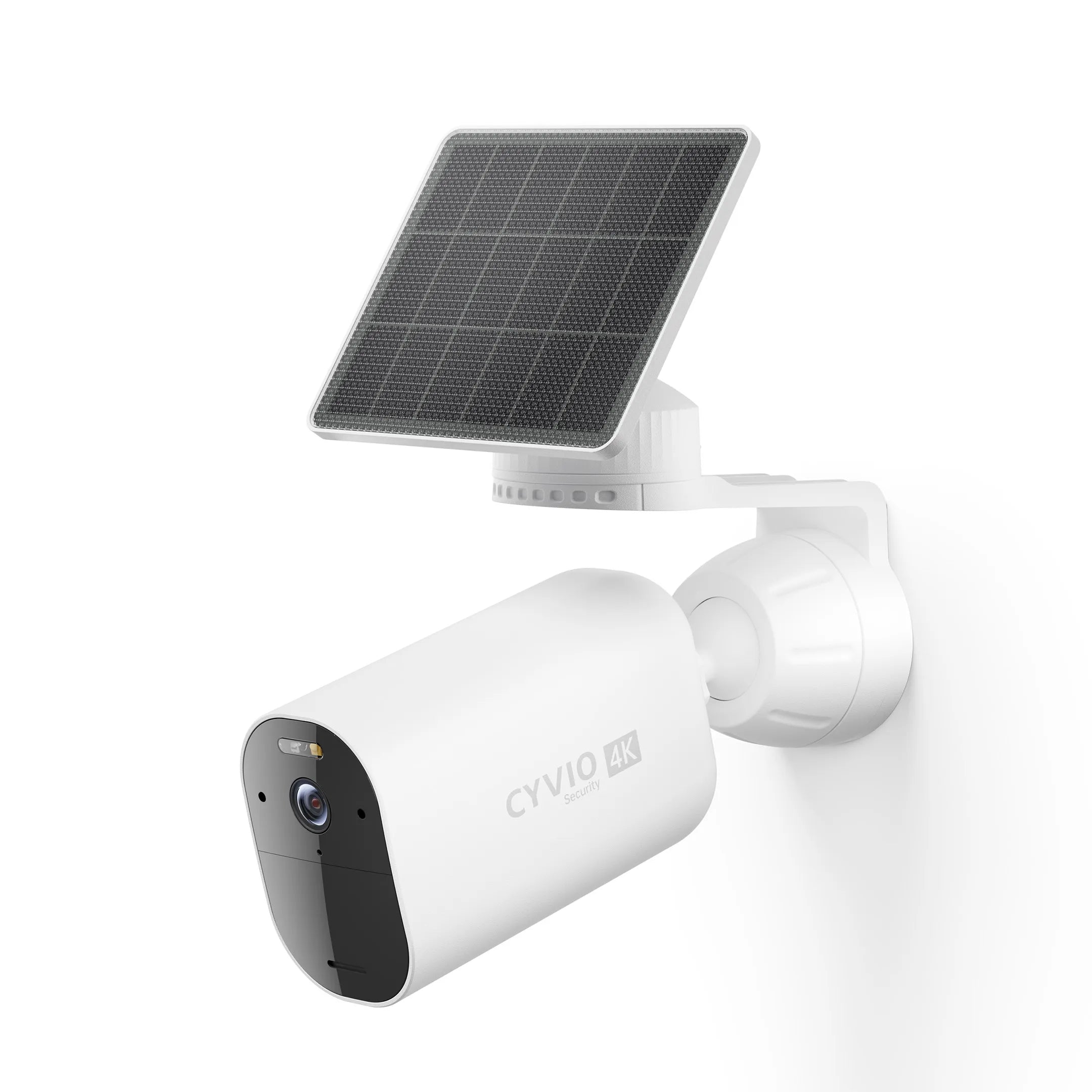
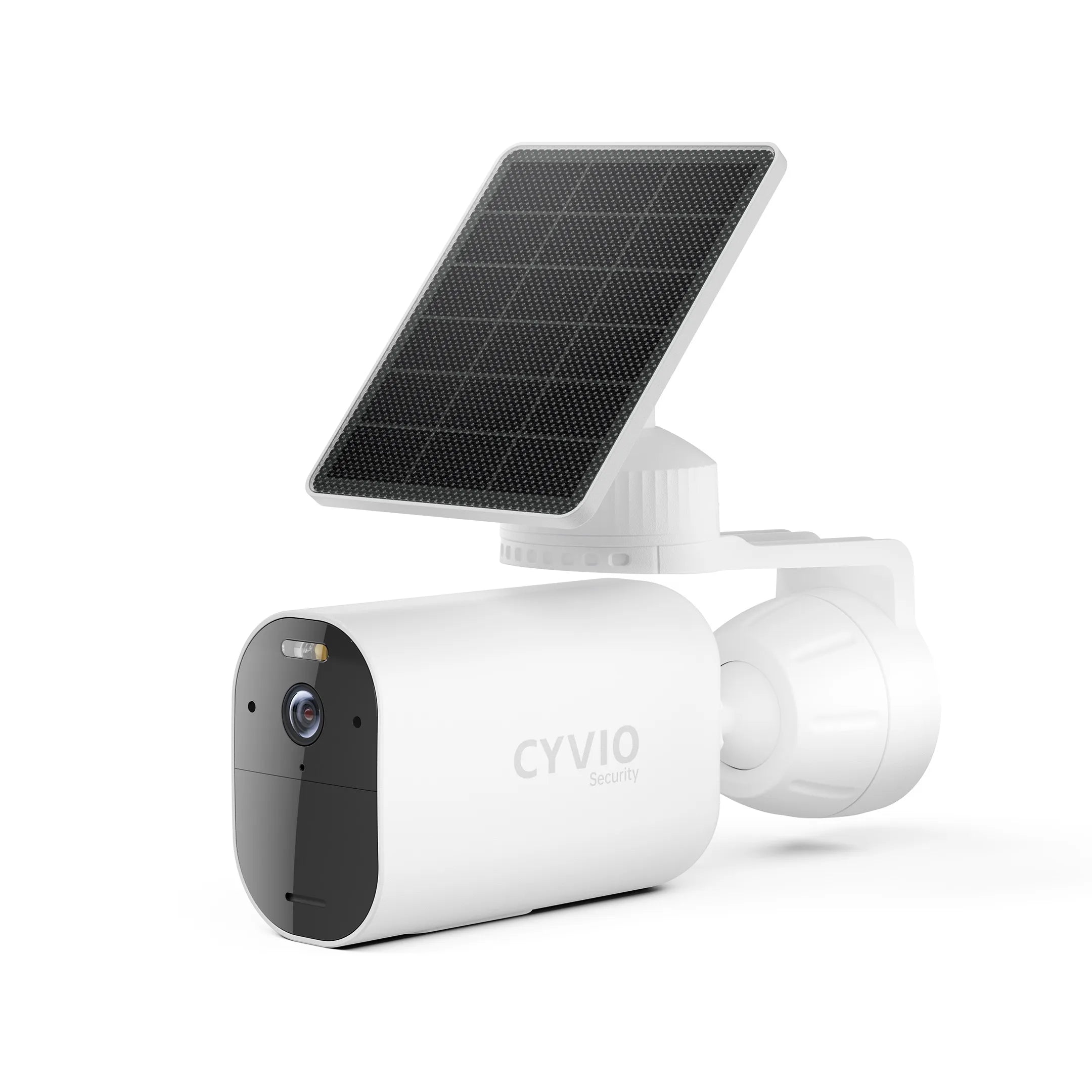
For users who decide that 4K suits their outdoor monitoring needs, CYVIO offers the N1814 4K Super Long-Range Wi-Fi Solar Camera System.
CYVIO currently lists the N1814 as a four-camera system featuring 4K video, 900MHz long-range HaLow Wi-Fi, solar charging, 11,600mAh rechargeable batteries, color night vision, and an included 64GB microSD card for local storage.
The 900MHz HaLow connection is designed for longer-range wireless communication and improved penetration compared with conventional higher-frequency Wi-Fi in challenging environments, making the system particularly relevant to properties where cameras need to be positioned farther from the central network device.
That combination can make the CYVIO N1814 worth considering for applications such as:
-
Large yards
-
Long driveways
-
Detached garages
-
Gates
-
Farms
-
Workshops
-
Small business properties
Rather than selecting 4K solely because of resolution, consider the complete system—including wireless range, power method, night viewing, storage, and camera placement.
=> Check out our wifi security camera collection!
2K vs 4K Security Camera: Which One Should You Buy?
Choose 2K if you prioritize:
-
Good detail for everyday monitoring
-
Moderate storage requirements
-
Lower network demand
-
Smaller or medium-sized monitoring areas
Choose 4K if you prioritize:
-
Higher image detail
-
More flexibility for digital zoom
-
Wider or more distant outdoor coverage
-
Larger displays or detailed playback
-
Monitoring large properties
Neither resolution is automatically the right choice for every installation. Camera position, lens, sensor, lighting, network quality, and storage can have as much impact on practical performance as the resolution number itself.
Frequently Asked Questions
1. Is 4K noticeably better than 2K for security cameras?
It can be, particularly when viewing larger scenes or digitally zooming into recorded footage. 4K UHD contains substantially more pixels than commonly used 2560 × 1440 2K security video, giving the image more source detail.
2. Is 2K enough for home security?
For many residential applications, yes. 2K can provide a useful balance between detail, bandwidth, and storage, particularly for entrances, indoor areas, garages, and medium-sized outdoor spaces.
3. Does 4K mean better facial or vehicle detail?
4K provides more pixels, which can help preserve detail when subjects occupy a smaller part of the frame. However, usable facial or vehicle detail also depends on distance, lighting, motion, lens quality, camera angle, and compression.
4. Is 4K worth it for outdoor cameras?
It can be worthwhile when monitoring wide or distant outdoor areas where digital zoom and fine detail matter. For smaller areas where people remain close to the camera, 2K may be sufficient.
5. Does 4K require a 4K monitor?
No. You can view 4K camera footage on a lower-resolution screen, although you will not see the complete native resolution at once. One benefit remains the ability to crop or zoom into higher-resolution recorded footage.
6. Which uses less storage, 2K or 4K?
2K generally requires less storage than 4K when recording settings such as frame rate, codec, and compression are comparable. Actual storage use depends on the camera's bitrate and recording configuration.
Making the Right 2K vs 4K Security Camera Choice
The decision between 2k vs 4k security camera options comes down to how much detail you need, the size of the area being monitored, and the amount of network and storage capacity available.
2K offers a strong middle ground for everyday residential monitoring, delivering more detail than 1080p while keeping data requirements relatively manageable. 4K provides substantially more pixels, making it useful for larger outdoor areas, distant subjects, and situations where digital zoom is important.
If your priority is detailed outdoor monitoring across a larger property, a 4K system such as the CYVIO N1814 combines high-resolution video with long-range 900MHz HaLow wireless connectivity, solar-powered cameras, color night vision, and local microSD storage.
The most suitable camera is not simply the one with the highest resolution—it is the one whose resolution, viewing angle, connectivity, power source, night performance, and storage setup match the area you actually need to monitor.