









CCTV and Alarm System: How They Work Together for Home Security

Home security is not just about seeing what happens around your property. It is also about detecting activity and knowing when something may need your attention. This is where a cctv and alarm system serve different but complementary purposes.
CCTV or security cameras provide visual monitoring and recorded footage, while alarm systems typically use devices such as door, window, or motion sensors to detect specific events and trigger an alert. Vivint describes cameras as devices that capture video, whereas alarm systems use interconnected sensors and alarms to detect activity and alert users or a monitoring service.
So, should you install security cameras, an alarm system, or both? The answer depends on your property, the areas you want to monitor, and how you want to respond when activity occurs. This guide explains the differences and shows how camera solutions from CYVIO can fit into a broader home security strategy.
Considering a solar-powered camera for your home? Check out: Are Solar-Powered Security Cameras Worth It?
What Is a CCTV Security Camera System?
CCTV stands for closed-circuit television. In modern home security, the term is commonly used to describe camera systems that monitor and record activity around a property.
Depending on the system, security cameras can be installed around:
-
Front entrances
-
Driveways
-
Backyards
-
Side doors
-
Garages
-
Hallways
-
Indoor rooms
-
Commercial areas
A camera system may use wired PoE connections, WiFi, rechargeable batteries, or solar-supported power depending on the product.
Its main role is visual monitoring. Cameras let you see what is happening, review recorded events, and, depending on the model, receive motion notifications or view live footage remotely.
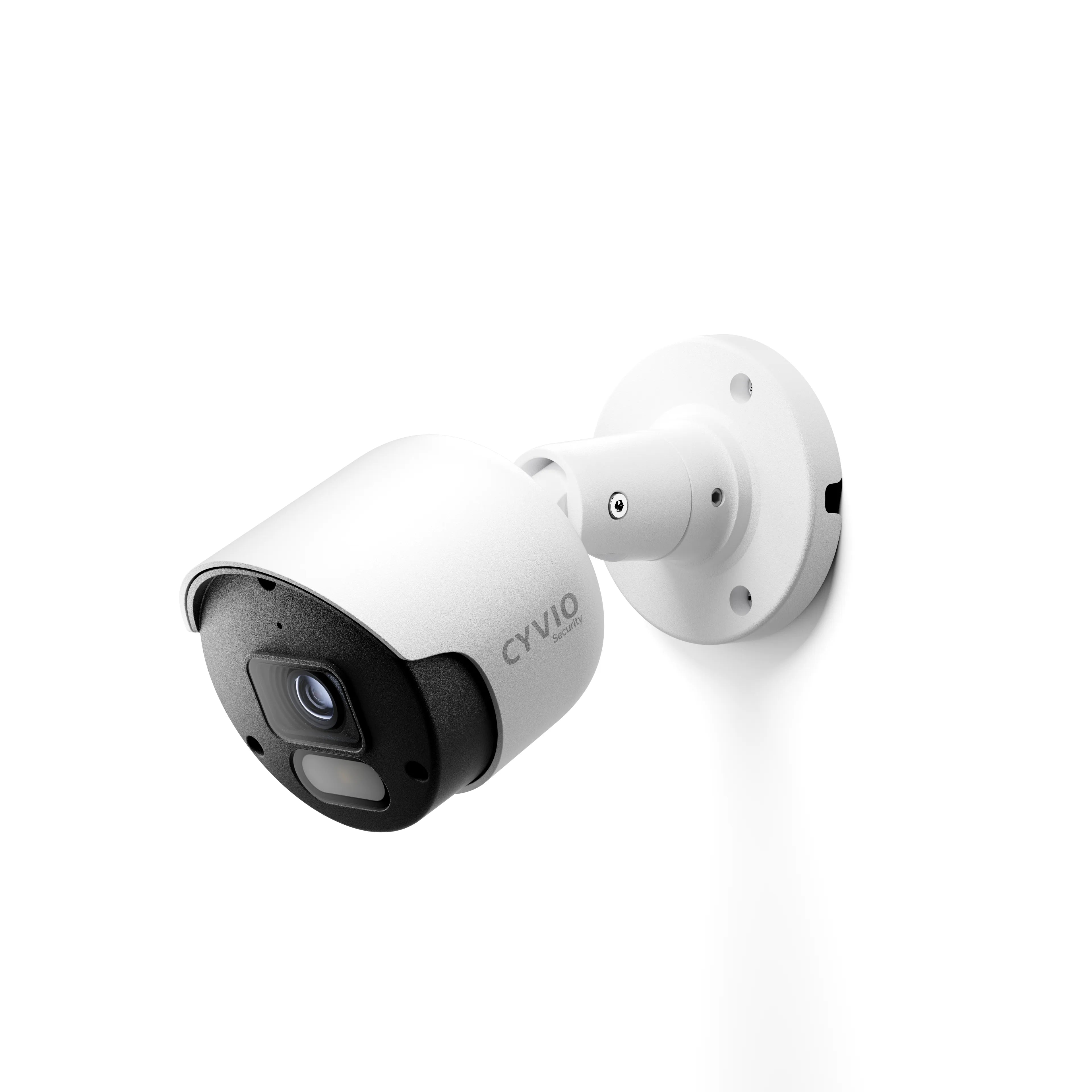
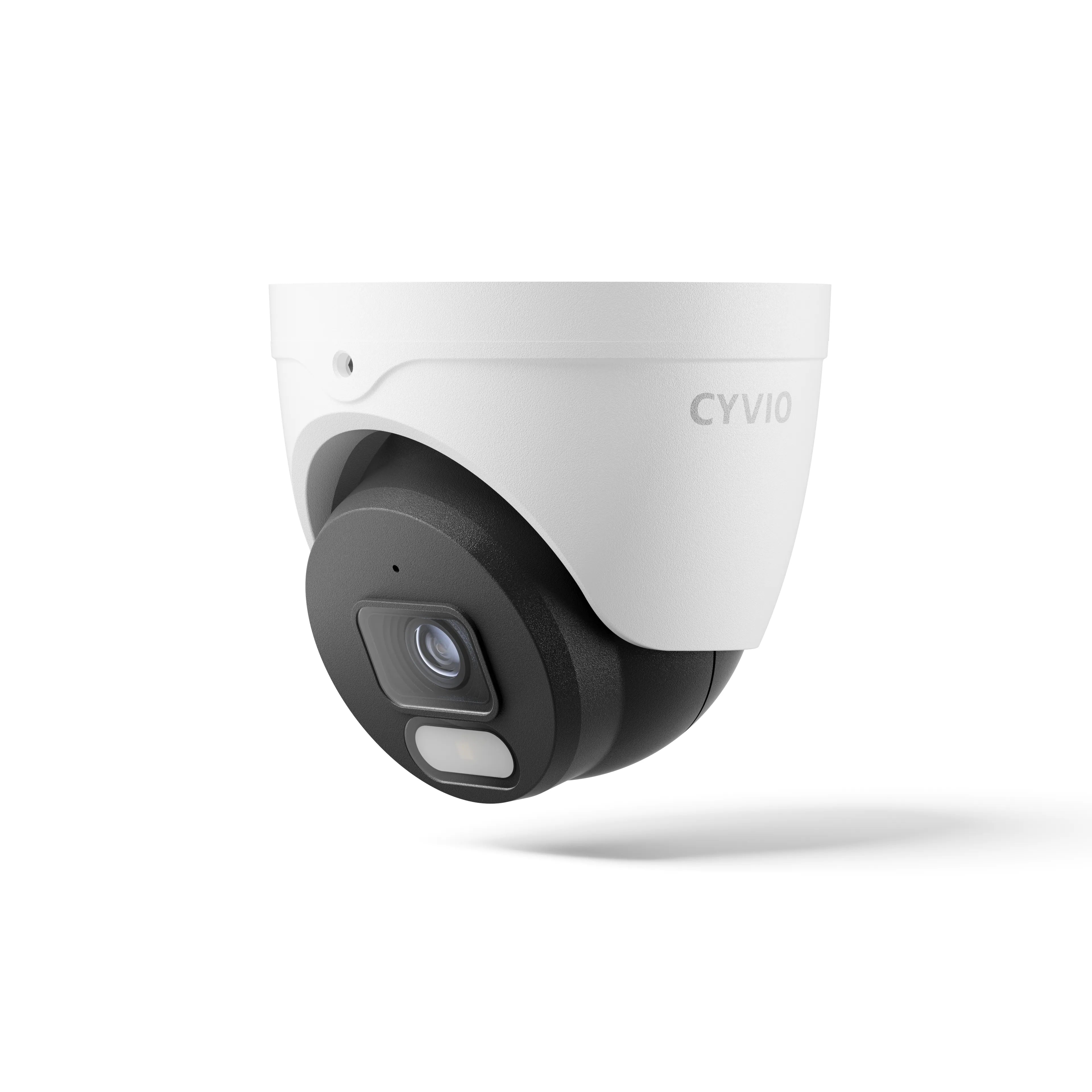
CYVIO currently offers several types of camera solutions, including PoE security systems, WiFi cameras, battery-powered cameras, solar cameras, and video doorbells.
Want to connect your camera to your phone? Read more on: How to Connect WiFi Camera to Mobile
What Is an Alarm System?
An alarm system is designed primarily to detect specific events rather than continuously provide visual coverage.
A typical home alarm setup may include:
-
Door sensors
-
Window sensors
-
Motion detectors
-
Glass-break sensors
-
Sirens
-
Keypads or control panels
-
Mobile alerts
-
Optional monitoring services
When a sensor detects a configured event while the system is armed, the system can trigger an alert or siren. Some connected systems can also notify homeowners or a monitoring provider.
Unlike CCTV, an alarm system does not necessarily show you what caused the event unless cameras are also integrated into the setup.
CCTV and Alarm System: What Is the Main Difference?
The simplest way to understand the difference is this:
Security cameras help you see and record activity. Alarm systems help detect defined events and alert you to them.
For example, an outdoor camera might capture someone walking along a driveway. A door sensor, by contrast, is designed to detect whether a monitored door changes from closed to open while the system is armed.
Because the two technologies perform different tasks, deciding between them should be based on what type of information and response you need.
CCTV cameras are mainly useful for:
-
Live viewing
-
Recorded video
-
Monitoring visitors and deliveries
-
Reviewing activity
-
Monitoring several areas visually
Alarm systems are mainly useful for:
-
Door and window status
-
Sensor-triggered alerts
-
Audible alarms
-
Detecting movement in monitored areas
-
Supporting monitored security services where available
Rather than viewing the two systems as direct substitutes, they can often be considered separate layers of a home security setup. Abode similarly distinguishes camera-focused setups from alarm systems built around hubs and sensors.
Planning a PoE camera setup? Check out this guide: Installing PoE Security Cameras
Security Camera vs Alarm System: Quick Comparison
When researching security camera vs alarm system, start with the function you need most.
Security Camera
A security camera gives you visual information. You can monitor an area, view live footage, and review recordings depending on the product and storage configuration.
It is useful when you want to answer questions such as:
-
Who is at the front door?
-
When was a package delivered?
-
What caused movement in the backyard?
-
What happened around the driveway earlier?
Alarm System
An alarm system focuses on detection and notification.
It is more useful for questions such as:
-
Was a monitored door opened?
-
Did a motion sensor activate?
-
Was a window sensor triggered?
-
Should an alarm or notification be activated?
This difference explains why the devices often work better as complementary tools rather than direct replacements.
Home Security Cameras vs Full Alarm Systems: What Do You Get?
A home security cameras vs full alarm systems comparison becomes more important when you move beyond a single camera.
A camera-focused setup may include several indoor or outdoor cameras, video recording, remote viewing, motion alerts, night vision, and local or cloud storage.
A full alarm system typically centers around a hub or control panel connected to sensors placed at doors, windows, and other points around the home. More comprehensive systems may also integrate cameras, smart locks, sirens, and professional monitoring. Abode describes modern security hubs as devices that can connect sensors, cameras, locks, lights, and alarm components into a coordinated ecosystem.
The important distinction is that adding multiple security cameras does not automatically turn a camera system into a full sensor-based alarm system.
Security Cameras vs Alarm System: Which Provides Better Visibility?
When comparing security cameras vs alarm system, cameras provide more direct visual context.
Suppose you receive a motion notification near your driveway. With a camera, you may be able to open the app and see whether the movement came from a visitor, vehicle, animal, or another source.
An alarm sensor provides different information. It can tell you that a monitored condition has changed—for example, that a door was opened—but it may not show you what caused the change unless the system is paired with a camera.
This is one reason integrated security setups can be useful: the sensor identifies an event while the camera provides visual context. Vivint similarly combines cameras with alarm components within integrated security systems.
Wondering about indoor camera laws? Read more on: Is It Illegal to Have Cameras Inside Your House?
Alarm System vs Security Camera: Which Provides Better Detection?
In an alarm system vs security camera comparison, dedicated alarm sensors can be useful when the goal is to detect specific physical events.
A door sensor is designed specifically to recognize changes in a monitored door. A glass-break detector is designed for a different trigger, while a motion sensor detects movement within its configured area.
Security cameras increasingly include their own forms of smart detection, such as motion notifications and, depending on the model, human or vehicle detection. However, camera-based detection and dedicated alarm sensors serve different roles.
For users who primarily want visual awareness, cameras may be the natural starting point. For users who want sensor-based detection at doors and windows, an alarm system provides capabilities cameras alone may not replace.
Security Cameras vs Alarm Systems: Key Differences
The security cameras vs alarm systems decision can be broken down into several practical areas.
1. Monitoring
Security cameras provide visual monitoring.
Alarm systems use sensors to monitor specific conditions or entry points.
2. Evidence and Event Review
Cameras can record video that allows users to review an event later.
Alarm systems primarily create alerts or event logs and may not provide visual footage unless cameras are integrated.
3. Notifications
Both systems can provide notifications depending on their features.
Camera alerts are commonly associated with detected visual movement or smart detection, while alarm notifications may be triggered by sensors.
4. Installation
Camera installation varies considerably. Battery-powered and WiFi cameras can offer flexible placement, while wired PoE systems require Ethernet cabling.
Alarm systems typically require sensors around selected doors, windows, and indoor areas.
5. Storage
Security cameras may require local or cloud video storage.
Traditional alarm sensors generate far less data because they do not continuously record video.
Worried about cold weather affecting your solar camera? Check out: Do Solar Security Cameras Work in Winter?
Do Security Cameras Have Alarms?
Some cameras include built-in sirens, lights, two-way audio, or motion notifications. However, this does not necessarily make them equivalent to a complete alarm system.
For example, a security camera may detect movement and send an app notification, but a full alarm system can include several dedicated sensor types connected through one central platform.
It is therefore useful to distinguish between a camera with an alarm feature and a complete alarm system.
The right choice depends on whether your priority is video monitoring, entry detection, or a combination of both.
Not sure how much sunlight your solar camera needs? Read more on: How Much Sunlight Does an Outdoor Solar Security Camera Need?
Can an Alarm System Work Without Security Cameras?
Yes. An alarm system can operate using sensors without cameras.
A basic setup might use:
-
Door sensors
-
Window sensors
-
Motion sensors
-
Siren
-
Control panel
This type of setup can detect configured events but gives the user less visual context.
If an alarm is triggered, you may know which sensor activated but not necessarily what occurred around that location.
Adding cameras can provide a visual layer that helps users understand events more clearly.
Want to know the expected lifespan of a solar camera? Read more on: How Long Do Solar Cameras Last?
Can Security Cameras Work Without an Alarm System?
Yes. Security cameras can operate independently of a dedicated alarm system.
Standalone camera systems can be useful for:
-
Checking entrances
-
Monitoring driveways
-
Viewing outdoor areas
-
Checking pets
-
Monitoring deliveries
-
Recording activity
-
Remote property viewing
This is a common approach for users whose main priority is visual monitoring rather than a sensor-based alarm network.
CYVIO's current lineup reflects this camera-focused approach, with options ranging from standalone WiFi and battery cameras to multi-camera PoE systems.
Should You Combine CCTV and an Alarm System?
For some properties, combining the two can make sense because they provide different kinds of information.
Consider a front entrance:
The alarm sensor: detects when a monitored door is opened.
The camera: shows what is happening around the entrance.
Together, those two sources can provide more context than either one alone.
Integrated systems can also simplify how users respond to alerts. Vivint, for example, offers systems where alarms and cameras are controlled through one app, illustrating how the two categories can function together.
However, a combined system is not necessary for every property. Smaller homes, apartments, or users focused mainly on remote video monitoring may decide that cameras provide the functionality they need.
CCTV and Alarm System for Different Home Areas
A useful way to design a home security setup is to choose devices based on each area instead of trying to use the same device everywhere.
Front Door
Consider:
-
Video doorbell
-
Outdoor camera
-
Door sensor
The camera gives you visual information, while a door sensor provides entry-status detection.
Driveway
A security camera is typically more relevant because it can provide a visual view of people and vehicles approaching the property.
Backyard
Outdoor cameras can help users monitor larger open spaces. Motion detection or smart notifications may also provide alerts when activity is detected.
Windows
Alarm sensors are often more directly suited to identifying whether a monitored window has been opened.
Indoor Common Areas
Indoor cameras and motion sensors can provide different forms of monitoring depending on privacy preferences and household needs.
Wired CCTV vs Wireless Cameras With Alarm Systems
Security cameras can use several connection and power methods.
Wired PoE Cameras
PoE cameras use Ethernet cables that can carry network data and electrical power. They are useful for users who want a fixed multi-camera installation.
CYVIO currently offers PoE systems such as the N2834 Lite, which is listed with 4K/8MP cameras, color night vision, an eight-channel recorder, and local microSD storage.
CYVIO also offers larger PoE configurations such as the N2838, an eight-camera 4K system with a 2TB hard drive. Its product page lists continuous recording and a wired PoE connection using one Ethernet cable for data and power to each camera.
Wireless and Battery Cameras
Wireless cameras can be easier to place where Ethernet cabling is inconvenient.
CYVIO currently offers WiFi, battery-powered camera options in addition to wired PoE systems.
The right format depends on available power, WiFi coverage, camera location, and whether you want continuous or event-based recording.
CYVIO Camera Solutions as Part of a Home Security Setup
CYVIO focuses on camera-based monitoring solutions that can cover several parts of a property.
Its current product range includes:
-
PoE security camera systems
-
WiFi security cameras
-
Battery-powered cameras
-
Solar-powered security cameras
-
Long-range wireless camera systems
-
Video doorbells
This gives homeowners flexibility when creating the CCTV portion of a broader security setup.

For example, a homeowner could use a CYVIO PoE system for continuous multi-camera monitoring around a fixed property, while another user might choose battery or solar models when running Ethernet cables is less practical.
If you already use a separate alarm system for doors, windows, or indoor sensors, cameras can add visual monitoring around the areas that matter most.
Which CYVIO Camera Type Fits Different Monitoring Needs?
Rather than selecting cameras based only on resolution, consider how each camera will be installed and used.
For Fixed Multi-Camera Monitoring
A PoE system can be useful for houses or businesses that need several cameras connected to a central recorder.
The CYVIO N2838, for example, currently combines eight 4K cameras with PoE connectivity and 2TB local recording storage.
For Flexible Outdoor Placement
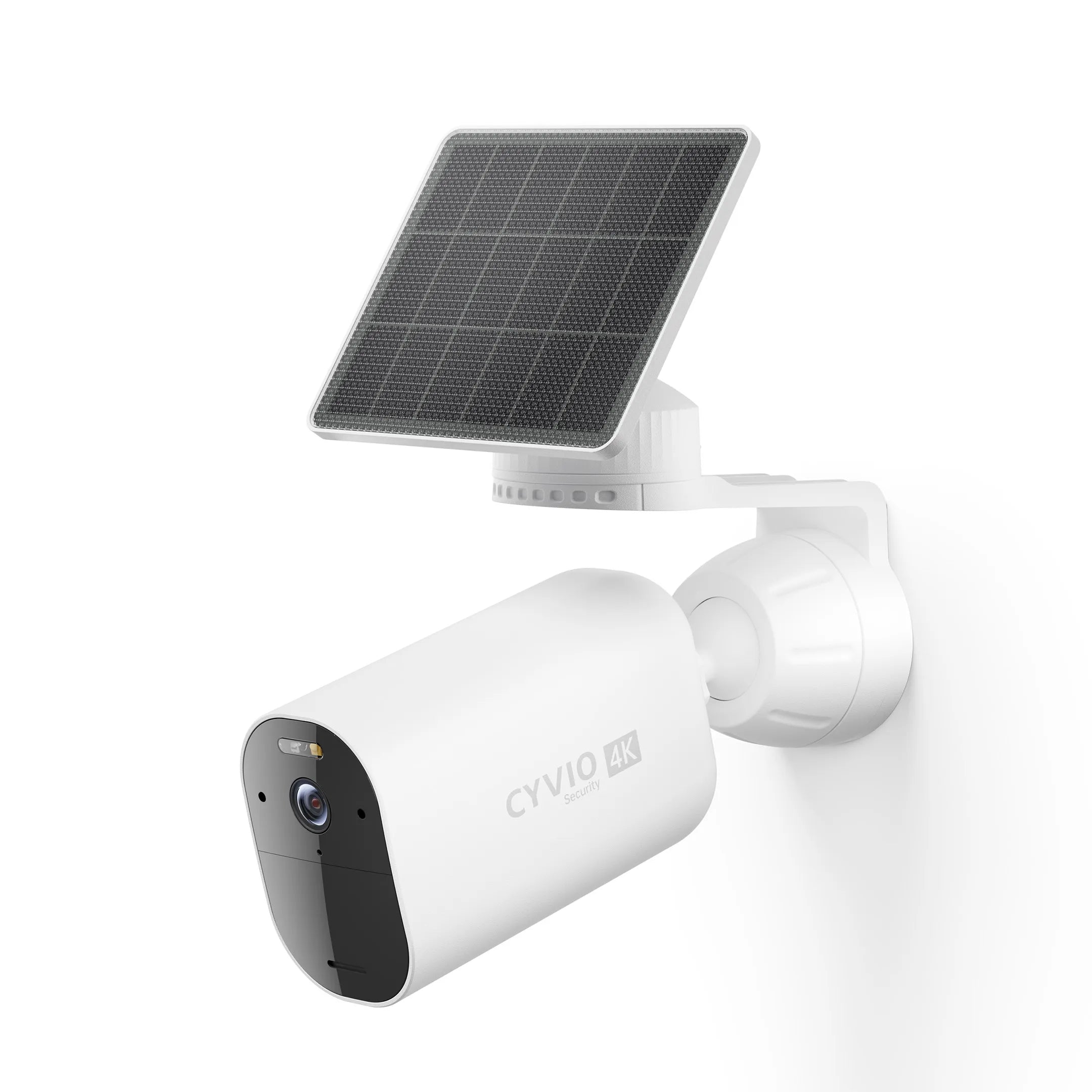
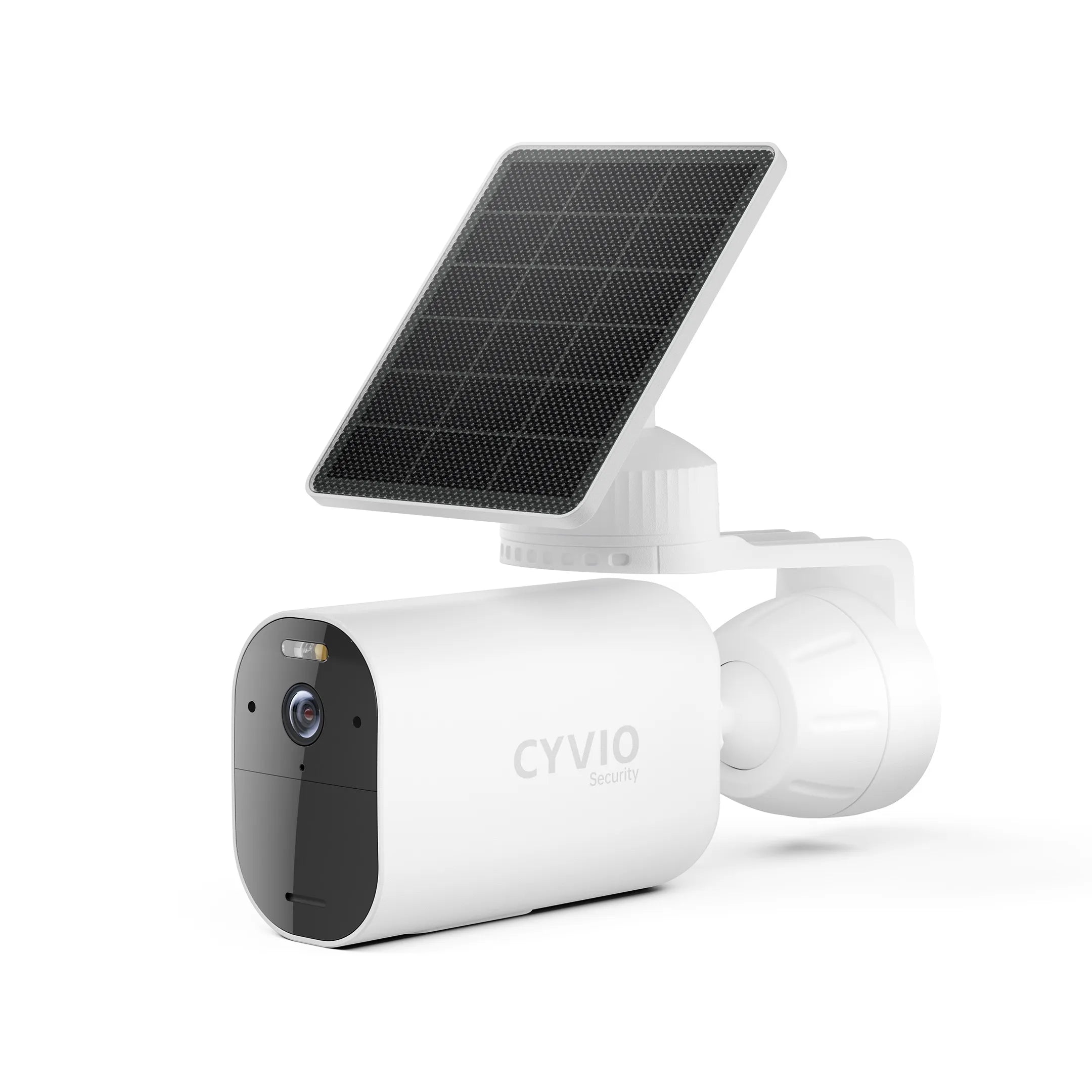
Battery and solar camera options can be helpful when a location does not have convenient power or Ethernet access.
CYVIO currently lists 4K battery and solar-powered security cameras among its camera products.
For Indoor Monitoring
WiFi cameras can suit locations such as living spaces, offices, pet areas, or other indoor environments. CYVIO's product support library currently includes its C2 WiFi security camera.
For Entrance Monitoring
A video doorbell can provide a more entrance-focused experience. CYVIO's support library currently includes its R112 Doorbell Camera alongside the company's other security camera categories.
How to Decide Whether You Need Cameras, Alarms, or Both
Before buying equipment, answer a few practical questions.
1. What Do You Want to Monitor?
If you mainly want to see driveways, yards, entrances, visitors, or deliveries, cameras may address most of your needs.
If you mainly want sensors that identify when monitored doors or windows are opened, an alarm system may be more appropriate.
2. Do You Need Recorded Video?
If reviewing previous events matters, cameras and an appropriate storage method become important.
3. Do You Need Entry Sensors?
If you want individual doors and windows to trigger alerts through dedicated sensors, look for an alarm system designed around those devices.
4. How Large Is Your Property?
Larger properties may benefit from several cameras positioned around key areas, while sensors can be concentrated around doors, windows, and selected interior spaces.
5. Do You Want Professional Monitoring?
Some alarm systems offer professional monitoring services, while camera systems may be self-monitored through an app. Professional monitoring can involve additional service fees depending on the provider.
6. How Much Maintenance Do You Want?
Battery cameras need periodic charging unless supported by suitable solar charging, while wired PoE cameras receive continuous power through their Ethernet connection.
Alarm sensors may also use batteries that require periodic maintenance.
Common CCTV and Alarm System Mistakes to Avoid
Buying Cameras Without Planning Coverage
Adding more cameras does not necessarily mean better monitoring. Camera placement should be planned around entrances, driveways, outdoor areas, and other relevant locations.
Focusing Only on Resolution
A 4K specification is useful, but field of view, night performance, power source, storage, connectivity, and installation position also matter.
Assuming Cameras and Alarms Do the Same Job
They overlap in some smart-notification functions but remain different technologies.
Ignoring Storage
If you want recorded footage, check whether the camera uses microSD, NVR, DVR, cloud storage, or another recording method.
Ignoring Network Requirements
WiFi cameras depend on suitable wireless coverage. Multi-camera high-resolution systems can also require adequate network capacity.
Forgetting Long-Term Maintenance
Cameras may need cleaning, firmware updates, battery charging, or storage management. Alarm sensors and control components also need periodic checks.
Frequently Asked Questions About CCTV and Alarm Systems
1. Is CCTV the same as an alarm system?
No. CCTV primarily provides visual surveillance and recording, while alarm systems typically use sensors to detect specific events and trigger alerts.
2. Which is better: security cameras or an alarm system?
Neither is universally better because they solve different problems. Cameras are useful for visual monitoring and recorded footage, while alarm systems are suited to sensor-based detection and alerts.
3. Do I need an alarm if I already have cameras?
It depends on what you want the system to do. If cameras provide the visual monitoring and notifications you need, you may not require a separate alarm system. If you want dedicated door, window, or other security sensors, an alarm system can add those functions.
4. Do I need cameras if I already have an alarm?
Not necessarily, but cameras can add visual information. When an event occurs, video may help you understand what happened around the monitored area.
5. Can CCTV cameras send alerts?
Many modern IP and WiFi cameras support motion notifications and other smart alerts depending on the model.
6. Can CCTV and alarm systems work together?
Yes, depending on platform compatibility. Some integrated home security platforms combine cameras, sensors, alarms, and other smart devices within one system.
7. Can I use CYVIO cameras with an alarm system?
CYVIO provides camera-focused products including PoE systems, WiFi cameras, battery cameras, solar cameras, and video doorbells. Whether a specific CYVIO model can integrate directly with a third-party alarm platform depends on the compatibility of the individual devices and software, so those specifications should be checked before purchasing.
Choosing the Right CCTV and Alarm System for Your Property
A cctv and alarm system perform different roles in home security. CCTV cameras provide visual monitoring, live viewing, and recorded footage, while alarm systems use dedicated sensors to detect configured events and provide alerts.
If your main goal is to monitor entrances, driveways, yards, indoor spaces, or other areas visually, security cameras may be the logical starting point. If you also need dedicated door, window, or motion sensors, adding an alarm system can create another layer of detection.
For users building the camera side of their setup, CYVIO currently provides options ranging from WiFi, battery, and solar cameras to video doorbells and multi-camera 4K PoE systems.
Ultimately, the right setup is not about choosing cameras against alarms. It is about determining what you need to see, detect, record, and manage, then selecting the combination of devices that matches your property and monitoring priorities.