









Can Wired Security Cameras Be Hacked? What Homeowners Should Know

Wired security cameras are often chosen for their stable connection and reduced dependence on WiFi, but does using an Ethernet cable make them immune to cyber threats? If you're wondering can wired security cameras be hacked, the short answer is that any network-connected camera can potentially be exposed if its credentials, firmware, recorder, router, or remote-access settings are poorly secured.
A wired connection can reduce certain risks associated with wireless communication, but many modern PoE and IP cameras still connect to a local network, NVR, mobile app, or internet-based remote viewing service. That means cybersecurity depends on the entire system—not simply whether the camera uses WiFi or Ethernet.
Government cybersecurity guidance supports this broader view. The UK's National Cyber Security Centre (NCSC), for example, warns that internet-connected security cameras can be accessed remotely when weak or well-known credentials are used and recommends changing default passwords, updating software, and disabling unnecessary remote viewing features.
This guide explains where wired cameras can be exposed, how that differs from WiFi cameras, signs worth investigating, and practical steps for improving the security of your CYVIO or other camera system.
Are Wired Security Cameras Completely Offline?
Not necessarily.
The word “wired” describes how the camera connects or receives power; it does not automatically mean that the system is isolated from the internet.
A modern wired security setup may include:
-
PoE cameras
-
Ethernet cables
-
An NVR
-
A router
-
A mobile application
-
Remote viewing
-
Local storage
-
Internet access
For example, a PoE camera may connect directly to an NVR with an Ethernet cable. The NVR can then connect to a router so users can access recordings or live video remotely.
Once any part of that system is reachable through a network, cybersecurity becomes relevant.
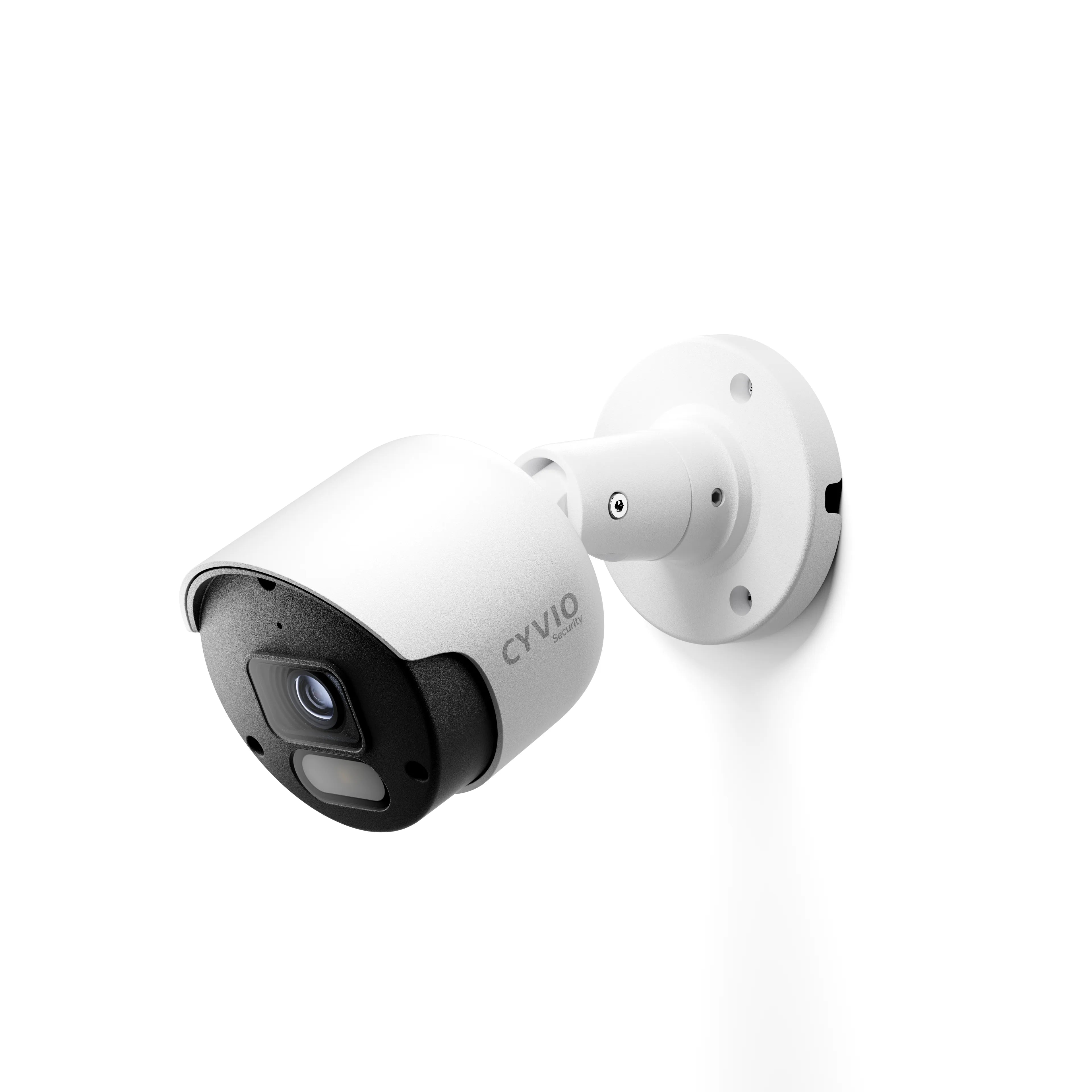
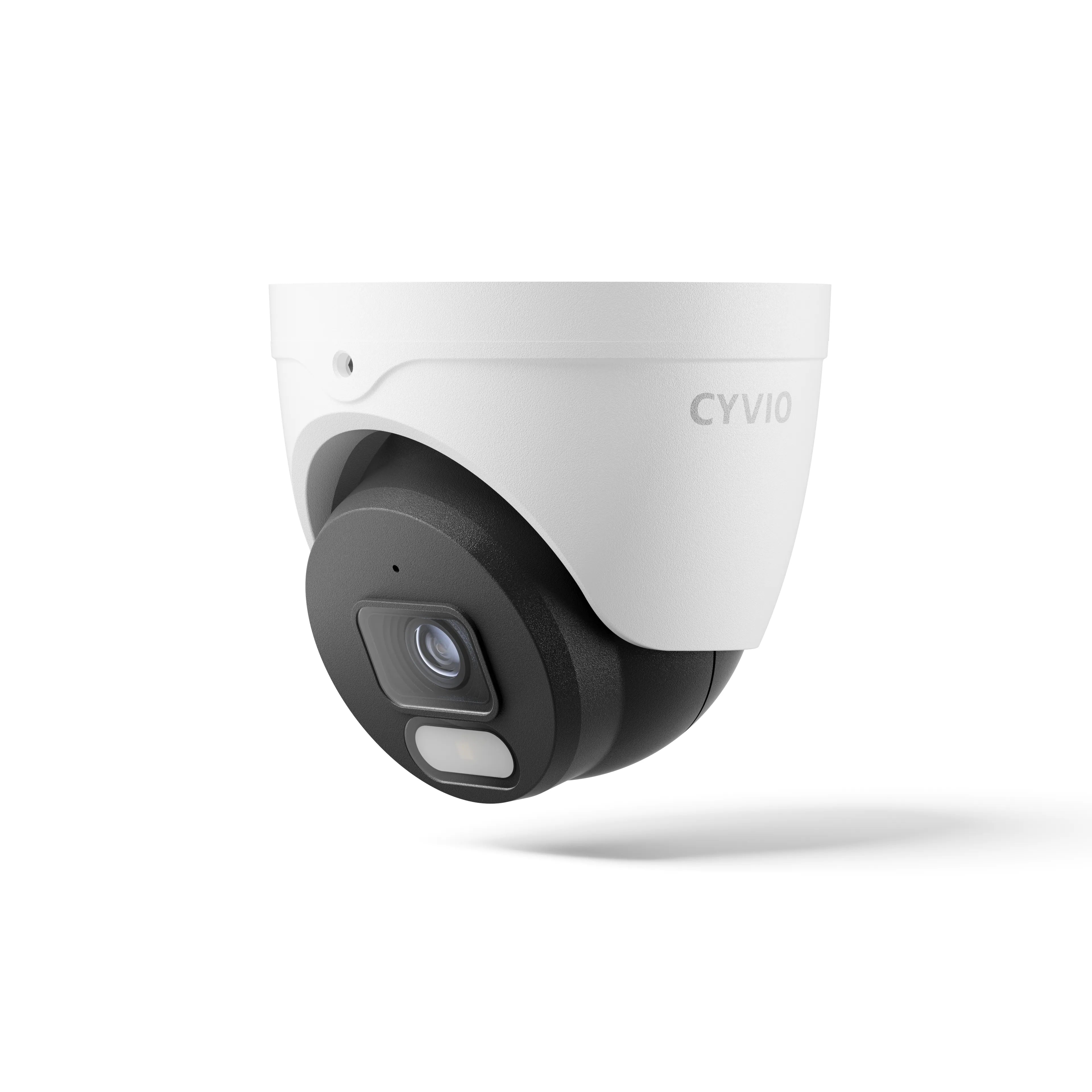
CYVIO's current PoE systems similarly use Ethernet to transmit camera data and power, while the company's support resources include networking, app access, NVR passwords, firmware, and other connected functions.
Want to understand security camera storage time? Check out: How Many Days Can a Security Camera Record?
How Can Wired Security Cameras Be Exposed?
Wired cameras generally do not face exactly the same connection risks as WiFi cameras, but several other parts of the system can create exposure.
1. Weak or Default Passwords
One of the most important risks is weak authentication.
CISA has specifically identified default credentials on devices including security cameras and other IoT equipment as a cybersecurity concern. It recommends replacing default passwords and strengthening authentication practices.
A password such as:
admin123
or one reused across multiple services makes an account easier to compromise than a unique, difficult-to-guess credential.
This is why reports involving hacked security cameras often lead back to account security, device configuration, or vulnerabilities somewhere in the connected system rather than the physical cable itself.
2. Outdated Camera or NVR Firmware
Security cameras and recorders run software just like routers, phones, and computers.
Manufacturers may release firmware updates to:
-
Fix software bugs
-
Improve compatibility
-
Correct security weaknesses
-
Improve network reliability
-
Add or modify functions
CISA has published camera-system advisories in which affected devices required firmware updates after security vulnerabilities were identified.
CYVIO's own support guidance also recommends checking for and installing current firmware when troubleshooting camera systems.
Keeping supported equipment updated therefore forms an important part of maintaining a connected surveillance system.
Learn how surveillance can improve security. Read more on: Benefits of Video Surveillance
3. An Exposed NVR or Recorder
Even if cameras are connected directly to an NVR rather than WiFi, the recorder can become an important security point.
The NVR may handle:
-
Camera connections
-
User accounts
-
Video storage
-
Remote viewing
-
Network settings
-
Device permissions
CYVIO's PoE NVR documentation, for example, shows that its recorders maintain passwords and configuration logs for functions including network settings, users, RTSP, IP filtering, recording settings, and firmware upgrades.
That means protecting the recorder is just as important as protecting individual cameras.
Want to know the expected lifespan of a solar camera? Read more on: How Long Do Solar Cameras Last?
4. Router or Home Network Security
A wired camera system frequently shares infrastructure with a home or business network.
If that network is poorly configured, connected devices may face additional exposure.
Important network considerations include:
-
Router administrator password
-
Router firmware
-
Remote administration
-
Unnecessary network services
-
Device isolation
-
Guest or IoT networks
-
Firewall configuration
CISA advises reducing unnecessary internet exposure, changing default passwords, and restricting remote access when it is not required.
Considering a solar-powered camera for your home? Check out: Are Solar-Powered Security Cameras Worth It?
5. Remote Viewing Accounts
Being able to see your cameras while away from home is convenient, but remote access creates another account or service that needs to be protected.
If someone obtains the username and password for a camera account, they may attempt to sign in without touching the camera or home network physically.
Where supported, use:
-
Unique passwords
-
Multifactor authentication
-
Account activity monitoring
-
Current applications
CISA recommends MFA as an important additional security layer for accounts and services that support it.
Wired Cameras vs WiFi Cameras: Which Has More Cyber Risk?
Wired and wireless cameras have different connection characteristics.
Wired or PoE Camera
A wired camera usually communicates through an Ethernet cable.
Potential advantages include:
-
No dependence on the camera's normal WiFi link
-
Stable data connection
-
Centralized NVR management
-
Easier separation into dedicated networks in more advanced setups
However, connecting the recorder or camera network to the internet can still introduce remote-access risks.
WiFi Camera
A WiFi camera communicates wirelessly with the router or another wireless hub.
This adds the wireless network itself as another component that should be secured.
The practical takeaway is that neither connection method eliminates cybersecurity considerations. Strong configuration matters for both.
Not sure how much sunlight your solar camera needs? Read more on: How Much Sunlight Does an Outdoor Solar Security Camera Need?
How to Protect WiFi Camera From Hackers
Although this article focuses on wired systems, many homes use both wired and wireless cameras. If you're researching how to protect wifi camera from hackers, several of the same security principles apply.
Start with:
-
A unique camera account password
-
A strong WiFi password
-
Current router firmware
-
Current camera firmware
-
Multifactor authentication where offered
-
Disabled features you do not use
-
A trusted home network
The NCSC specifically recommends changing default camera passwords, keeping camera software updated, and disabling remote viewing when it is not needed.
These practices cannot eliminate every possible risk, but they can substantially reduce common forms of avoidable exposure.
Security Cameras Hacking: Common Risk Factors
When people search for security cameras hacking, it is important to separate realistic cybersecurity risks from the idea that cameras can simply be accessed instantly.
Successful unauthorized access normally requires some weakness or access path.
Common risk factors can include:
-
Default credentials
-
Weak passwords
-
Reused passwords
-
Outdated firmware
-
Exposed network services
-
Poor router configuration
-
Compromised online accounts
-
Unsupported equipment
-
Excessive remote-access permissions
CISA and the NCSC both emphasize password management, firmware maintenance, and reducing unnecessary exposure for internet-connected devices.
Does Using PoE Make a Security Camera Safer?
PoE stands for Power over Ethernet. It allows one Ethernet cable to carry both power and network data between compatible equipment.
Using PoE removes the need for the camera itself to rely on a normal household WiFi connection, but PoE is primarily a power and networking technology, not a cybersecurity guarantee.
A PoE system still needs appropriate security around:
-
Camera credentials
-
NVR credentials
-
User accounts
-
Router configuration
-
Firmware
-
Remote viewing
-
Network permissions
CYVIO's N2838, for example, uses wired PoE connectivity in which each camera receives data and power through Ethernet.
This provides a stable wired connection, but users should still follow good network and credential practices.
Local Recording vs Cloud Recording: Does It Matter?
Storage location can change how a camera system communicates.
Local Recording
Footage may be stored on:
-
An NVR hard drive
-
A microSD card
-
Another local storage device
Local recording can reduce dependence on cloud storage, but the recorder and network still need appropriate protection if remote access is enabled.
For example, CYVIO's N2834 is currently offered with local NVR storage and does not require cloud storage or a monthly subscription for its standard local recording setup.
Cloud Recording
Cloud-connected cameras send or synchronize footage through internet-based services.
This makes account security especially important because cloud access commonly depends on online credentials.
Neither storage method should be treated as automatically secure or insecure. The configuration of the full system matters.
Signs Your Security Camera May Need Investigation
A single unusual behavior does not prove that a security camera hacked incident has occurred. Camera problems can also result from network issues, firmware bugs, power interruptions, hardware faults, or incorrect settings.
However, investigate unexpected changes such as:
-
A password suddenly no longer working
-
Unknown user accounts
-
Settings changing without your action
-
Unexpected remote-login notifications
-
Unexplained camera movement on a PTZ model
-
Unrecognized changes to recording schedules
-
Unexpected network configuration changes
-
Camera activity at unusual times
-
Unfamiliar devices or sessions in account history, when available
CYVIO PoE recorders maintain logs covering activities such as settings changes, user configuration, network changes, recording changes, firmware upgrades, and other system events, which can be useful when reviewing unexpected behavior.
Do not assume that every offline camera or unexplained reboot is evidence of unauthorized access. Check ordinary connectivity and firmware problems as well.
What Should You Do if You Suspect Unauthorized Access?
If you believe someone may have accessed your camera system without permission, focus first on containing access and securing your accounts.
A practical response can include:
-
Change camera, NVR, and account passwords.
-
Change any reused passwords on other accounts.
-
Review connected users and remove unfamiliar accounts.
-
Install current supported firmware.
-
Review remote-access settings.
-
Check router settings and connected devices.
-
Enable MFA where supported.
-
Review system logs when available.
-
Contact the camera manufacturer if unusual activity continues.
CISA recommends changing default credentials, reducing internet exposure, applying security updates, and using stronger authentication as part of broader connected-device protection.
If the camera monitors sensitive indoor areas, temporarily disconnecting the affected device from network access while you investigate may also be appropriate.
How to Secure a Wired Security Camera System
You do not need advanced cybersecurity knowledge to improve the basic security of a home surveillance system.
1. Replace Default Credentials
Do this during initial setup rather than postponing it.
Use a password that is:
-
Unique to the camera system
-
Difficult to guess
-
Not reused for email, banking, or social media
-
Stored in a reputable password manager if needed
CISA repeatedly recommends eliminating reliance on default device passwords.
2. Secure the NVR Separately
Do not treat the recorder as a passive storage box.
If it has its own administrator password, use a strong unique credential.
CYVIO's NVR interface supports password-protected access and logs system configuration activity, reinforcing the recorder's role as a central control point in a PoE system.
3. Keep Firmware Current
Check periodically for updates from the camera manufacturer.
Avoid downloading firmware from unofficial sources.
If a product has reached end-of-support and no longer receives security updates, consider whether continued internet connectivity is appropriate. CISA recommends tracking product end-of-life information and upgrading unsupported network equipment when needed.
4. Disable Functions You Don't Use
If you do not need:
-
Remote access
-
UPnP
-
Third-party integrations
-
External streaming
-
Unused protocols
consider disabling them where the product allows it.
Reducing unnecessary interfaces and internet exposure can reduce the number of potential access paths. NCSC guidance similarly recommends constraining unused interfaces on connected devices.
5. Protect Your Router
The security of connected cameras is partly dependent on the network around them.
Use:
-
A strong router administrator password
-
Current router firmware
-
Modern WiFi security for any wireless devices
-
A separate guest or IoT network where appropriate and supported
For more advanced installations, network segmentation can help separate camera equipment from laptops, phones, and other devices.
6. Enable MFA Where Available
A strong password is important, but multifactor authentication adds another layer when supported by the service.
CISA recommends MFA because password-only authentication can remain vulnerable if credentials are stolen or reused.
7. Review Users and Logs
Periodically check who has access to your camera system.
Remove:
-
Old user accounts
-
Former household members
-
Contractors who no longer need access
-
Unrecognized users
If the system provides activity logs, review them when unexpected behavior occurs.
Hackers Security Cameras: Can Someone Access Footage Remotely?
Searches for hackers security cameras often reflect concern about someone remotely viewing private footage.
Remote access can become possible when a connected device or account is exposed through weaknesses such as compromised credentials, vulnerable software, or poorly configured internet-facing services. NCSC warns specifically that cybercriminals can use known/default passwords and other techniques to gain remote access to internet-connected cameras.
This does not mean every internet-connected camera is easily accessible. It means users should treat cameras like other connected devices and apply appropriate account and network security practices.
Hacking Surveillance Cameras: Why the Whole System Matters
Discussions about hacking surveillance cameras sometimes focus entirely on the individual camera, but a modern surveillance setup has several components.
Think of it as a chain:
Camera → NVR or hub → router → internet service → app/account
A weakness at any connected point may affect the security of the overall setup.
For example, a camera could have a strong password, while the recorder uses outdated firmware. Or the recorder may be secure while the remote-viewing account uses a reused password.
A more useful security strategy is therefore to protect the complete ecosystem.
What Does “Hacking a Security Camera” Actually Mean?
The phrase hacking a security camera can describe several different types of unauthorized activity, including accessing live video, changing configuration settings, obtaining account access, or exploiting vulnerable network-connected equipment.
From a homeowner's perspective, the technical method matters less than reducing the available opportunities for unauthorized access.
That means focusing on:
-
Strong credentials
-
Current software
-
Secure network configuration
-
Limited remote exposure
-
Controlled user access
-
Trusted devices and applications
These measures are consistent with cybersecurity guidance from CISA and the NCSC for networked and IoT devices.
Are Wired Cameras More Secure Than Wireless Cameras?
Wired cameras can reduce dependence on wireless communication between the camera and local network equipment, which removes one category of wireless connection considerations.
However, it would be misleading to call wired cameras inherently immune to unauthorized access.
A better comparison is:
Wired cameras can reduce:
-
Reliance on WiFi coverage
-
Exposure associated specifically with the camera's normal wireless link
-
Wireless interference
Wired cameras still require protection for:
-
Passwords
-
Firmware
-
NVRs
-
Routers
-
User accounts
-
Remote access
-
Network configuration
So, security comes from the architecture and configuration of the entire system—not the cable alone.
CYVIO PoE Security Camera Systems and Network Security
For homeowners who prefer a wired setup, CYVIO currently offers several PoE security camera systems.
For example, the CYVIO N2834 Lite includes four 4K cameras and an eight-channel recorder, while the N2838 uses eight 4K cameras connected through PoE. Both use Ethernet-based camera connections rather than relying on a standard WiFi link for each camera.
CYVIO also provides support documentation for:
-
Device passwords
-
NVR settings
-
Firmware updates
-
System logs
-
Network configuration
-
Camera software and applications
Users should still apply the same basic cybersecurity principles discussed above: configure unique credentials, maintain supported firmware, review access permissions, and secure the network equipment connected to the NVR.
A wired PoE architecture can provide reliable camera connectivity, but good cybersecurity remains an ongoing configuration and maintenance task.
Wired vs Wireless Security Camera Security: What Should You Choose?
Cybersecurity should be one factor in your buying decision, but not the only one.
Choose a wired PoE system when you prioritize:
-
Stable connections
-
Fixed camera installation
-
Centralized recording
-
Multi-camera coverage
-
Reduced dependence on WiFi at each camera
Choose wireless cameras when you prioritize:
-
Flexible placement
-
Simpler installation
-
Locations where Ethernet cabling is difficult
-
Easier repositioning
Whichever type you choose, prioritize products from vendors that provide ongoing support, firmware updates, account-security controls, and clear documentation.
Security Camera Cybersecurity Checklist
Before considering your installation complete, review the following:
-
Change all default passwords.
-
Use unique passwords for camera and online accounts.
-
Keep camera and NVR firmware updated.
-
Keep your router updated.
-
Enable MFA where supported.
-
Disable unused remote-access features.
-
Remove old or unfamiliar user accounts.
-
Use only official applications and firmware.
-
Review system logs when something looks unusual.
-
Keep sensitive indoor cameras positioned thoughtfully.
-
Check whether older devices still receive vendor support.
These measures align with guidance from cybersecurity authorities for reducing risk on internet-connected devices.
Frequently Asked Questions
1. Can a wired camera be hacked without WiFi?
A camera does not need WiFi to face cybersecurity risks. If a wired IP camera or its NVR connects to a network or internet-accessible service, vulnerabilities, credentials, or configuration can still matter.
A fully isolated local system has a different exposure profile, but physical access and local network security should still be considered.
2. Are PoE cameras safer than WiFi cameras?
PoE cameras avoid the standard wireless connection between the camera and router or recorder, but PoE itself does not make a system immune to unauthorized access. Passwords, firmware, network settings, recorders, and remote-access accounts still require protection.
3. Can someone watch my security camera remotely?
Remote unauthorized viewing may be possible if credentials or connected systems become compromised. NCSC guidance specifically identifies weak or known camera passwords as a route criminals may use to access internet-connected camera footage remotely.
4. Should I change my security camera password?
Yes. Replace manufacturer defaults and use a unique password that you do not reuse elsewhere. CISA identifies default credentials on cameras and other IoT devices as a significant security weakness.
5. How often should security camera firmware be updated?
Rather than following an arbitrary fixed schedule, periodically check the manufacturer's support channel and install supported security and firmware updates when appropriate. CYVIO, for example, directs users to its app and support resources for current firmware.
6. Does local storage make a camera immune to hacking?
No. Local storage changes where recordings are stored, but network-connected cameras and NVRs can still have accounts, firmware, services, and remote-access settings that require protection.
7. Is an offline wired CCTV system more secure?
A truly isolated system with no internet or external network access has fewer remote attack paths. However, it is still important to control physical access, local credentials, maintenance devices, and any network interfaces that remain enabled.
Can Wired Security Cameras Be Hacked?
So, can wired security cameras be hacked? Wired cameras are not automatically immune to cybersecurity threats. While Ethernet or PoE removes reliance on a normal WiFi connection at the camera, modern systems may still connect through an NVR, router, app, or remote-access service.
The most common areas to protect are therefore not just the camera cable but the entire system: passwords, firmware, NVR access, router configuration, remote viewing, and user accounts. Cybersecurity authorities such as CISA and the NCSC consistently recommend changing default credentials, maintaining software updates, limiting unnecessary internet exposure, and using stronger authentication where available.
For users who prefer a stable wired setup, CYVIO offers PoE camera systems such as the N2834 Lite and N2838, which connect cameras through Ethernet and provide centralized local recording options.
The practical goal is not to look for a camera described as impossible to compromise. Instead, choose supported equipment, configure it carefully, maintain it over time, and limit access to the people and services that actually need it.