









Benefits of Video Surveillance: Why Security Cameras Matter for Homes and Businesses

Security cameras have evolved from simple recording devices into monitoring systems that can provide live video, event alerts, searchable recordings, night vision, and remote access. For homeowners and businesses, understanding the benefits of video surveillance can make it easier to decide where cameras are useful, what features matter, and how video should fit into a broader security plan.
A well-designed surveillance system can help users see what is happening around a property, review events after they occur, verify alerts, monitor entrances, and maintain a visual record of important activity. Modern systems may also offer person or vehicle detection, local video storage, two-way audio, and remote viewing.
However, cameras should not be treated as a standalone solution that eliminates every security risk. Their effectiveness depends on camera placement, image quality, lighting, recording coverage, storage, network reliability, and how the system is configured.
This guide explores the major advantages of video surveillance for homes and businesses, explains what security cameras can realistically do, and looks at the features to consider when choosing a system.
What Is Video Surveillance?
Video surveillance is the use of one or more cameras to observe and record activity within a defined area.
Depending on the system, cameras may monitor:
-
Front doors
-
Driveways
-
Backyards
-
Garages
-
Building entrances
-
Offices
-
Warehouses
-
Parking areas
-
Retail spaces
-
Farms
-
Detached buildings
-
Indoor common areas
Video may be viewed live or stored for later playback.
Traditional systems often relied on cameras connected to a central recorder. Modern surveillance can also include PoE cameras, Wi-Fi cameras, battery-powered cameras, solar cameras, video doorbells, and systems that combine local storage with mobile applications.
The goal is not simply to record as much footage as possible. A useful surveillance system should provide relevant visual information when users need to understand what happened at a particular place and time.
Read more on: Where to Place Security Cameras
Why Are Surveillance Cameras Important?
If you are asking why are surveillance cameras important, one of the clearest answers is visibility.
Without a camera, many events happen without a visual record. A homeowner may hear a noise outside without knowing what caused it. A business owner may receive an alarm but have limited information about what is occurring. A delivery may be reported as completed without anyone being present to confirm when it arrived.
Video adds visual context.
Surveillance footage can help users answer questions such as:
-
Who approached an entrance?
-
When did an event occur?
-
Which direction did someone or something travel?
-
Was a package delivered?
-
What triggered a motion alert?
-
Did a vehicle enter the property?
-
What happened immediately before an incident?
-
Was an area accessible at a specific time?
This ability to observe, verify, and review events is at the center of many video surveillance benefits.
Check out this guide to learn more: What to Look for in a Home Security Camera
1. Remote Visibility Into Your Property
One of the most practical benefits of surveillance cameras is the ability to see what is happening without being physically present.
A connected camera system can allow users to check an area from a smartphone, tablet, or computer when remote viewing is supported.
For homeowners, that might mean checking:
-
A front entrance while at work
-
A driveway while traveling
-
A garage at night
-
A backyard after receiving an alert
Businesses can use the same concept to review:
-
Entrances
-
Loading areas
-
Storage rooms
-
Offices
-
Parking areas
-
Remote facilities
Remote access does not replace on-site security procedures, but it gives users another source of information when they are away.
Modern camera systems may also combine live video with notifications, allowing users to open the relevant camera view after an event is detected.
2. A Visual Record of Important Events
Surveillance systems can create a time-stamped visual record of activity.
This becomes particularly useful when an event needs to be reconstructed later.
Recorded footage may help determine:
-
When someone entered an area
-
How long they remained there
-
What happened before an event
-
Which objects or vehicles were present
-
Whether two events occurred at the same time
-
How an operational problem developed
Video surveillance is widely used for incident investigation because recorded images can provide information that may not be available from memory or written reports alone.
Footage quality matters, however.
A recording is more useful when the camera provides an appropriate field of view, sufficient resolution, suitable lighting, and a clear view of the relevant area.
Simply installing a camera does not mean every detail will be visible.
Want to understand the technology behind surveillance? Read more on: How Do Security Cameras Work?
3. Faster Verification of Alerts and Unusual Activity
Sensors and notifications tell you that something happened.
Video can help show what happened.
For example, a motion alert near a driveway might have been triggered by:
-
A person
-
A vehicle
-
An animal
-
Moving vegetation
-
A delivery
-
Another routine event
Being able to visually check an alert can help users decide whether further attention is necessary.
For businesses, video may also support alarm verification or operational review by providing a visual overview of the affected area. Surveillance systems are commonly used to supplement alerts with real-time visual information.
Systems with person or vehicle detection can further help categorize certain types of activity, although detection accuracy depends on the camera, environment, settings, and visibility.
Not sure how many cameras your home needs? Check out: How Many Security Cameras Do I Need?
4. Visible Cameras May Discourage Some Unwanted Behavior
The presence of a visible camera can influence how people behave when they know an area may be recorded.
This is one reason surveillance cameras are frequently installed near:
-
Entrances
-
Driveways
-
Gates
-
Parking spaces
-
Retail entrances
-
Storage areas
-
Reception points
However, surveillance should not be described as something that can eliminate theft, trespassing, vandalism, or other unwanted activity.
A camera is better understood as one layer within a broader approach that may also include:
-
Good lighting
-
Appropriate locks
-
Access control
-
Gates
-
Alarms
-
Physical barriers
-
Clear property procedures
Visible surveillance can contribute to awareness that activity may be documented, but users should avoid relying on cameras as their only security measure.
5. Monitoring Entrances and Exits
Entrances are some of the most valuable locations for surveillance because they are natural points of movement.
A camera positioned around a front door, gate, lobby, loading entrance, or driveway can provide information about who or what passes through the area.
For residential properties, entrance monitoring may help users see:
-
Visitors
-
Deliveries
-
Vehicles
-
Service personnel
-
Unexpected activity
For businesses, cameras can supplement access-control procedures by providing a visual record of entry and exit activity. Surveillance is commonly used alongside access-control systems for this purpose.
Placement is particularly important.
A camera installed too high may capture the top of a person's head instead of useful facial detail, while one aimed directly toward bright sunlight may produce difficult exposure conditions.
6. Reviewing Deliveries and Packages
Online shopping and home delivery have made entryway monitoring increasingly useful.
A camera near a front door or driveway can help document:
-
When a package arrived
-
Where it was placed
-
Which delivery vehicle arrived
-
Whether someone approached the package afterward

For businesses, the same concept can apply to loading docks and delivery entrances.
Video does not guarantee that every package-related issue can be resolved, but it can provide useful context when delivery records and actual events need to be compared.
A video doorbell or outdoor camera can be particularly suitable for this type of monitoring because its field of view can be centered around a primary entrance.
Keep your security system working reliably. Check out: Security Camera Maintenance
7. Checking a Home While You Are Away
Another aspect of the importance of surveillance cameras is the ability to maintain visual awareness while away from home.
A camera system can help users check whether:
-
A garage door appears closed
-
A delivery arrived
-
Someone approached an entrance
-
A pet entered a monitored room
-
Weather affected an outdoor area
-
A service provider arrived as scheduled
Indoor cameras may also be used for general household monitoring where appropriate and with consideration for the privacy of people in the home.
The goal is not constant observation.
Instead, cameras provide an option to check specific areas when there is a reason to do so.
8. Monitoring Larger Outdoor Areas
Video surveillance can also be useful on properties where important areas are located far from the main building.
Examples include:
-
Farms
-
Large yards
-
Workshops
-
Detached garages
-
Barns
-
Storage buildings
-
Long driveways
-
Gates
These installations introduce additional challenges.
Power may not be available near the camera, and standard Wi-Fi coverage may not reach every location.
Battery and solar cameras can reduce dependence on nearby electrical outlets, while longer-range wireless systems may be useful when cameras need to communicate across larger properties.
This is one area where choosing the correct camera architecture becomes just as important as choosing resolution.
9. Supporting Business Operations
Surveillance cameras are not limited to incident review.
Businesses can also use video to understand routine operational activity.
For example, cameras may help managers review:
-
Loading and unloading processes
-
Customer traffic patterns
-
Entry and exit procedures
-
Deliveries
-
Equipment areas
-
Parking activity
-
Workflow around a facility
Video surveillance is used in commercial and infrastructure settings for operational oversight as well as security monitoring.
This information may help teams determine whether procedures are being followed or identify areas that deserve closer review.
However, workplace surveillance must be implemented in accordance with applicable privacy, employment, and data-protection requirements.
10. Supporting Incident Investigation
When something unexpected occurs, people may remember events differently.
Recorded footage offers another source of information.
For example, if equipment is damaged in a warehouse, video might help determine:
-
When the damage occurred
-
What happened beforehand
-
Which area was involved
-
Whether a vehicle or piece of equipment was nearby
Similarly, homeowners may use footage to understand property damage, unusual activity, or disputes involving deliveries.
Surveillance footage is commonly valued for incident investigation because it can preserve visual evidence for later review.
The usefulness of that evidence depends on the recording quality and whether relevant footage has been retained.
11. Monitoring Day and Night
A surveillance system becomes more useful when it can capture relevant activity outside normal daylight hours.
Security cameras may use different technologies for nighttime monitoring.
Infrared Night Vision
Infrared LEDs illuminate an area using wavelengths detected by the camera sensor.
The resulting footage is commonly shown in black and white.
Color Night Vision
Color night vision may use a sensitive image sensor, supplemental lighting, a spotlight, or a combination of these technologies.
It can retain additional visual information such as object or clothing color when conditions allow.
When comparing cameras, look beyond the phrase “night vision.”
Consider:
-
Night vision range
-
Infrared illumination
-
Color night vision availability
-
Nearby lighting
-
Camera placement
-
Resolution
-
Lens field of view
A high-resolution camera cannot capture useful detail if the monitored subject is outside its effective nighttime viewing range.
12. Person and Vehicle Detection Can Make Alerts More Useful
Basic motion detection responds to changes within the camera's view.
Unfortunately, not all movement is relevant.
Possible triggers include:
-
Trees moving
-
Shadows
-
Pets
-
Insects
-
Rain
-
Passing vehicles
-
People
Some modern surveillance systems can distinguish certain categories such as people or vehicles.
This can make alerts easier to prioritize.
For example, a homeowner may care more about a person entering a driveway than tree branches moving in the wind.
Detection technology should still be treated as an aid rather than an infallible classification system. Performance can vary with lighting, viewing distance, weather, camera angle, and environmental conditions.
13. Local Recording Can Provide More Control Over Footage
Storage architecture is another important part of video surveillance.
Depending on the system, footage might be stored on:
-
microSD cards
-
NVRs
-
Internal hard drives
-
Network storage
-
Cloud platforms
Local storage can be attractive to users who want recordings retained on equipment under their direct control.
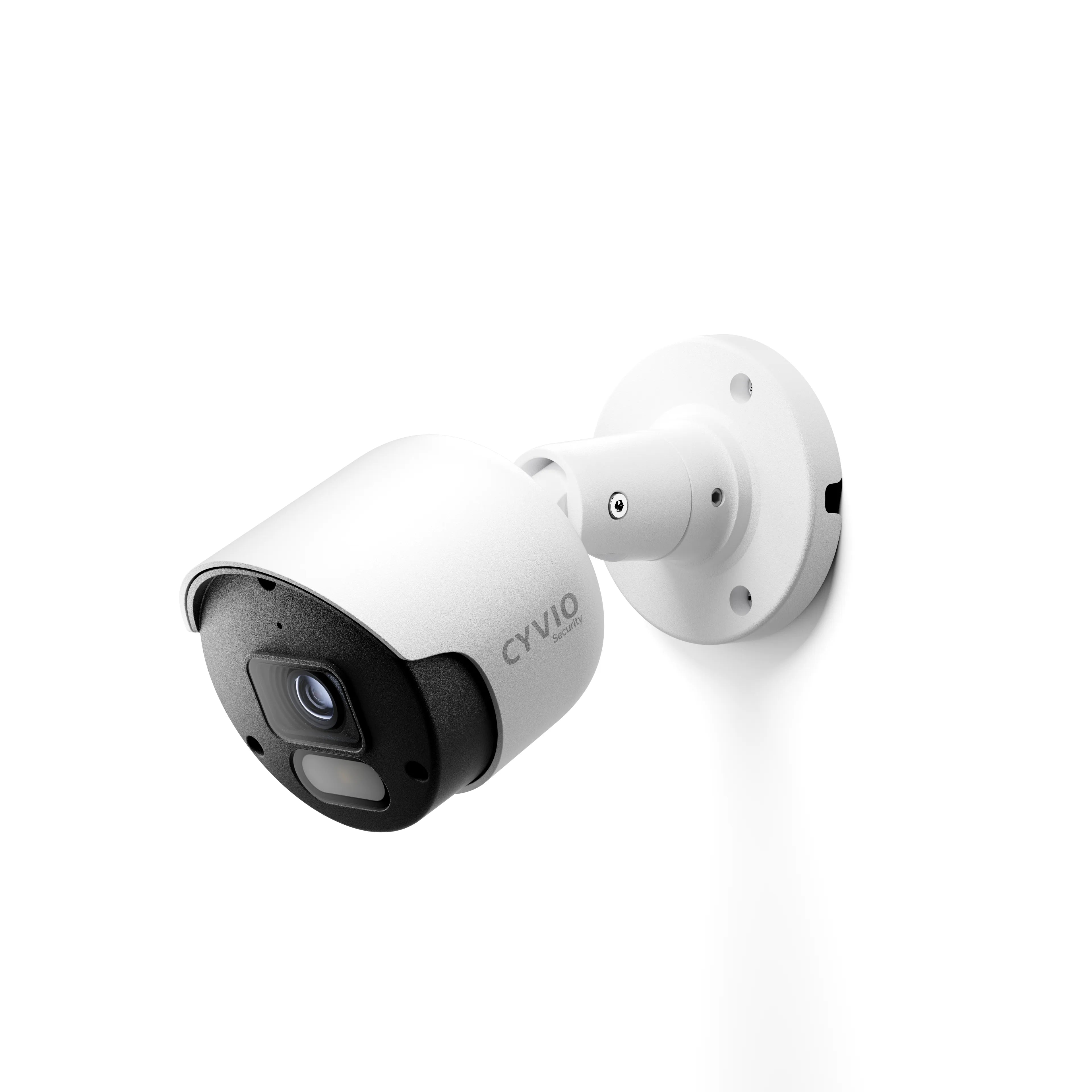
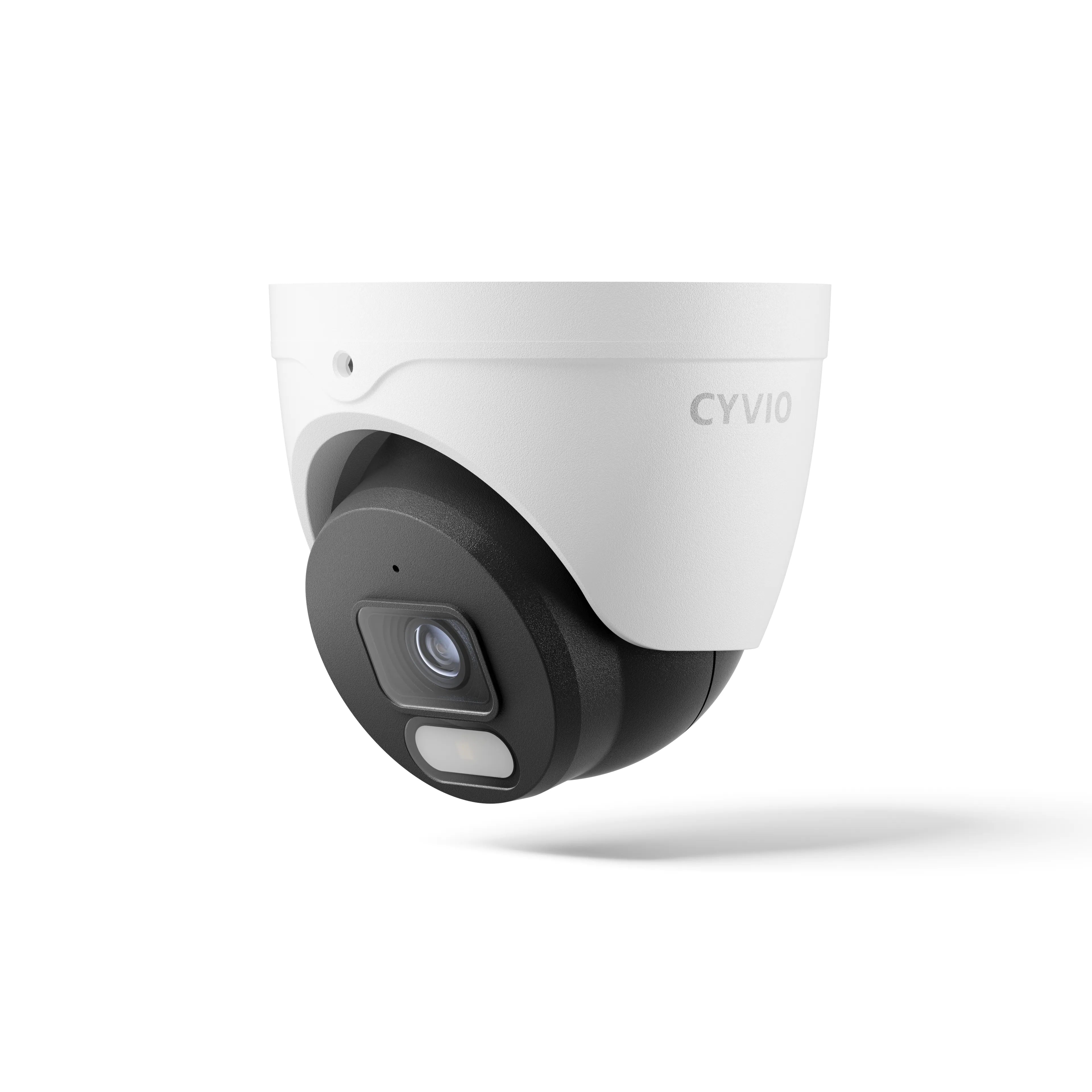
CYVIO, for example, currently offers several camera and NVR systems designed around local recording, including PoE systems, Wi-Fi cameras, battery/solar cameras, and long-range wireless systems. Its current product lineup also includes systems that do not require a recurring subscription for core local recording functions.
Cloud storage may still be useful in other scenarios, so the appropriate approach depends on how users want to access and retain their footage.
14. Different Camera Types Can Match Different Monitoring Needs
One of the advantages of modern surveillance is that not every camera needs to work the same way.
Different installations require different approaches.
| Camera Type | Useful For | Key Consideration |
|---|---|---|
| PoE camera | Fixed home or business installations | Ethernet cabling required |
| Wi-Fi camera | Indoor or flexible monitoring | Wi-Fi coverage |
| Battery camera | Locations without nearby power | Battery maintenance |
| Solar camera | Outdoor locations with suitable sunlight | Solar exposure |
| Video doorbell | Front entrances and visitors | Doorway placement |
| Long-range wireless system | Large properties and detached buildings | Distance and obstacles |
Choosing the appropriate technology can make the system easier to maintain and more suitable for its environment.
Video Surveillance for Homes
Residential surveillance usually focuses on a relatively small number of important zones.
Common locations include:
Front Door
Useful for visitors and deliveries.
Driveway
Provides a wider view of vehicle and pedestrian activity approaching the property.
Backyard
Can provide visibility around secondary access points or outdoor areas.
Garage
Useful for monitoring vehicles, tools, storage, and access.
Side Entrance
Side doors and gates can be overlooked when cameras focus entirely on the front of a property.
Indoor Common Areas
Some homeowners use indoor cameras in shared areas, although privacy should be considered carefully.
The most effective layout depends on the home's design.
More cameras do not automatically create better coverage. Strategic placement is usually more important than camera count alone.
Video Surveillance for Businesses
Businesses often have different priorities.
Video surveillance may need to cover:
-
Public entrances
-
Employee entrances
-
Loading docks
-
Inventory areas
-
Parking areas
-
Reception areas
-
Warehouses
-
Equipment zones
-
Perimeter locations
Businesses may also need longer recording retention and more cameras operating at the same time.
For these installations, PoE systems are often worth considering because a single Ethernet cable can provide both data connectivity and power to compatible cameras.
CYVIO's current PoE lineup includes multi-camera systems with local recording, 4K models, color night vision, and systems designed for continuous recording.
The appropriate system size should be based on the number of monitoring zones and required recording capacity rather than simply choosing the largest available kit.
Where CYVIO Fits Into a Video Surveillance Setup
The benefits of video surveillance become easier to use when the camera type matches the installation.
CYVIO currently offers several approaches rather than relying on a single camera format.
CYVIO PoE Security Systems
For fixed installations where Ethernet cabling is practical, CYVIO offers PoE systems designed for multi-camera surveillance.
PoE can simplify wiring because compatible cameras receive data and electrical power through the Ethernet connection.
Current CYVIO PoE options include 4K systems, local recording, night vision, and models that support continuous recording.
This type of setup can fit:
-
Homes with permanent camera locations
-
Offices
-
Warehouses
-
Retail properties
-
Multi-camera outdoor installations
CYVIO Wi-Fi Cameras
For indoor monitoring where Ethernet cabling is unnecessary, Wi-Fi cameras provide a more flexible alternative.
CYVIO's current C2 indoor camera is listed with 5MP video, PTZ viewing, and human tracking.
An indoor Wi-Fi camera may make sense for monitoring common areas, pets, entrances, or other spaces where a wireless network is already available.
CYVIO Battery and Solar Cameras
Outdoor locations do not always have convenient access to electrical wiring.
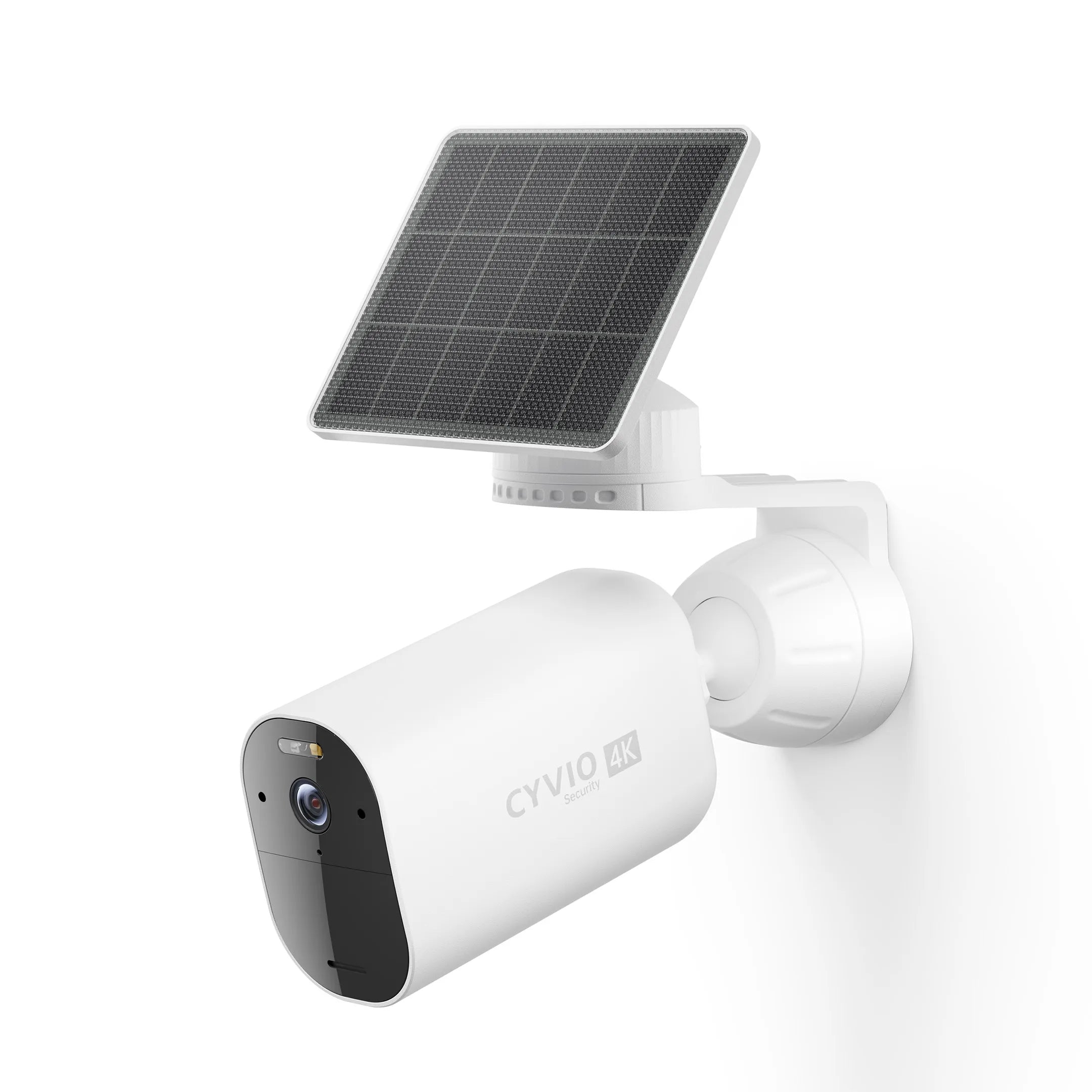
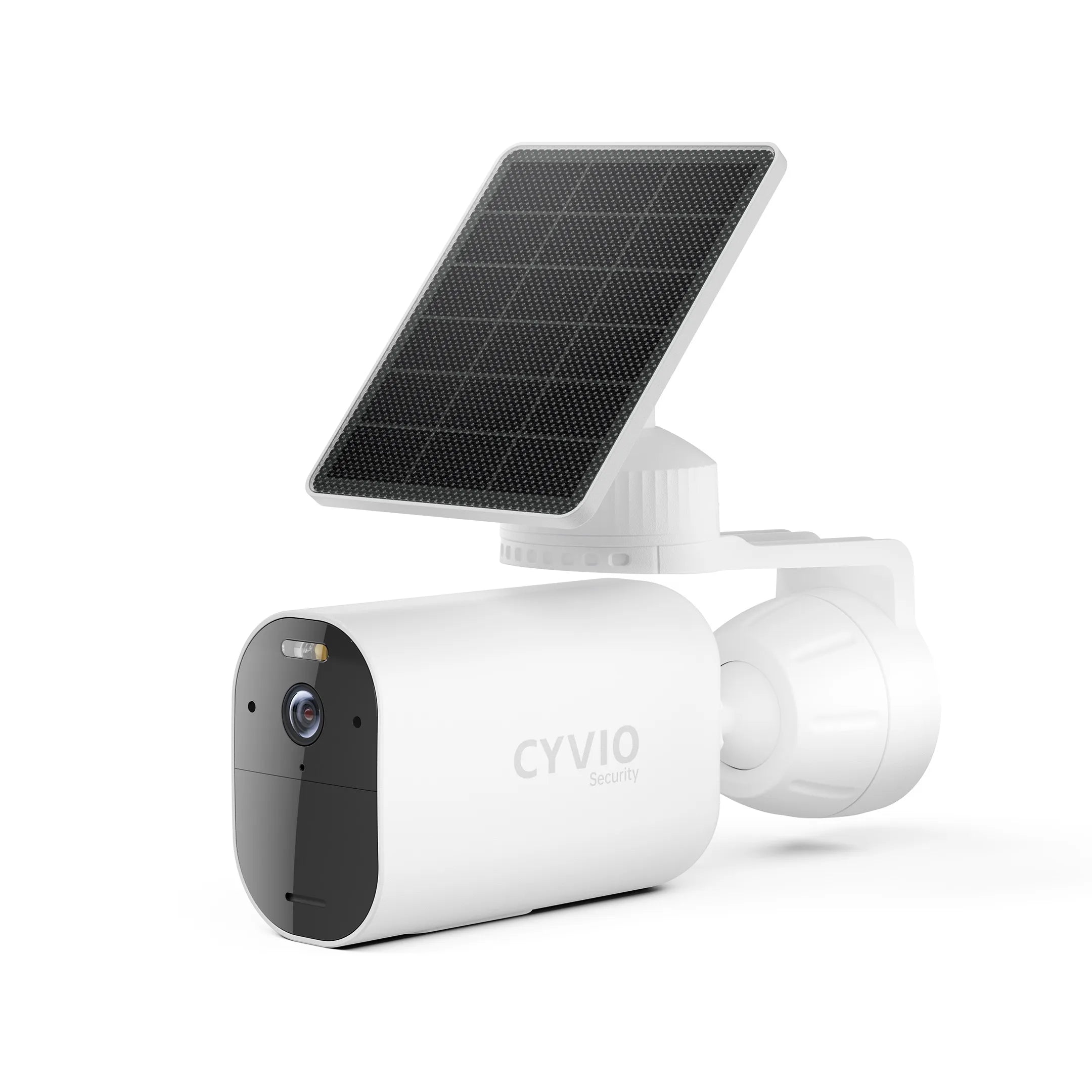
CYVIO's battery-powered lineup includes solar models with rechargeable 11,600mAh batteries, allowing the solar panel to replenish battery energy when suitable sunlight is available.
This type of camera can be useful for:
-
Detached garages
-
Yards
-
Gates
-
Driveways
-
Sheds
-
Other difficult-to-wire locations
Actual battery and solar performance varies with sunlight, recording frequency, temperature, camera activity, and settings.
CYVIO Long-Range Wireless Systems
Larger properties create another challenge: communication distance.
CYVIO also offers long-range wireless camera systems intended for installations where cameras may be located farther from the recorder or main building. The current N1814 system combines 4K battery-powered solar cameras with long-range wireless connectivity and local recording options.
This type of architecture may be useful for larger yards, farms, detached structures, or other properties where ordinary Wi-Fi coverage is difficult.
What Are the Limitations of Video Surveillance?
Understanding the advantages is important, but a balanced system plan should also account for limitations.
Cameras Have Blind Spots
Every camera has a limited field of view.
Poor placement can leave important areas outside the frame.
Before installation, consider:
-
Entry routes
-
Camera height
-
Viewing direction
-
Obstructions
-
Lighting
-
Nighttime visibility
Video Quality Depends on Conditions
Resolution is only one part of image quality.
A high-resolution camera can still produce difficult footage when:
-
The subject is too far away
-
Lighting is poor
-
The lens is dirty
-
The camera faces strong backlighting
-
Heavy rain or fog reduces visibility
-
The viewing angle is unsuitable
Camera specifications should therefore be evaluated together rather than judging a system by resolution alone.
Storage Is Finite
Recorded video requires storage.
Higher resolution, more cameras, longer retention periods, and continuous recording all increase storage consumption.
Before buying a system, determine:
-
How many cameras will record?
-
Will they record continuously or by event?
-
How long should footage remain available?
-
What resolution will be used?
-
Can storage be expanded?
These decisions can significantly affect the practical experience of using the system.
Cameras Require Maintenance
Even wired surveillance systems require periodic attention.
Typical maintenance may include:
-
Cleaning lenses
-
Checking camera positioning
-
Reviewing storage status
-
Updating firmware
-
Inspecting cables
-
Checking solar panels
-
Monitoring batteries
-
Confirming date and time settings
Outdoor cameras should receive additional inspection after severe weather.
Privacy Is an Important Part of Video Surveillance
One of the major concerns associated with surveillance cameras is privacy.
Responsible installation means thinking carefully about where cameras are pointed, what they record, who can access footage, and how long recordings are retained.
Privacy and legal considerations are recognized limitations of surveillance systems, particularly where cameras can capture employees, residents, customers, or members of the public.
Users should avoid placing cameras in areas where people reasonably expect privacy.
Rules regarding audio recording, employee monitoring, public areas, neighboring properties, and data retention can also differ by jurisdiction.
For commercial installations, organizations may need documented policies regarding:
-
Camera locations
-
Access permissions
-
Recording retention
-
Footage export
-
User accounts
-
Employee or visitor notification
Video surveillance works best when security needs and privacy responsibilities are considered together.
How to Get More Value From a Surveillance System
Installing cameras is only the first step.
Several decisions can improve practical usefulness.
Identify Important Areas First
Start with locations where visual information would be most useful.
Typical priorities include entrances, driveways, gates, garages, and storage areas.
Choose the Right Camera for Each Location
A PoE camera may fit a permanent exterior wall, while a battery/solar camera may make more sense on a detached structure.
Check Nighttime Conditions
Walk around the property after dark.
A camera location that looks ideal during daylight may perform differently at night.
Avoid Major Obstructions
Trees, walls, pillars, and rooflines can create blind spots.
Configure Detection Zones
Where supported, exclude areas that generate unnecessary alerts.
Review Footage Before Finalizing Installation
After mounting a camera, check:
-
Daytime image
-
Nighttime image
-
Person visibility
-
Vehicle visibility
-
Motion detection
-
Wireless connection
-
Recording playback
Small adjustments to camera angle can make a significant difference.
Features to Look for in a Video Surveillance System
When choosing cameras, consider the following features rather than focusing on one specification.
Resolution
Higher resolution can provide additional image detail, particularly when footage needs to be enlarged.
Field of View
A wider field of view can cover more area, while a narrower angle may show distant subjects in greater relative detail.
Night Vision
Compare infrared and color night vision according to the environment.
Smart Detection
Person and vehicle detection can help reduce less relevant alerts.
Recording Mode
Determine whether you need motion recording, scheduled recording, or continuous recording.
Local Storage
Consider how much recording capacity you need and whether storage can be expanded.
Remote Access
A mobile or desktop interface can make checking live video and playback more convenient.
Two-Way Audio
Useful for entrances and locations where communication may be helpful.
Weather Resistance
Outdoor cameras should have an environmental rating appropriate for their installation.
Power Method
Choose between:
-
PoE
-
Plug-in power
-
Battery
-
Solar-assisted battery
Wireless Range
Large properties may require a different communication architecture than a typical indoor Wi-Fi camera.
FAQs About the Benefits of Video Surveillance
What are the main benefits of surveillance cameras?
Surveillance cameras provide visual monitoring, recorded footage, remote viewing, event verification, entrance monitoring, and support for incident review. Available capabilities vary by system.
Why are surveillance cameras important for a home?
They can provide visibility around entrances, driveways, garages, yards, and other important areas while allowing users to review recorded events or check live footage remotely.
Are surveillance cameras useful for businesses?
Yes. Businesses can use cameras for property monitoring, access-area visibility, operational review, incident documentation, parking areas, loading areas, and other relevant spaces.
Can surveillance cameras record at night?
Many security cameras include infrared or color night vision. Effective viewing distance and image quality depend on the specific camera, available light, lens, installation, and environmental conditions.
Are PoE cameras better than Wi-Fi cameras?
Neither type is appropriate for every situation.
PoE cameras can be useful for fixed installations requiring stable wired connectivity and continuous power. Wi-Fi cameras offer greater installation flexibility when suitable wireless coverage is available.
Are solar cameras useful for video surveillance?
They can be useful in outdoor locations where running electrical wiring is difficult. Solar charging helps replenish the rechargeable battery when sufficient sunlight is available.
Do security cameras need cloud storage?
Not necessarily.
Some systems offer local microSD or NVR storage, while others rely on cloud storage or provide both options. CYVIO offers several systems designed around local recording and no-subscription configurations.
How many security cameras do I need?
The answer depends on the property.
Rather than starting with a specific camera count, identify the areas that need visual coverage first. Then determine whether one camera can cover multiple zones without sacrificing useful detail.
Is 4K necessary for video surveillance?
Not in every situation.
4K can provide additional image detail, but camera placement, lens quality, lighting, night vision, viewing distance, and compression also affect the usefulness of recorded footage.
Can video surveillance replace other security measures?
Video surveillance is generally more useful as one part of a broader approach. Locks, lighting, access control, alarms, property procedures, and physical barriers may all address needs that cameras alone cannot.
Conclusion: Understanding the Benefits of Video Surveillance
The benefits of video surveillance extend beyond simply recording video.
A thoughtfully designed system can provide live visibility into a property, document important events, help verify alerts, monitor entrances, support incident investigation, and make it easier to understand activity when the property owner or manager is not physically present.
For homes, cameras can provide useful visibility around front doors, driveways, garages, backyards, and other important areas. For businesses, surveillance can also support operational oversight, access monitoring, parking areas, warehouses, and multi-camera property management.
The value of a system ultimately depends on how well its design matches the property.
Camera placement, image quality, night vision, detection features, storage, network connectivity, privacy considerations, and recording method all matter.
CYVIO offers several approaches for different installation requirements, including PoE camera systems for fixed multi-camera setups, Wi-Fi cameras for flexible indoor monitoring, and battery/solar and long-range wireless systems for outdoor areas where conventional wiring may be less practical.
Rather than viewing cameras as a solution to every security concern, the most practical approach is to use video surveillance as a tool for visibility, documentation, verification, and informed response—and to select the camera system according to the areas and events that actually need to be monitored.