









Neighbor Has Camera Pointed at My Backyard: What Can I Do?

Noticing a security camera facing your property can be uncomfortable, especially when it appears to capture a backyard, patio, window, or another area you consider private. If you're searching neighbor has camera pointed at my backyard, the first thing to understand is that the legality usually depends on what the camera can actually see, whether audio is being recorded, the purpose of the surveillance, and the privacy laws where you live.
In the U.S., a camera that happens to capture areas visible from a street, sidewalk, driveway, or another publicly observable location may be treated differently from a camera deliberately aimed into a bedroom, bathroom, or secluded area where someone has a stronger expectation of privacy. Laws also vary significantly by state and locality, particularly when audio recording is involved.
Before assuming the camera is unlawful, it is worth assessing its actual field of view, documenting the situation, and speaking with your neighbor if you feel comfortable doing so. This guide explains what to consider, what actions may be appropriate, and how homeowners using cameras from CYVIO or other brands can position their own systems with neighboring privacy in mind.
Can My Neighbor Point a Security Camera at My Property?
In many situations, homeowners are allowed to install security cameras on their own property, even when part of a neighboring driveway, front yard, or other publicly visible area appears in the background.
The issue becomes more complicated when a camera is intentionally directed toward an area where there may be a stronger expectation of privacy.
For example, cameras directed toward these areas may deserve closer scrutiny:
-
Bedroom windows
-
Bathroom windows
-
Enclosed patios
-
Highly secluded backyards
-
Areas intentionally screened from public view
-
Other private living spaces
The legal concept of a “reasonable expectation of privacy” is highly fact-specific. The U.S. Supreme Court's privacy jurisprudence recognizes a distinction between what a person knowingly exposes to public view and what they reasonably seek to keep private, although private-neighbor disputes are also governed by state tort, surveillance, harassment, and recording laws—not just constitutional law.
Neighbour Has Camera Pointed at My House: Is That Automatically Illegal?
If a neighbour has camera pointed at my house, the direction of the camera alone usually does not answer the legal question.
A camera may look as though it is aimed at your home while actually covering:
-
The neighbor's driveway
-
Their front entrance
-
A shared property boundary
-
Their parked vehicles
-
A gate
-
A section of public sidewalk
Many modern cameras also have relatively wide fields of view, so your home may appear in the edge of the image even when it is not the main monitoring target.
On the other hand, a camera intentionally positioned to look into private interior spaces or to repeatedly target a secluded area can raise more serious privacy concerns. State laws differ, so a local attorney or relevant authority is better positioned to assess a specific case.
Can My Neighbor Have a Camera Pointed at My House?
The question can my neighbor have a camera pointed at my house does not have one universal yes-or-no answer.
As a general U.S. principle, surveillance of an area that is plainly visible from public or neighboring property is more likely to be lawful than surveillance designed to capture activity hidden from public view. Sources discussing residential camera law likewise distinguish public-facing areas from bedrooms, bathrooms, fenced private spaces, and other areas where privacy expectations may be stronger.
Important factors can include:
-
Where the camera is mounted
-
What it actually records
-
Whether the area is visible from public space
-
Whether the camera captures audio
-
Whether zoom or other technology is being used
-
Whether the behavior is part of harassment
-
State and local privacy laws
-
HOA or condominium rules
A camera merely being visible from your property is not enough to determine whether a violation has occurred.
Why Backyard Cameras Raise More Privacy Questions
Backyards are often treated differently from front yards because homeowners frequently use fences, walls, landscaping, and building placement to make them more private.
That does not mean every fenced backyard automatically receives the same legal protection. However, deliberate steps to screen an area from ordinary public observation can strengthen an argument that the occupants expected more privacy there.
For example, compare two situations:
Open Front Yard
A camera across the street captures your driveway and front lawn, both of which are clearly visible to pedestrians.
Enclosed Backyard
A camera is elevated or specially positioned to look over a privacy fence into a patio that is otherwise hidden from surrounding public areas.
The second situation can raise substantially different privacy questions.
Neighbor Camera Pointed at My Backyard: What Should I Check First?
If you notice a neighbor camera pointed at my backyard, avoid assuming that you know exactly what it records.
Start by examining what you can reasonably observe from your own property.
Ask yourself:
-
Is the lens directly facing a private area?
-
Is the camera aimed at a shared boundary instead?
-
Could its primary target be your neighbor's own gate or driveway?
-
Is your yard enclosed by a privacy fence?
-
Does the camera appear capable of panning or tilting?
-
Has its position recently changed?
-
Are there windows or private spaces directly in its line of sight?
Taking photographs of the camera's apparent position from your own property can help you document the situation without touching or entering your neighbor's property.
Does It Matter If the Camera Records Audio?
Yes. Audio recording can create separate legal issues from video surveillance.
U.S. audio-recording and wiretap laws vary by state. Some jurisdictions generally allow a participant in a conversation to consent to recording, while others have stricter consent requirements for private conversations.
A camera that legally captures a portion of an outdoor scene does not necessarily have the same legal freedom to record private conversations occurring there.
This is why residential surveillance disputes should consider both:
What can the camera see?
and
What can the camera hear?
Legal resources on neighbor surveillance specifically note that audio recording can create additional concerns even when video of a publicly visible area may be permitted.
Can a Neighbor Have a Camera Pointed at My House If It Records the Street Too?
Potentially, yes.
Suppose a neighbor installs a wide-angle outdoor camera to monitor vehicles entering their driveway. Your front lawn or part of your house may naturally appear in the same frame.
That is different from deliberately positioning a camera so that the primary view is through your bedroom window.
When asking can a neighbor have a camera pointed at my house, intent, field of view, location, and the privacy characteristics of the monitored area can all matter.
Because the legal standard varies by jurisdiction, the safest approach is to avoid assuming that merely appearing in another person's camera view creates a legal violation.
Neighbors Camera Pointed at My House: What Can I Do?
If you believe a neighbors camera pointed at my house is capturing more of your property than necessary, there are several reasonable steps you can take before considering legal action.
1. Confirm the Camera's Position
Document what you can see from your own property.
Take photographs showing:
-
The camera
-
Its apparent direction
-
The area of your home it appears to face
-
Your fence or privacy barriers
-
Nearby windows or private spaces
Do not enter your neighbor's property to investigate.
2. Talk to Your Neighbor
Sometimes a camera's apparent direction is misleading.
A short conversation may reveal that the camera is actually monitoring a driveway, gate, vehicle, or another part of the neighbor's own property.
If you are comfortable speaking with them, you could explain that the camera appears to capture part of your backyard and ask whether they can adjust its angle.
Some systems also support privacy masking or activity zones that can exclude portions of the image from monitoring or alerts.
A simple adjustment may resolve the problem without further conflict.
3. Ask Whether Privacy Masking Is Available
Many modern camera systems allow users to restrict monitoring to selected portions of the image.
If your neighbor is willing to cooperate, options may include:
-
Tilting the camera downward
-
Rotating it away from your yard
-
Reducing the monitored area
-
Creating privacy zones
-
Repositioning the mounting location
From a camera-owner perspective, thoughtful positioning is also good practice. CYVIO's own installation guidance recommends testing the real camera view and adjusting the downward angle based on the intended target area rather than simply maximizing coverage.
Can a Neighbor Point a Camera at Your House Through a Window?
The keyword can a neighbor point a camera at your house becomes more legally sensitive when the camera appears to be capturing the interior of a home.
Bedrooms, bathrooms, and other interior spaces generally carry stronger privacy expectations than open driveways or front lawns.
The fact that a camera is physically located on the neighbor's property does not automatically mean every possible viewing angle is lawful.
If you have reason to believe a camera is intentionally capturing private indoor activity, consider documenting the situation and obtaining jurisdiction-specific legal advice rather than attempting to interfere with the camera yourself.
What if the Camera Looks Over My Privacy Fence?
A privacy fence can be an important factor because it indicates that the space was designed to be shielded from ordinary observation.
For example, there is a meaningful difference between:
-
A camera accidentally capturing the upper edge of an open backyard
-
A camera positioned unusually high specifically to see over a tall privacy fence
The latter may raise stronger questions about intrusion or harassment depending on applicable state law and surrounding circumstances.
Recording-law guidance notes that fenced and enclosed areas can strengthen an expectation-of-privacy argument compared with open, street-facing spaces.
However, a fence alone does not automatically settle the issue.
What if the Camera Is Being Used to Harass Me?
Camera disputes can become more serious when surveillance appears to be part of repeated intimidation, stalking, or harassment.
Potential warning signs could include:
-
Cameras repeatedly repositioned to follow your activity
-
Multiple cameras focused primarily on your private spaces
-
Threatening statements about recorded footage
-
Repeated monitoring linked to an ongoing dispute
-
Deliberate filming of private activities
-
Publishing footage as part of harassment
Some jurisdictions provide civil or criminal remedies for surveillance conducted with harassing or intrusive intent. Because these rules are highly location-specific, document the behavior and seek local legal advice if harassment is a serious concern.
Should I Call the Police?
Not every camera disagreement requires police involvement.
A conversation, HOA complaint, landlord request, or mediation process may be more appropriate when the issue concerns ordinary camera positioning.
However, contacting local authorities may be appropriate if you reasonably believe the camera is being used for conduct such as:
-
Voyeurism
-
Stalking
-
Harassment
-
Deliberate recording of highly private spaces
-
Threatening conduct
-
Other behavior prohibited by local law
If the concern is mainly about whether a camera's angle violates civil privacy rules, a local attorney may be able to provide more useful guidance than emergency law enforcement.
Check HOA, Condo, Rental, and Community Rules
Even when a camera placement does not clearly violate criminal law, other rules may apply.
For example:
-
Homeowners associations may regulate camera placement.
-
Condo associations may restrict equipment on shared structures.
-
Apartment leases may limit exterior installations.
-
Community rules may address common areas.
-
Local ordinances may regulate surveillance or nuisance behavior.
These rules can sometimes provide a simpler way of resolving a dispute than pursuing a broader privacy claim.
Can I Block My Neighbor's Camera?
You can generally make privacy improvements on your own property, subject to local zoning, HOA, lease, and building rules.
Practical options may include:
-
Privacy fencing
-
Lattice panels
-
Hedges
-
Trees or shrubs
-
Outdoor curtains
-
Pergolas
-
Shade sails
-
Window blinds
-
Privacy film
These solutions change what can naturally be seen from neighboring property without interfering with the neighbor's equipment.
Backstreet Surveillance similarly recommends physical privacy barriers such as fencing, landscaping, and screens as potential non-destructive responses to unwanted camera sightlines.
What You Should Not Do to a Neighbor's Camera
Even when you strongly disagree with where a camera is pointed, do not physically damage or interfere with equipment that belongs to someone else.
Avoid actions such as:
-
Touching or moving the camera
-
Covering the lens on their property
-
Cutting cables
-
Damaging mounts
-
Trying to access the camera account or network
-
Using lasers against the sensor
-
Using radio-frequency jammers
In the U.S., the FCC specifically prohibits the use, sale, and marketing of devices designed to jam authorized radio communications, including WiFi.
Using destructive or electronic interference can create a separate legal problem even if you have a legitimate privacy complaint.
Do Not Try to Hack the Camera
Attempting to gain unauthorized access to a neighbor's camera, router, NVR, cloud account, or app is not an appropriate way to determine what the camera records.
You also should not attempt to:
-
Guess passwords
-
Access the camera's live feed
-
Intercept network traffic
-
Disable the camera remotely
-
Delete recordings
-
Change its settings
If you need evidence about the camera's field of view, use lawful documentation from your own property and appropriate legal channels.
When Should You Consider Mediation?
Neighbor disputes can become unnecessarily expensive and stressful when communication breaks down.
Community or HOA mediation may be useful when:
-
Your neighbor refuses to discuss the camera
-
You disagree about where the property boundary lies
-
Several cameras are involved
-
There is a history of neighborhood conflict
-
You want a written compromise
Possible agreements might include:
-
Repositioning the camera
-
Adding privacy masking
-
Limiting audio recording
-
Moving the device lower
-
Installing a privacy barrier
A documented compromise can often resolve the underlying concern while allowing the neighbor to continue monitoring their own property.
When Should You Talk to a Lawyer?
Consider getting jurisdiction-specific legal advice when:
-
A camera clearly faces inside your home
-
A camera appears intentionally aimed over a privacy barrier
-
Private conversations may be recorded
-
Surveillance is part of alleged harassment or stalking
-
Your neighbor publishes private recordings
-
The dispute has continued despite attempts to resolve it
-
You are considering filing a legal claim
Privacy, surveillance, audio-recording, nuisance, and harassment laws differ significantly between states and municipalities.
General internet advice cannot determine whether a specific camera installation is lawful in your location.
How to Position Your Own Security Cameras Without Creating the Same Problem
A neighbor-camera dispute is also a useful reminder to review your own camera placement.
When installing an outdoor camera, prioritize areas you actually need to monitor:
-
Your front door
-
Your driveway
-
Your garage
-
Your backyard
-
Your gates
-
Your side entrances
Avoid unnecessarily pointing cameras at:
-
Neighboring windows
-
Private patios
-
Pools on neighboring property
-
Bedrooms
-
Bathrooms
-
Other areas unrelated to your own monitoring needs
CYVIO's camera-placement guidance recommends selecting a clear target zone and adjusting the camera angle downward to center that intended area.
Good placement can improve both useful coverage and neighbor privacy.
Use Field of View Carefully
A very wide viewing angle can be useful for monitoring a driveway or backyard, but it can also capture more neighboring property than necessary.
Before permanently installing a camera:
-
Temporarily mount or hold it in position.
-
Check the live view.
-
Identify the actual boundaries of the image.
-
Tilt or rotate the camera toward your target area.
-
Reduce unnecessary coverage of adjacent properties where practical.
CYVIO currently offers outdoor systems with wide viewing angles, including PoE models designed to cover areas such as entrances, garages, and backyards, which makes careful positioning especially important.
CYVIO Camera Options for Responsible Property Monitoring
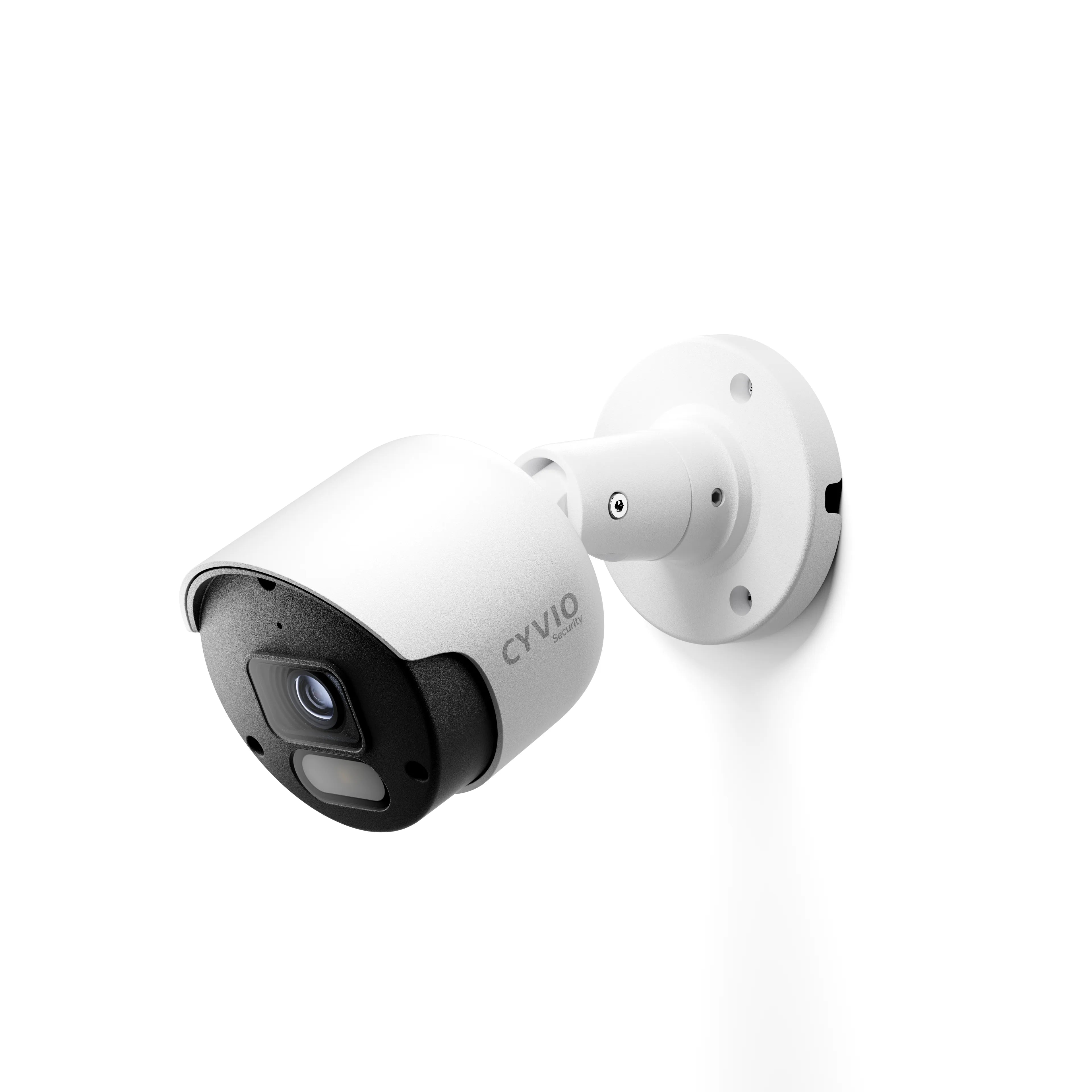
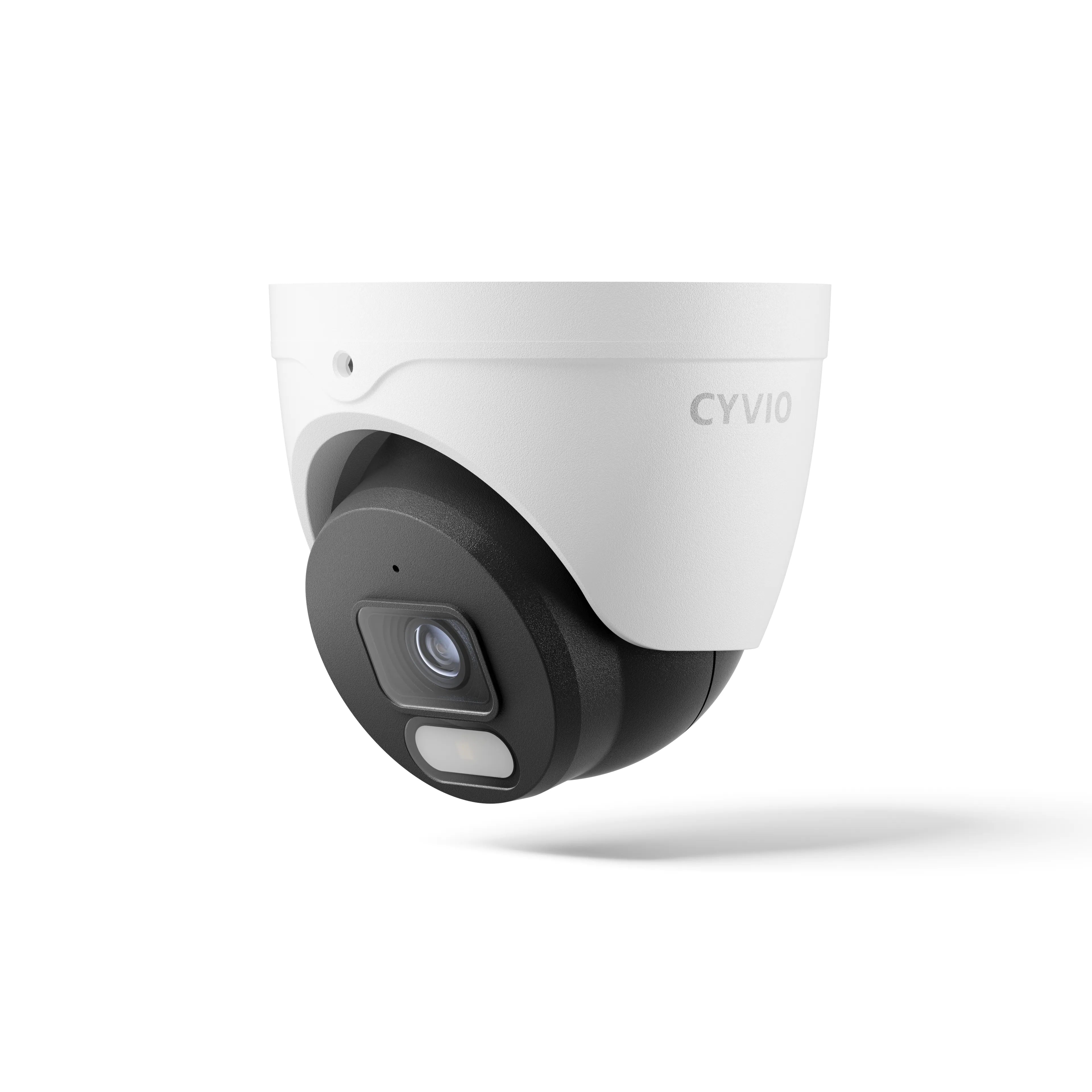
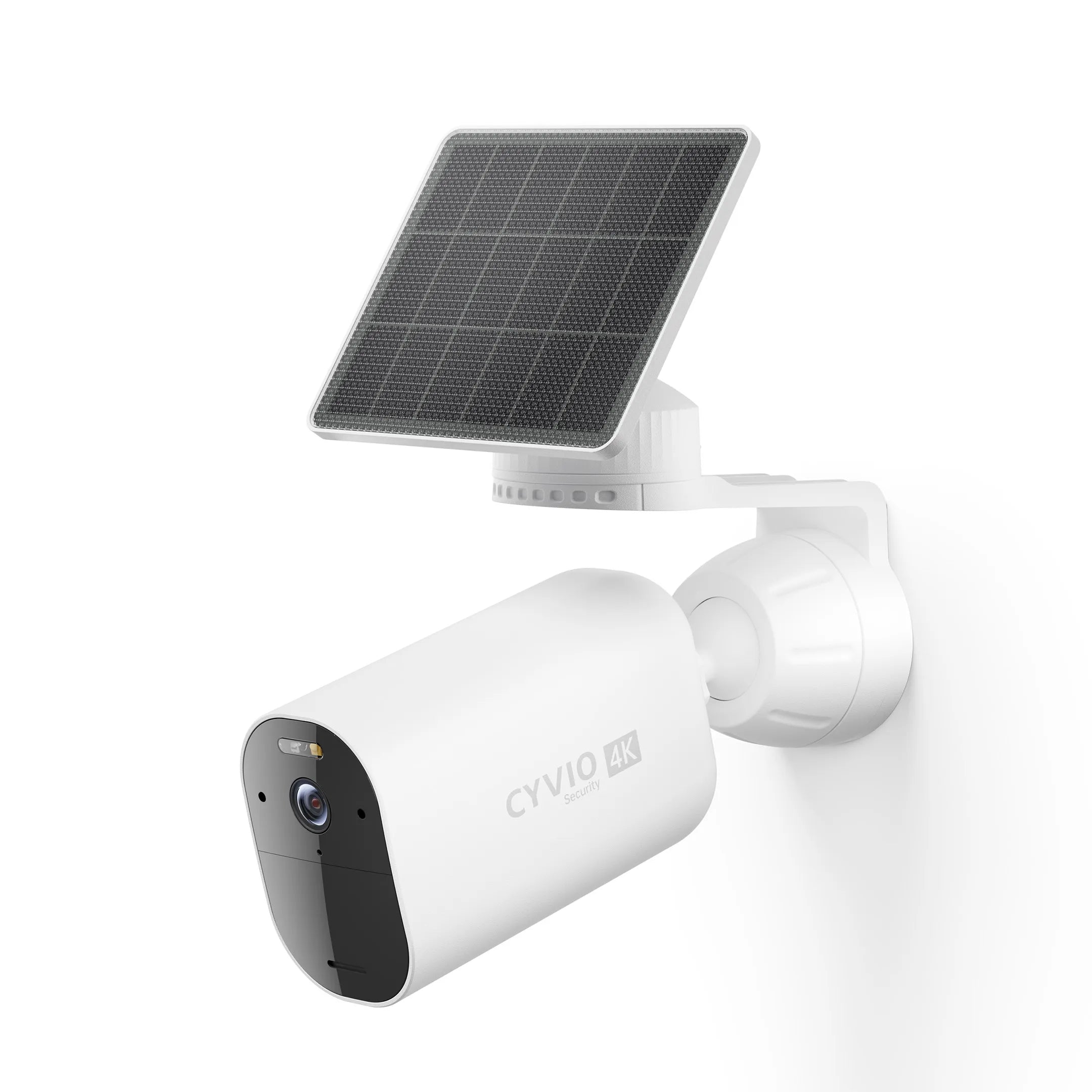
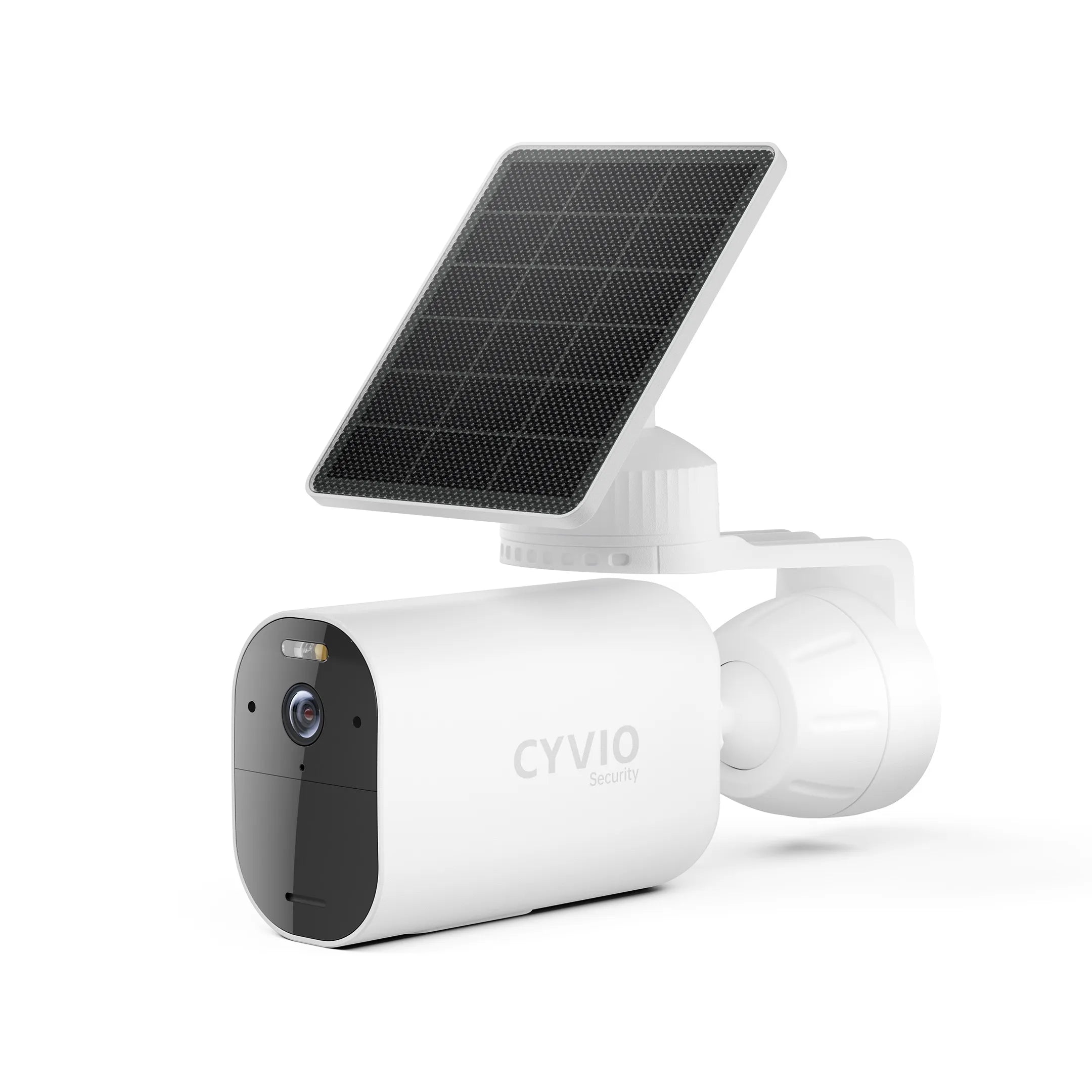
CYVIO currently offers multiple camera types for different residential monitoring needs, including:
-
PoE security camera systems
-
Solar security cameras
-
WiFi cameras
-
Indoor cameras
-
Video doorbells
The right camera type depends on the area you actually need to monitor.
For example, a wide-area PoE system may be useful for covering multiple fixed zones around a house, while a video doorbell may be more appropriate when your primary concern is the front entrance.
The important part is to position each camera around a legitimate monitoring purpose instead of simply maximizing how much surrounding property enters the frame.
A Practical Example of Privacy-Conscious Camera Placement
Imagine two neighboring houses separated by a backyard fence.
Homeowner A wants a camera to monitor a rear gate located near the property line.
Poor Placement
The camera is mounted high on the house and points horizontally across the fence, placing much of Homeowner B's patio in the center of the image.
Better Placement
The camera is mounted closer to the target gate and tilted downward so that the gate, pathway, and Homeowner A's fence line fill most of the frame.
The second setup can provide more relevant footage while reducing unnecessary monitoring of neighboring property.
Camera placement should therefore focus on the area that actually needs observation, not simply the widest possible view.
What Should You Document if the Problem Continues?
If repeated conversations do not resolve the issue, keep simple records.
Useful documentation may include:
-
Photographs of the camera's position
-
Dates when its orientation changes
-
Written communication with the neighbor
-
HOA correspondence
-
Relevant screenshots or notices
-
Notes describing the private area involved
Keep documentation factual.
For example:
“Camera was moved on August 10 and now appears to face the second-floor bedroom window.”
is more useful than:
“My neighbor is definitely spying on me.”
Clear documentation makes it easier for an HOA, mediator, attorney, or relevant authority to understand the situation.
Frequently Asked Questions
1. Is it legal for my neighbor to point a camera at my backyard?
It depends on the location and circumstances. In the U.S., recording an area visible from public or neighboring property may be lawful, while deliberately recording spaces with stronger privacy expectations can raise legal concerns. State and local laws vary.
2. Can my neighbor's security camera record my front yard?
Potentially. Front yards and driveways visible from streets or surrounding properties generally have a lower expectation of privacy than interior rooms or secluded spaces. However, specific laws vary by location.
3. Can my neighbor record my fenced backyard?
A fenced or secluded backyard can raise stronger privacy considerations than an open front yard, particularly if the camera is deliberately positioned to overcome the privacy barrier. Whether a particular setup violates the law depends on the jurisdiction and facts.
4. Can my neighbor record inside my house through a window?
Intentionally recording private interior spaces can raise much more serious privacy issues than recording publicly visible exterior areas. If you believe this is occurring, document the situation and consider obtaining local legal advice.
5. Can I ask my neighbor to move their camera?
Yes. A polite request to adjust the camera angle or use privacy masking can be an appropriate first step.
6. Can I put up a privacy fence to block the camera?
Potentially, subject to local building, zoning, HOA, and rental rules. Fences, screens, and landscaping are common ways to reduce unwanted sightlines from neighboring property.
7. Can I use a jammer to block my neighbor's wireless camera?
Do not use radio-frequency jamming equipment. In the United States, the FCC states that operating devices designed to jam authorized radio communications, including WiFi, is prohibited by federal law.
8. Should my own camera avoid recording neighboring property?
Where practical, yes. Aim cameras toward the entrances, driveways, yards, and other areas you legitimately need to monitor. Adjusting the angle and limiting unnecessary neighboring coverage can reduce privacy disputes.
What to Do When Your Neighbor Has Camera Pointed at My Backyard
If your neighbor has camera pointed at your backyard, do not assume immediately that the camera is either lawful or unlawful. What matters is what the camera actually captures, whether the monitored area has a reasonable expectation of privacy, whether audio is involved, and what state or local law says about residential surveillance.
Start by documenting the apparent camera position, then consider a respectful conversation or request for the camera to be adjusted. If necessary, privacy fencing, landscaping, HOA procedures, mediation, or jurisdiction-specific legal advice can provide additional options. Avoid damaging, hacking, or electronically interfering with someone else's camera.
The same principle applies when installing your own system. CYVIO offers PoE, WiFi, battery, solar, indoor, and video-doorbell cameras for monitoring different areas of a property. Positioning those cameras toward the specific areas you need to observe—and away from neighboring private spaces where practical—can provide useful coverage while respecting the people living around you.