









Color vs IR Night Vision: 5 Key Questions for Choosing Night Security Cameras

When the sun sets and darkness envelops your surroundings, your property doesn’t stop being at risk—and neither should your surveillance. Yet, night brings a unique challenge for security cameras: insufficient light often leads to poor visibility, grainy footage, and difficulty distinguishing details. The security industry has responded with a variety of night vision technologies, including color night vision, starlight sensors, and traditional infrared (IR) night vision, each promising clear footage under low-light conditions. But with so many options on the market, how do you choose the right solution?

This article answers the five most important questions about night vision cameras, breaking down their differences, limitations, and applications. By the end, you will understand how modern surveillance systems are evolving to combine the advantages of both color and IR night vision, ensuring comprehensive protection at night.
Q1: What is the fundamental difference between color night vision and IR night vision?
A common misconception is that color night vision simply adds color to black-and-white footage. In reality, these technologies follow completely different approaches, mainly in the type of light they detect and use for imaging.
Traditional IR Night Vision:
You can think of this as equipping your camera with night-vision goggles. When visible light is insufficient, IR cameras emit infrared light, which is invisible to the human eye, to illuminate the scene. The camera sensor detects this infrared reflection and translates it into a monochrome (black-and-white) image. Since only intensity is recorded—not color—subtle details like vehicle paint or clothing color remain indistinguishable.
IR night vision works in total darkness, does not require street lamps or moonlight, and can operate covertly without alerting intruders. This makes it highly suitable for environments that demand discretion and reliable zero-light operation.
Color Night Vision:
Color night vision cameras, on the other hand, aim to replicate or even surpass human vision at night. These cameras rely on large-aperture lenses and high-sensitivity sensors to gather every possible photon of ambient light. In environments with very low illumination, such as areas lit only by moonlight or distant streetlights, they can still capture recognizable color images.
When natural light is insufficient, the camera can activate white-light LEDs to illuminate the scene. This allows it to record full-color footage even in near-total darkness, providing rich visual information that black-and-white IR cameras cannot.
Analogy: IR night vision is like using a hidden flashlight you can’t see, while color night vision tries to see in dim light or turns on a “lamp” when needed to reveal every detail.

Q2: If color night vision is so advanced, what are its limitations?
Despite its advantages, color night vision is not flawless. Understanding its limitations will help you choose the right camera for your needs.
Dependence on Light:
Color night vision relies heavily on ambient lighting or artificial illumination. In completely dark areas, such as closed warehouses, basements, or dense forests at night, the camera may be forced to switch to black-and-white IR mode to maintain visibility.
Illumination Concerns:
White-light LEDs used in color night vision cameras expose the camera’s location, potentially alerting intruders or vandals. Bright lights can also cause light pollution, disturbing neighbors or nearby pedestrians and vehicles.
Distance and Power Requirements:
White-light illumination usually has a shorter effective distance than IR LEDs. Running these lights continuously increases power consumption, generates additional heat, and may affect camera longevity if not properly managed.
Trade-offs in Extreme Environments:
While color night vision excels in well-lit or moderately lit areas, it is less effective for long-range surveillance or in scenarios where absolute stealth is required. This is why traditional IR cameras remain indispensable for certain use cases.

Q3: Does this mean traditional IR night vision is obsolete?
Absolutely not. Despite the rise of color night vision, IR night vision remains critical in many security applications, thanks to its unique advantages:
Discreet Operation: IR LEDs emit light outside the visible spectrum, making the camera less noticeable and reducing the risk of tampering or avoidance.
Zero-Light Functionality: IR cameras operate in total darkness without any ambient light, ensuring reliable surveillance in basements, warehouses, or unlit perimeters.
Long-Distance Coverage: High-powered IR LEDs can illuminate scenes over 100 meters away, a feat that color night vision cameras with white-light LEDs cannot easily achieve.
Non-Intrusive: IR lighting does not disturb humans or animals, making it ideal for wildlife observation, research, or sensitive residential areas.
Key Insight: IR night vision guarantees the “minimum visibility” at night, providing a stable foundation for surveillance, while color night vision enhances the “maximum clarity and detail,” enabling identification and evidence capture. Both technologies are complementary rather than mutually exclusive.

Q4: How do you choose between color and IR night vision for your property?
The choice depends on your specific environment and security priorities. Consider the following scenarios:
|
Core Requirement |
Recommended Technology |
Reasoning |
|
Discreet monitoring without exposing camera position |
IR Night Vision |
IR LEDs are subtle, reducing visibility to intruders. |
|
Long-range or wide-area surveillance |
IR Night Vision |
High-power IR LEDs can illuminate longer distances, offering better cost-efficiency. |
|
Completely dark environments |
IR Night Vision |
IR does not require ambient light, ensuring reliable zero-light operation. |
|
Need to identify colors (vehicles, clothing, materials) |
Color Night Vision |
Color information is critical for identification and situational awareness. |
|
High detail and realistic image quality |
Color Night Vision |
Full-color images capture textures and facial features more clearly than monochrome IR. |
|
Low-light areas with some ambient lighting |
Color Night Vision (Smart Mode) |
Can produce color images in dim light, and activate supplemental white-light when necessary. |
By matching the technology to your environment and surveillance goals, you can ensure effective monitoring while avoiding unnecessary compromises in visibility, stealth, or power consumption.
Q5: Is there a smarter solution that combines both technologies?
Yes. Modern security systems are increasingly adopting intelligent night surveillance, integrating both IR and color night vision to optimize performance. Instead of relying on a fixed mode, these systems adapt to environmental conditions and events, offering the best of both worlds.
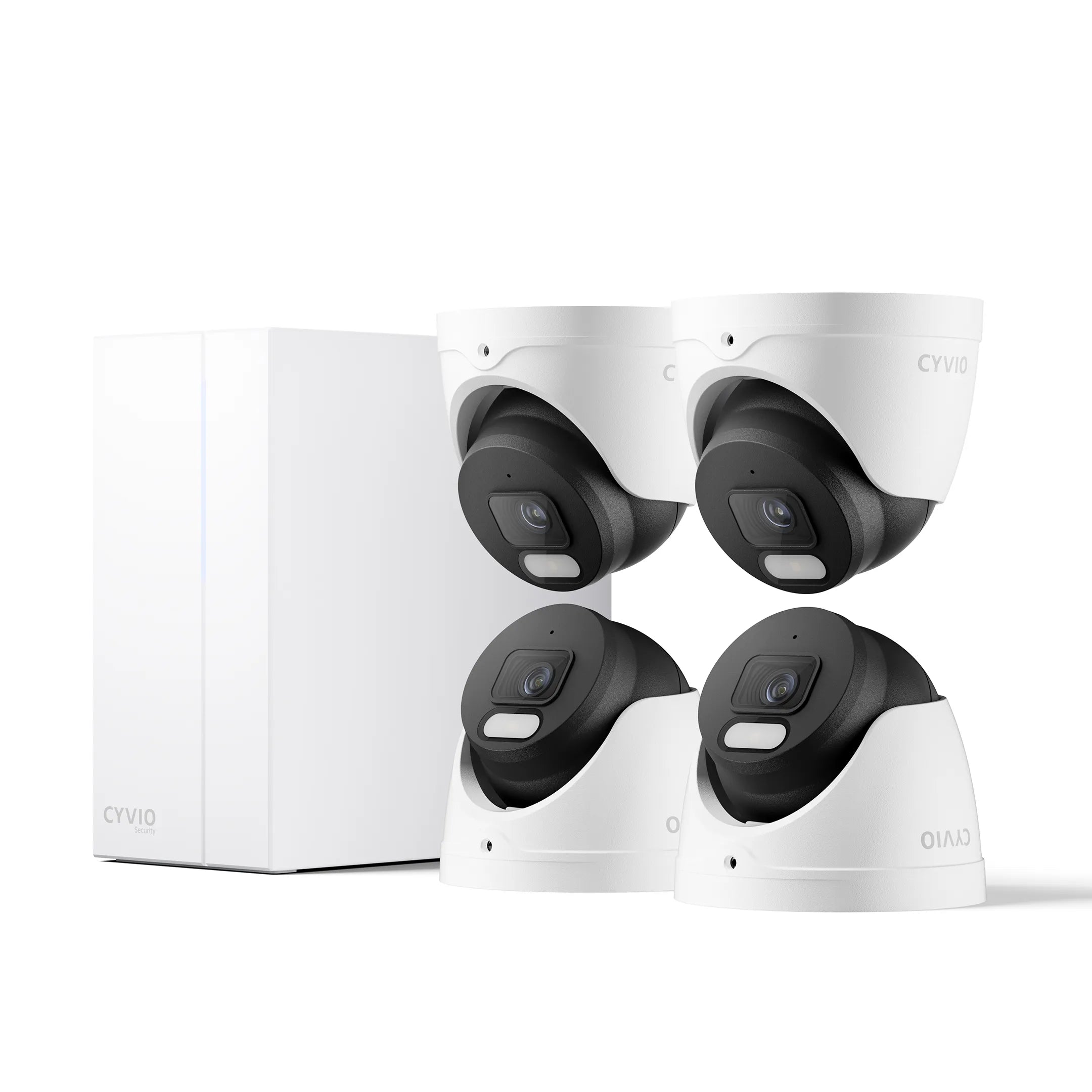
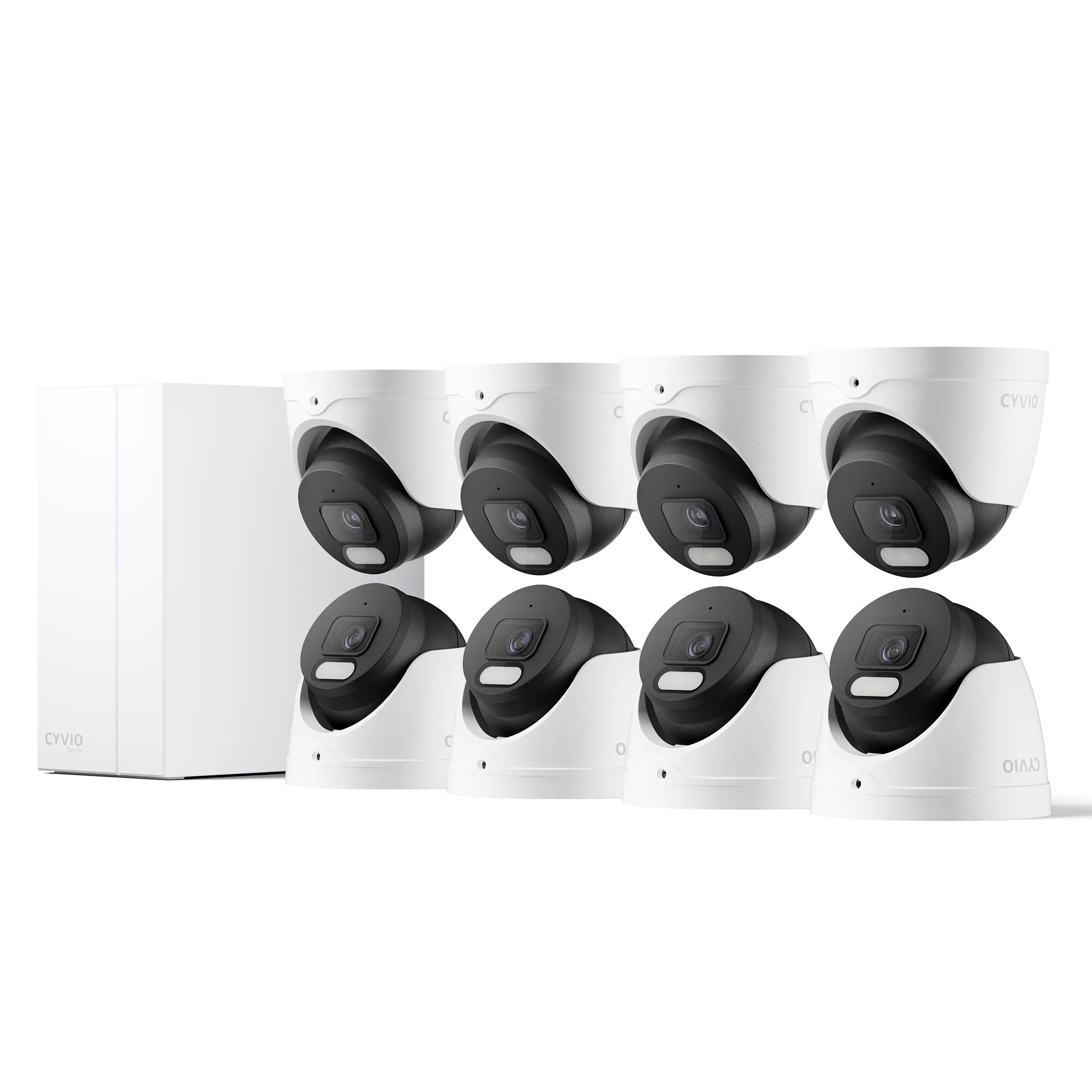
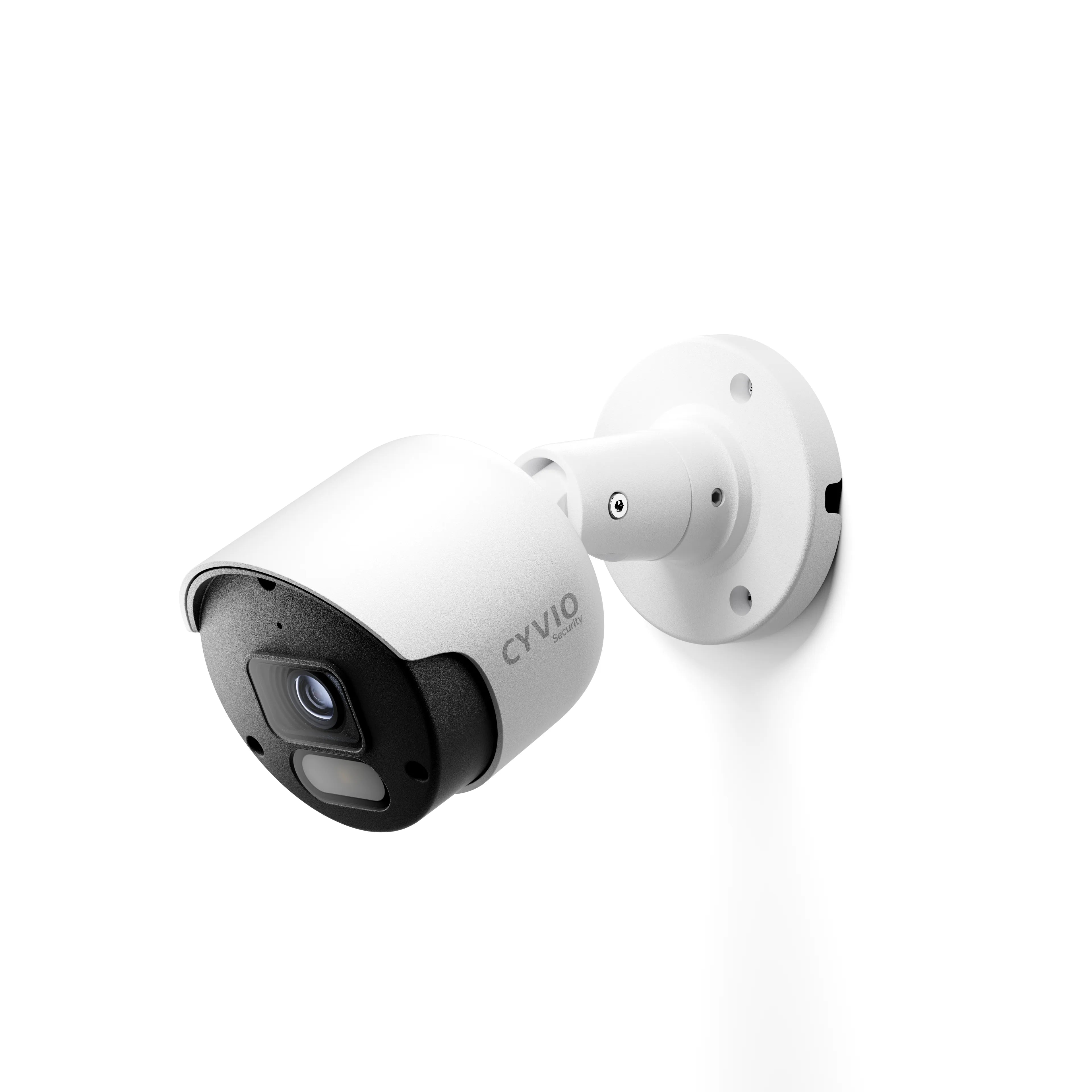
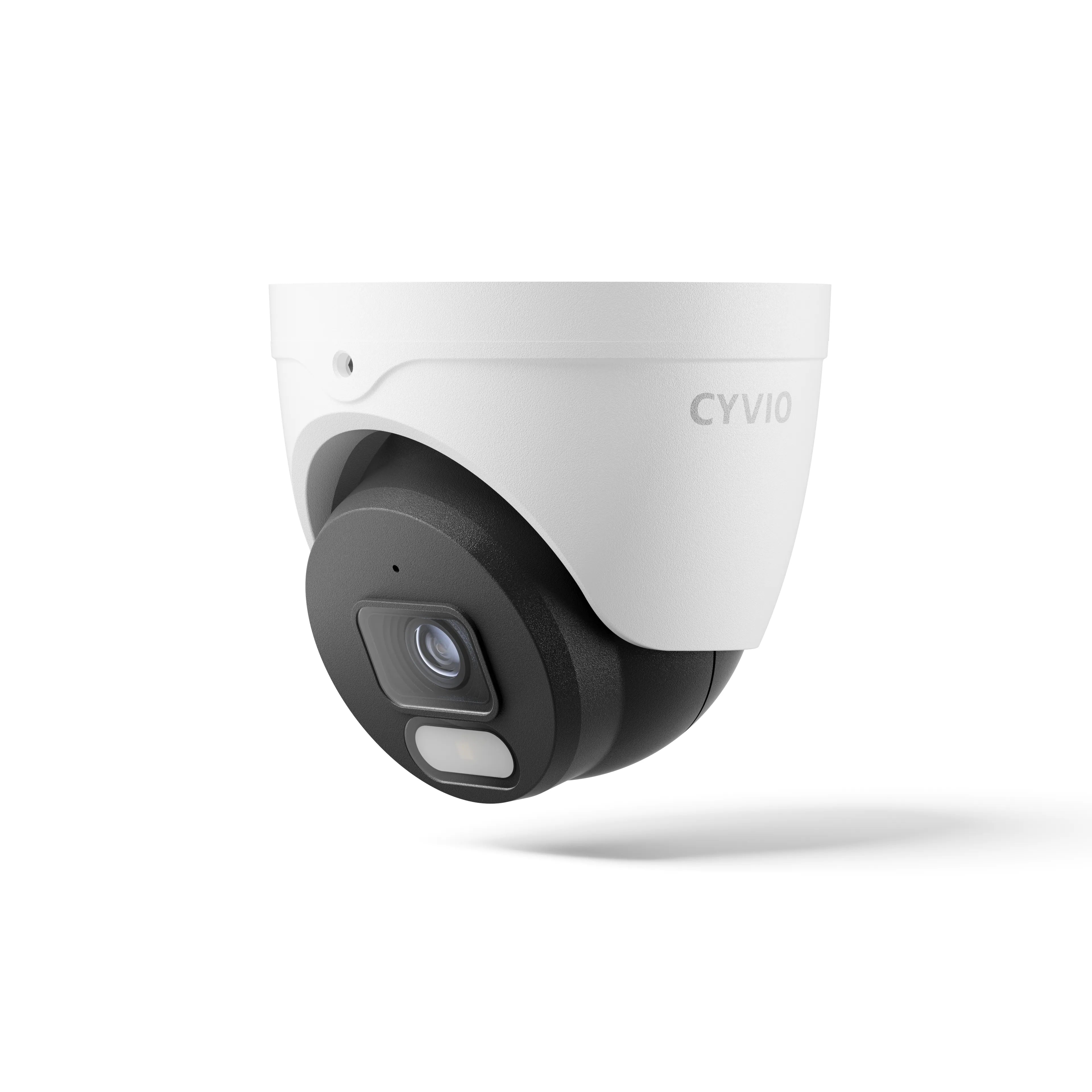
For example, the CYVIO N2834 PoE 4K Security Camera System utilizes smart night light technology, combining high-sensitivity color sensors with infrared LEDs and event-triggered white-light illumination. This allows the camera to:
Stealthy IR Monitoring: Under normal conditions, the camera operates in IR mode, conserving energy and remaining discreet.
Event-Triggered Color Capture: When motion or other security events are detected, the camera instantly activates soft white-light LEDs and switches to color mode, capturing critical details such as vehicle colors, license plates, or clothing patterns.
Automatic Reversion: Once the event is resolved, the camera returns to IR mode, resuming unobtrusive monitoring.

This hybrid approach delivers a balanced solution: continuous surveillance without drawing attention, yet the ability to capture rich, color-accurate evidence when necessary. With PoE (Power over Ethernet) integration, the CYVIO system also simplifies installation and ensures reliable power and data transmission over a single cable, making it ideal for both residential and commercial applications.
Real-World Applications and Use Cases
Residential Security: Homes with dimly lit yards or driveways benefit from color night vision to identify visitors and vehicle details while relying on IR for discreet perimeter coverage.
Retail Stores and Offices: Color night vision ensures that surveillance footage is detailed enough to resolve disputes or identify individuals, while IR helps monitor stock rooms or back offices without alerting intruders.
Large Industrial Sites: Warehouses, factories, and outdoor perimeters often use hybrid cameras, leveraging IR for long-range coverage and color night vision for entrances or high-traffic zones.
Wildlife and Environmental Monitoring: IR preserves natural behavior of animals at night without disruption, while color cameras can be used in semi-lit observation areas to identify species or track activity.
These applications demonstrate that the combination of IR and color night vision is often more effective than relying on a single technology.
Conclusion: Night Vision That Adapts to Your Needs
Selecting a night vision camera is essentially about choosing the right set of “eyes” for your environment.
IR Night Vision: A reliable sentinel that guarantees visibility in complete darkness.
Color Night Vision: A detective’s eye, capturing intricate details, textures, and colors.
Smart Hybrid Systems: Provide the flexibility to remain discreet and energy-efficient, yet deliver full-color evidence when it matters most.
The future of night surveillance lies not in choosing one technology over another, but in systems that intelligently adapt, deploying the right light and sensor based on the scene, environmental conditions, and detected events. By understanding your environment, security goals, and the capabilities of modern cameras, you can select a system that illuminates the dark without compromise.
For those seeking a practical and reliable solution, the CYVIO PoE Security Camera line demonstrates this approach perfectly. Combining high-sensitivity color sensors, infrared LEDs, and smart night light technology, CYVIO cameras deliver seamless IR and color night vision, ensuring both stealthy monitoring and rich, evidence-quality footage whenever it matters. With PoE support for simplified installation and stable power/data delivery, CYVIO provides a comprehensive night surveillance solution for homes, offices, and large-scale properties.
FAQ: Color Night Vision vs IR Night Vision
1. What is the difference between color night vision and IR night vision?
Color night vision captures images using available ambient light or white-light illumination to produce full-color footage at night. IR night vision uses infrared LEDs to illuminate scenes in complete darkness, producing black-and-white images. The main difference lies in the type of light used and whether color information is preserved.
2. Which night vision is better for home security cameras?
It depends on your needs. If you want discreet monitoring and reliable performance in total darkness, IR night vision is ideal. If identifying vehicle colors, clothing, or facial details is important, color night vision provides more visual information. Many modern security cameras combine both technologies for better flexibility.
3. Can color night vision work in complete darkness?
No. Color night vision requires some ambient light. In total darkness, it must activate built-in white-light LEDs or switch to IR night vision mode to maintain visibility.
4. Does white-light illumination make security cameras more noticeable?
Yes. White-light LEDs are visible and may expose the camera’s position. This can deter intruders, but it may also alert them. IR night vision is more discreet because infrared light is invisible to the human eye.
5. Is IR night vision better for long-distance monitoring?
Generally, yes. IR night vision cameras often provide longer effective distances compared to white-light color night vision. High-powered infrared LEDs can illuminate large areas, making them suitable for perimeters, warehouses, and industrial properties.
6. What is a smart hybrid night vision system?
A smart hybrid system combines IR and color night vision. It typically monitors in IR mode under normal conditions and switches to color mode when motion or events are detected. This ensures discreet operation while capturing full-color evidence when needed.
7. Are PoE security cameras better for night surveillance?
PoE (Power over Ethernet) security cameras provide stable power and data transmission through a single cable. This improves reliability, especially for advanced features like smart night vision. Systems such as CYVIO PoE security cameras are designed to deliver consistent nighttime performance with simplified installation.
8. Which night vision technology is best for commercial properties?
For commercial environments, a hybrid system is often the best choice. IR ensures long-range and discreet coverage, while color night vision helps capture detailed evidence. Choosing a professional PoE security camera system enhances stability and performance.