









Human Detection vs Motion Detection: How to Choose the Right Security Camera and Reduce False Alerts

Have you ever experienced this situation? Your security camera suddenly sends an alert in the middle of the night. You open the notification expecting something serious, only to realize it was triggered by a moving tree branch, shifting sunlight, or a passing cat.
Frequent false alerts are one of the most common frustrations for security camera users. Not only do they interrupt your daily life, but they can also make you ignore notifications over time—potentially causing you to miss a real security event.
This is where modern human detection technology becomes essential. Compared with traditional motion detection, intelligent human detection dramatically reduces false alarms and ensures that alerts actually matter.
In this article, we’ll explain the key differences between human detection and motion detection, explore how these technologies work, and show how different CYVIO security cameras apply these features in real-world scenarios.
Understanding the Difference Between Motion Detection and Human Detection
At their core, motion detection and human detection serve the same purpose: identifying activity captured by a camera. However, the way they interpret movement is very different.
Traditional motion detection works by analyzing changes between video frames. If anything in the camera’s field of view moves—even slightly—the system detects that change and triggers an alert.
This means motion detection reacts to nearly everything:
- Tree branches moving in the wind
- Pets walking through the frame
- Changing light or shadows
- Rain or snow
- Insects flying near the lens
You can think of it like an overly sensitive guard who shouts every time something moves, regardless of whether it’s actually important.
Human detection, on the other hand, is much more intelligent. Instead of simply detecting movement, it analyzes what is moving.
Using AI-powered image recognition, the camera can identify the shape and movement patterns associated with a human body. If the system determines that the moving object is a person, it sends an alert. If the movement comes from an animal, a shadow, or background motion, it usually ignores it.
In simple terms:
- Motion detection answers: “Is something moving?”
- Human detection answers: “Who or what is moving?”
- This difference dramatically improves the usefulness of security notifications.
How Security Cameras Detect Humans
Modern security cameras rely on several different technologies to recognize people. Each approach has its own strengths, and some cameras combine multiple methods for better accuracy.
PIR Sensors: Detecting Body Heat
One common method uses Passive Infrared (PIR) sensors. PIR sensors detect changes in infrared radiation, which allows them to recognize heat emitted by living beings.
Because humans and animals generate heat, PIR sensors can detect their movement even in darkness. At the same time, objects without heat—such as leaves, shadows, or moving curtains—are ignored .
This makes PIR sensors especially useful for battery-powered security cameras, where energy efficiency is critical.
AI Video Analysis
Another method relies entirely on video-based AI recognition. In this approach, the camera analyzes the visual content of video frames using machine learning algorithms.
The system identifies patterns such as:
- Human body shapes
- Walking or running motion
- Head and shoulder outlines
- Vehicle structures
This allows the camera to distinguish between people, vehicles, pets, and background movement.
AI-based video detection can be extremely accurate and is commonly used in wired or PoE camera systems where power consumption is less of a concern.
Hybrid Detection Systems
Many modern security cameras combine PIR sensors and AI video analysis.
The process typically works like this:
- The PIR sensor detects heat movement and wakes up the camera.
- The camera analyzes the detected target to determine whether it is a person.
- If confirmed as a person, recording and alerts are triggered; otherwise, the event is ignored and the camera returns to sleep mode.
This two-step verification approach reduces false alerts while keeping power consumption low, making it ideal for wireless devices.
How CYVIO Security Cameras Use These Technologies
Different environments require different types of security cameras. CYVIO designs its product lineup to match specific scenarios, using the appropriate detection technologies for each category.
Battery-Powered Cameras: Accuracy with Energy Efficiency
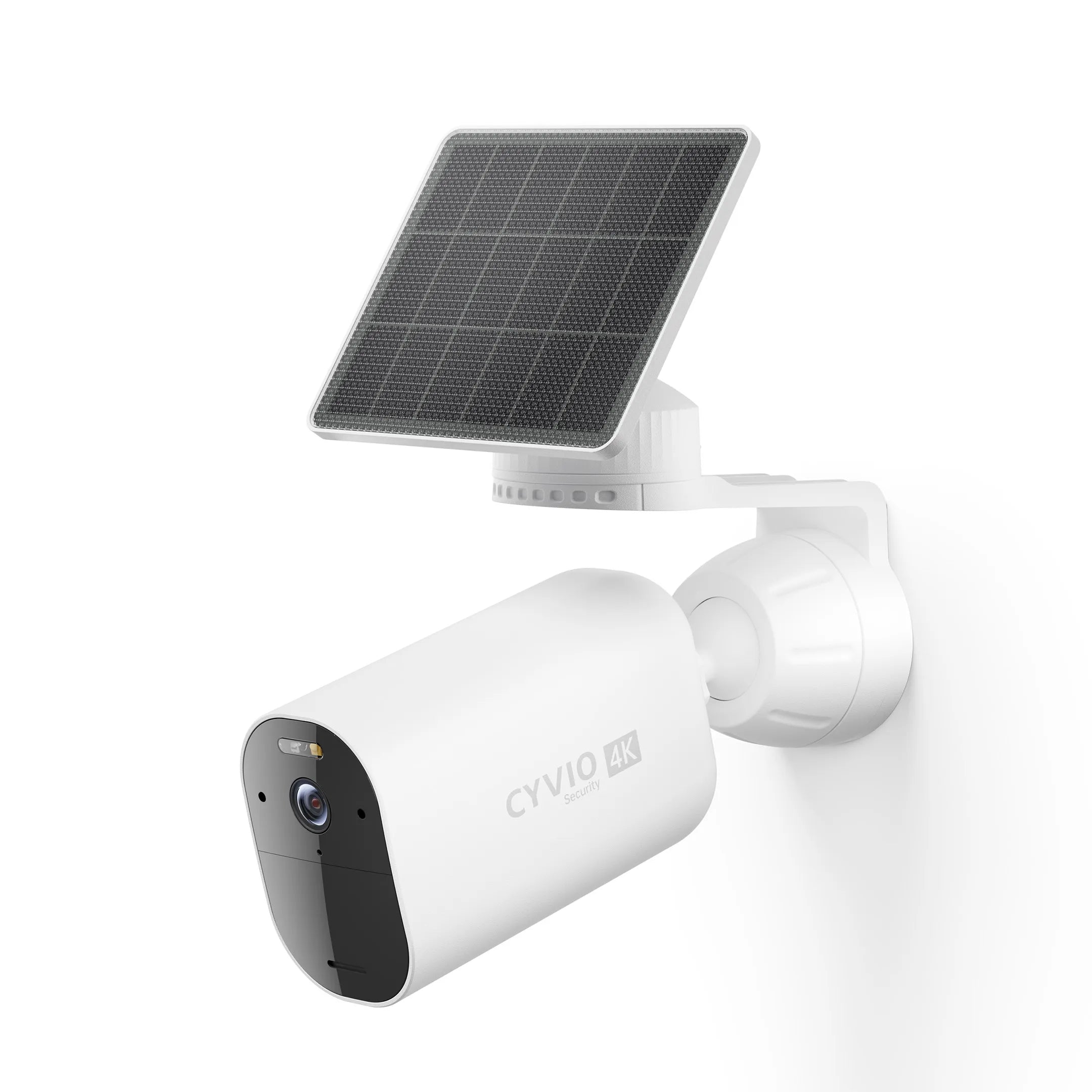
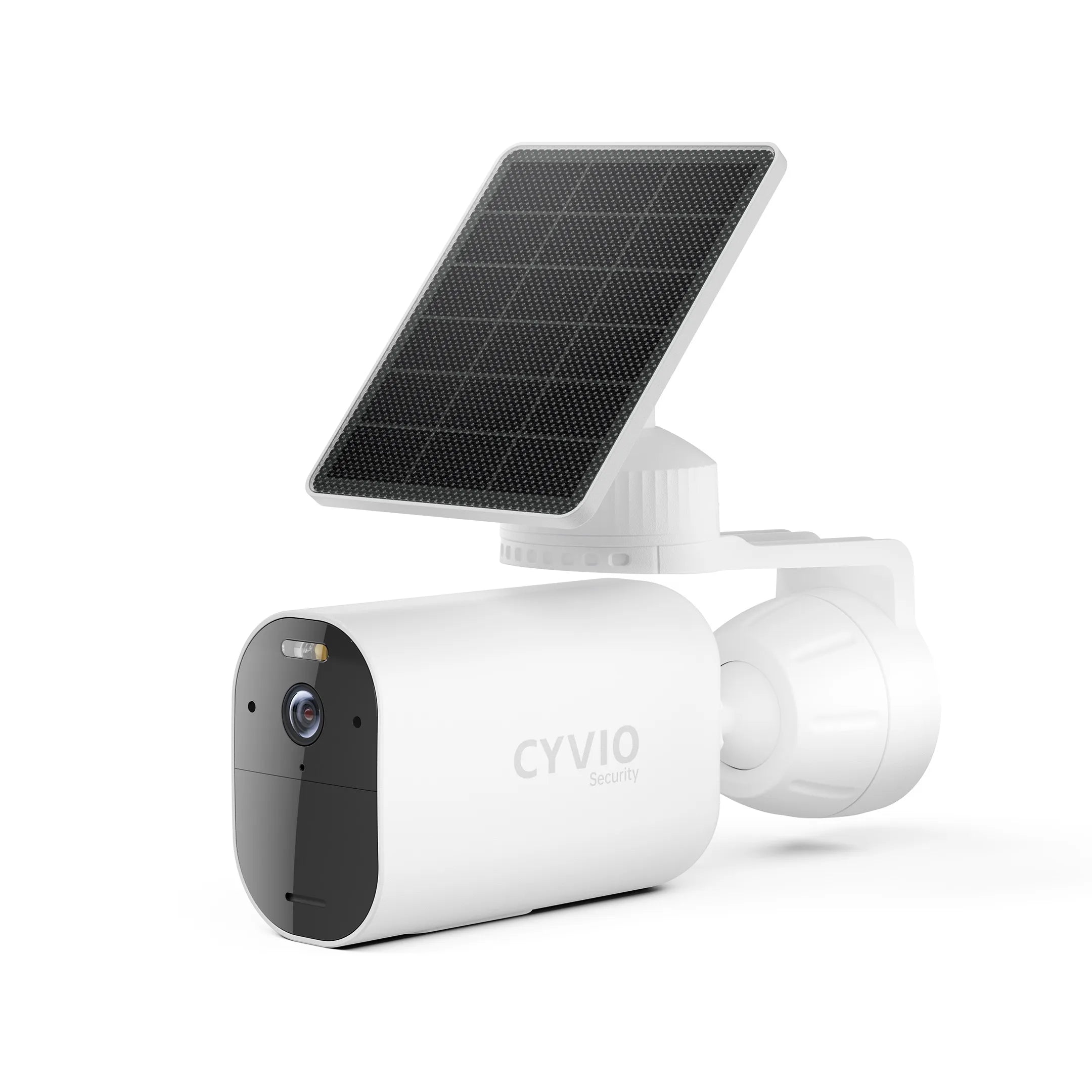
Wireless cameras and video doorbells must operate for long periods on battery power. To achieve this balance, CYVIO R112 battery-powered doorbell cameras use a dual verification system.
First, the PIR sensor detects heat-based motion, which filters out most non-living movement such as leaves or shadows.
Then the system performs AI human detection to confirm that the detected subject is actually a person.
This approach offers two major advantages.
It dramatically reduces false alarms while also conserving battery life, since the camera only activates its AI processing when the PIR sensor detects something meaningful.
For homeowners who want a wireless security camera with reliable alerts, this combination provides an excellent balance between performance and efficiency.

PoE Cameras: Reliable 24/7 Smart Monitoring
PoE security cameras operate differently. Because they receive both power and data through a wired Ethernet connection, they don’t have the same power limitations as battery devices.
This allows them to run continuous AI video analysis.
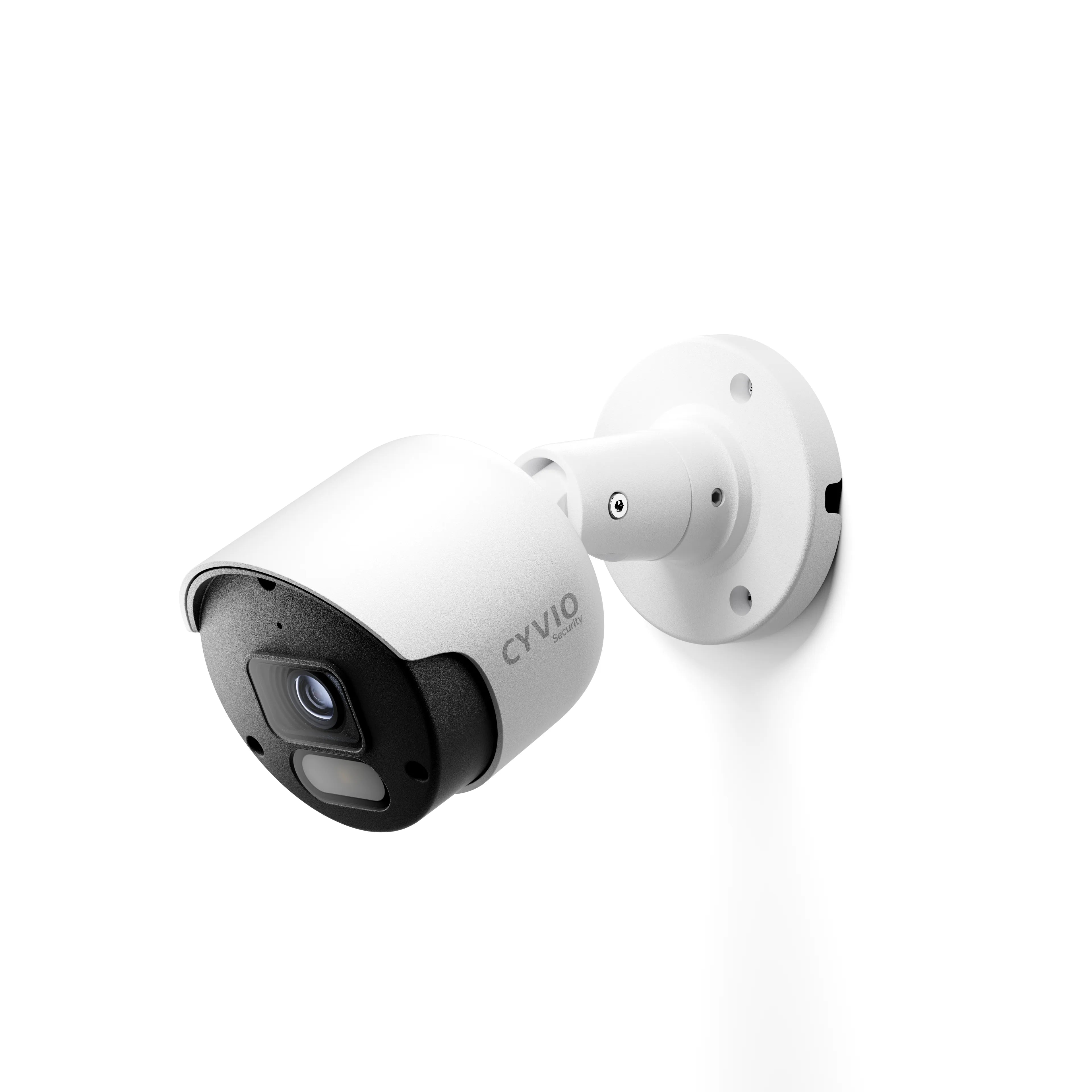
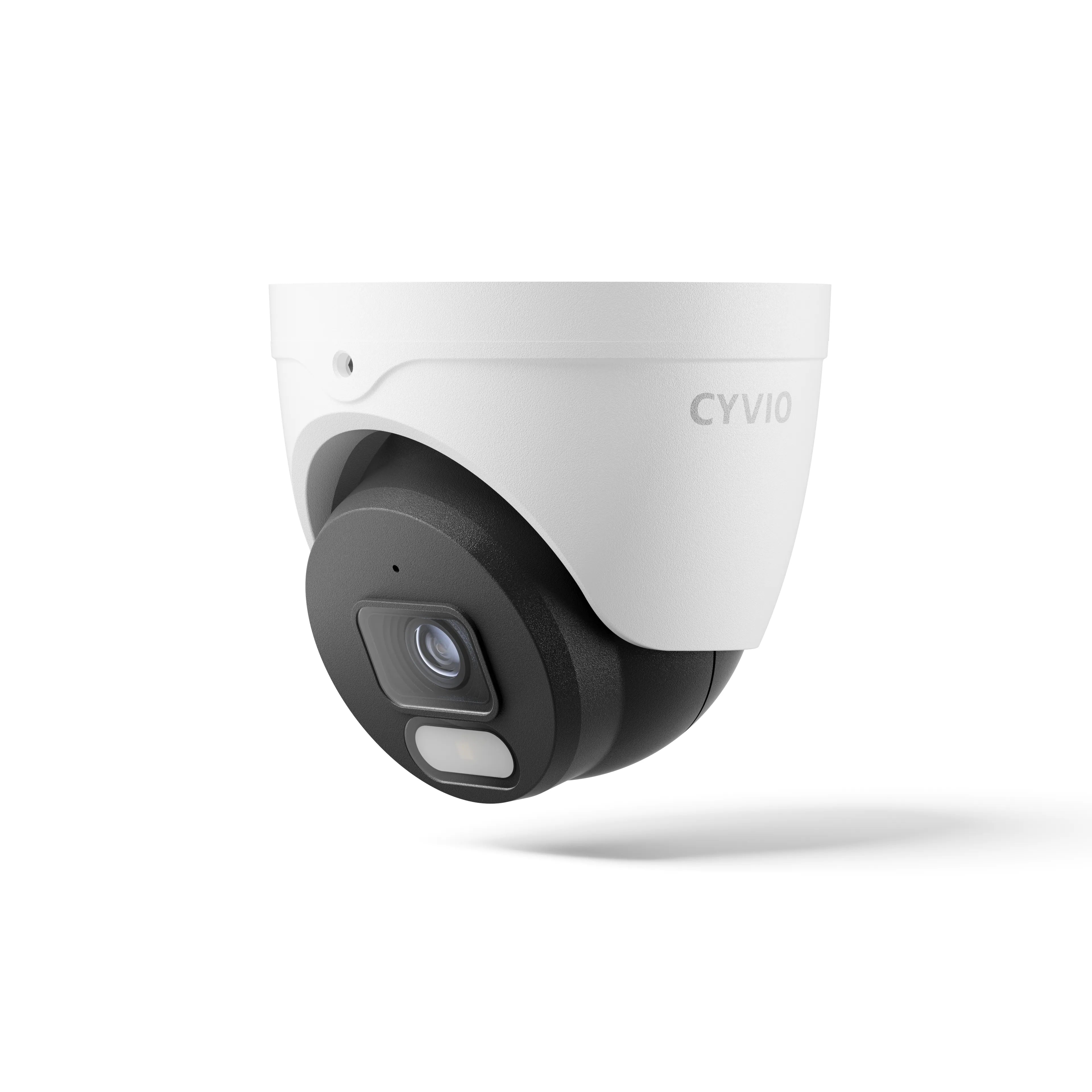
CYVIO N2838 PoE cameras system use advanced algorithms to identify people and vehicles, distinguishing them from pets, shadows, or environmental motion. As a result, users receive notifications that are more relevant and actionable.

This type of camera system is ideal for locations that require 24/7 surveillance, such as:
- Small businesses
- Offices
- Warehouses
- Garages
- Fixed outdoor monitoring points
By combining stable power supply with intelligent recognition, PoE cameras provide dependable long-term security coverage.
CYVIO C2: Intelligent Indoor Monitoring
The CYVIO C2 indoor PTZ 360° camera represents a more advanced level of smart detection.
Instead of treating every movement as a generic event, the C2 is capable of recognizing multiple types of targets, including people, pets, and vehicles. This ensures that notifications are meaningful and relevant.
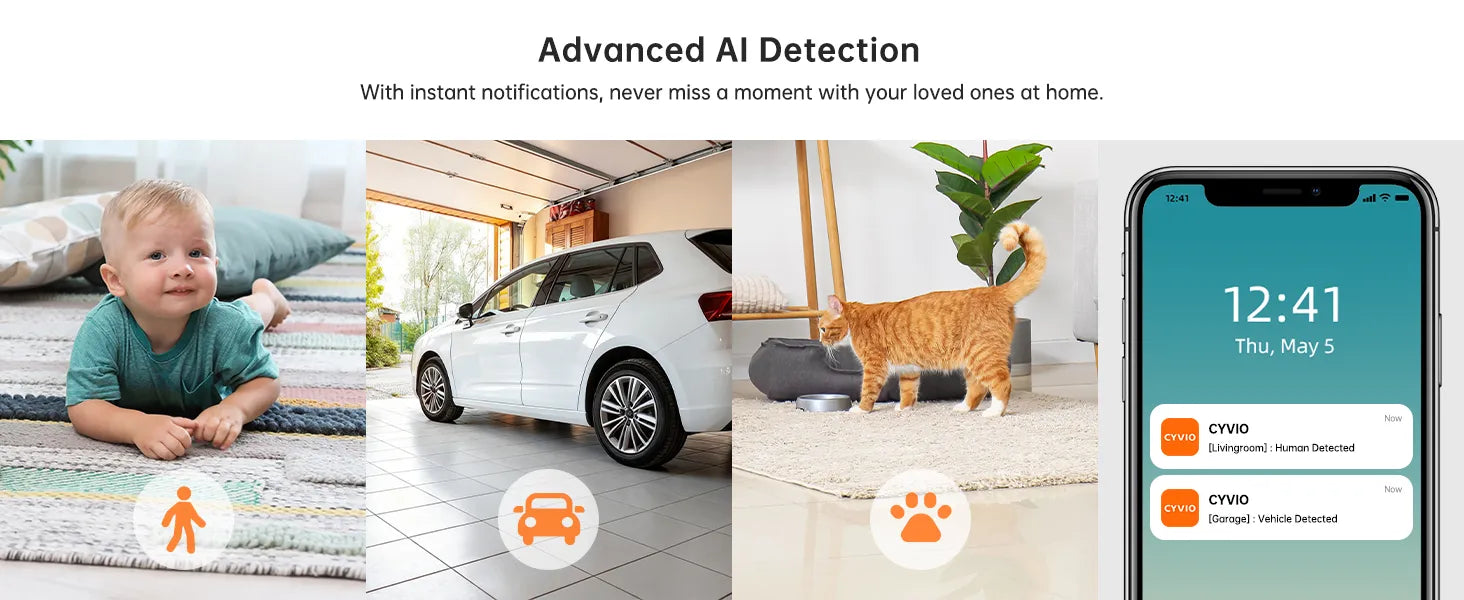
For example, subtle background movements like changing sunlight or minor environmental motion won’t constantly trigger alerts.
One of the most useful features of the C2 is its automatic human tracking.
The camera can rotate smoothly to follow activity within the room. When human movement is detected, the camera automatically locks onto the person and keeps them centered in the frame.

This provides a continuous view of the movement rather than a single snapshot.
Imagine monitoring your living room while your child is playing, or keeping an eye on elderly family members as they move around the house. With human tracking, you can observe the full situation in real time rather than just seeing a momentary alert.
This level of intelligent monitoring goes far beyond what traditional motion detection systems can offer.
How to Choose the Right Security Camera
Selecting the best security camera depends largely on your installation environment and monitoring goals.
If you want to monitor entry points such as front doors, driveways, or yards, wireless cameras or video doorbells are often the most convenient option. Their PIR-based detection reduces false alerts while maintaining long battery life.
For small businesses, garages, or fixed surveillance locations, PoE cameras provide a more stable solution. Continuous power allows them to run advanced AI recognition around the clock.
If your goal is active indoor monitoring, cameras like the CYVIO C2 provide additional intelligence such as human tracking.
Understanding how detection technologies work can help you choose a system that fits your specific needs.
The Future of AI Security Cameras
Security camera technology continues to evolve rapidly as artificial intelligence becomes more advanced.
In the near future, we can expect several improvements.
Cameras will be able to recognize not just people, but also specific activities and behaviors, allowing them to identify suspicious actions rather than simple movement.
Power efficiency will continue improving, extending battery life for wireless cameras.
Local AI processing will also become more powerful, reducing reliance on cloud services while improving privacy and response speed.
These advancements will make security systems smarter, faster, and more reliable than ever before.
Conclusion
Choosing the right security camera isn’t just about image resolution or night vision. One of the most important factors is how the camera detects motion.
Traditional motion detection simply identifies movement, which often leads to frequent false alarms.
Human detection, powered by AI and sensor technology, focuses on identifying people specifically. This dramatically improves alert accuracy and ensures that you’re notified only when something truly matters.
CYVIO’s product lineup reflects this philosophy by offering different detection technologies tailored to different environments—from energy-efficient wireless cameras to powerful PoE surveillance systems and intelligent indoor monitoring solutions.
A good security camera should work like a reliable guardian: quiet most of the time, but ready to alert you instantly when something important happens.
By choosing the right detection technology, you can make sure your security system protects your home or business without creating unnecessary distractions.
FAQ
1. Why does my security camera still occasionally trigger false alerts?
Even advanced human detection systems can sometimes be affected by extreme lighting conditions, rapid shadow movement, or unusual environmental changes. However, compared with traditional motion detection, AI human detection significantly reduces false alerts.
2. Does human detection work at night?
Yes. Most modern security cameras like CYVIO include infrared night vision, allowing them to capture clear images in low light. PIR sensors can even perform better at night because heat differences are easier to detect.
3. Do AI detection features require a monthly subscription?
CYVIO cameras include built-in AI detection features without requiring a subscription. Once purchased, the detection functions can be used long-term without additional fees.
4. Is human detection better than motion detection for home security?
In most situations, yes. Human detection focuses on identifying people specifically, which makes alerts more meaningful and reduces unnecessary notifications.
5. Are wireless security cameras reliable enough for home protection?
Modern wireless cameras with PIR sensors and AI verification can provide reliable protection while remaining easy to install. They are especially suitable for homes where running cables is difficult.