










H.265 Video Encoding: The Smart Compression Revolution in Security Surveillance

The Growing Data Challenge in Modern Surveillance
In today’s digital world, video has become the dominant form of information. From social media and online streaming platforms to smart cities and intelligent homes, almost every system now depends on continuous video data. However, behind every clear image lies a growing problem that is often ignored: data volume.
Security surveillance faces this challenge more than any other industry. Unlike entertainment video, which is recorded for minutes or hours, surveillance cameras operate 24 hours a day, 7 days a week. A single high-resolution camera can generate hundreds of gigabytes of data every month. When multiple cameras are deployed across homes, offices, warehouses, or retail chains, storage and bandwidth quickly become major operational costs.
This is why video compression is not just a technical feature, but a strategic foundation for modern security systems. And this is exactly where H.265, also known as High Efficiency Video Coding (HEVC), becomes essential.
What Is H.265 Video Encoding?
H.265 is a next-generation video compression standard jointly developed by the International Telecommunication Union (ITU-T) and the International Organization for Standardization (ISO/IEC) in 2013. It was created as the direct successor to H.264, which had dominated the video industry for more than a decade.
The primary goal of H.265 is simple in theory but revolutionary in practice: to deliver the same visual quality as H.264 while using approximately half the bitrate. At the same time, H.265 was designed to support ultra-high-definition content, including 4K and 8K resolutions, making it suitable for both consumer media and professional industries such as security surveillance.
Technically, H.265 introduces a more intelligent way of understanding image content. Traditional codecs treat each part of a frame in a relatively uniform manner. H.265, however, adapts its compression strategy based on scene complexity, allocating more data to important visual areas and less data to simpler backgrounds. This results in a much more efficient use of bandwidth and storage.
How H.265 Works: Smarter Compression at the Core
The key innovation behind H.265 lies in its flexible coding structure. While H.264 divides video frames into fixed 16×16 pixel macroblocks, H.265 introduces Coding Tree Units (CTU), which can range in size from 8×8 up to 64×64 pixels.
This flexibility allows the encoder to analyze each frame and decide how much detail is truly necessary. For example, a static wall or empty corridor can be encoded using large blocks with minimal data, while complex areas such as faces, vehicles, or moving objects are encoded using smaller blocks with higher precision.
In addition to block structure, H.265 significantly improves prediction accuracy. It offers 35 intra prediction modes compared to only 9 in H.264, allowing the encoder to more accurately estimate pixel values based on surrounding information. This reduces redundancy and minimizes the amount of data required to represent each frame.
Together with more advanced transform and entropy coding methods, these improvements enable H.265 to achieve far higher compression efficiency without compromising visual quality.

H.265 vs H.264: Why the Difference Matters in Real Life
On paper, H.265 promises around 50% bitrate reduction. In real-world security systems, the impact is even more significant.
A typical 8MP security camera using H.264 may require around 8 Mbps to maintain acceptable quality. The same camera using H.265 can often achieve similar or better clarity at around 4 Mbps. Over one month of continuous recording, this difference translates into hundreds of gigabytes of storage savings per camera.
For businesses operating dozens or hundreds of cameras, this becomes a major cost factor. Fewer hard drives are needed, NVR systems last longer before upgrades, and network infrastructure does not need constant expansion.
Equally important is visual quality at low bitrate. H.265 performs much better in challenging conditions such as night scenes, rain, fog, or fast motion. Important details like faces, license plates, and small objects remain readable, even when bandwidth is limited.

Why H.265 Is Essential for Security Surveillance
Security surveillance has unique requirements that make H.265 particularly valuable. Systems must record continuously, store footage for long periods, and allow remote access from various devices and networks.
H.265 directly addresses these needs by reducing storage pressure, lowering network load, and maintaining high image quality. This makes it ideal for both small home systems and large enterprise deployments.
In weak network environments, such as rural areas or mobile connections, H.265 enables stable real-time monitoring without constant buffering. In cloud-based systems, it significantly reduces storage and bandwidth costs. In multi-site enterprises, it allows centralized monitoring without overwhelming network infrastructure.
H.265 and the Future of Intelligent Security
Modern security systems are no longer limited to passive recording. Artificial intelligence is increasingly integrated into surveillance platforms for tasks such as face recognition, behavior analysis, intrusion detection, and object tracking.
These AI algorithms require high-quality video input, but transmitting raw high-bitrate streams is impractical. H.265 provides an ideal balance by preserving visual detail while keeping data volume manageable. This makes large-scale intelligent security systems technically feasible and economically sustainable.
CYVIO Security Cameras Powered by H.265
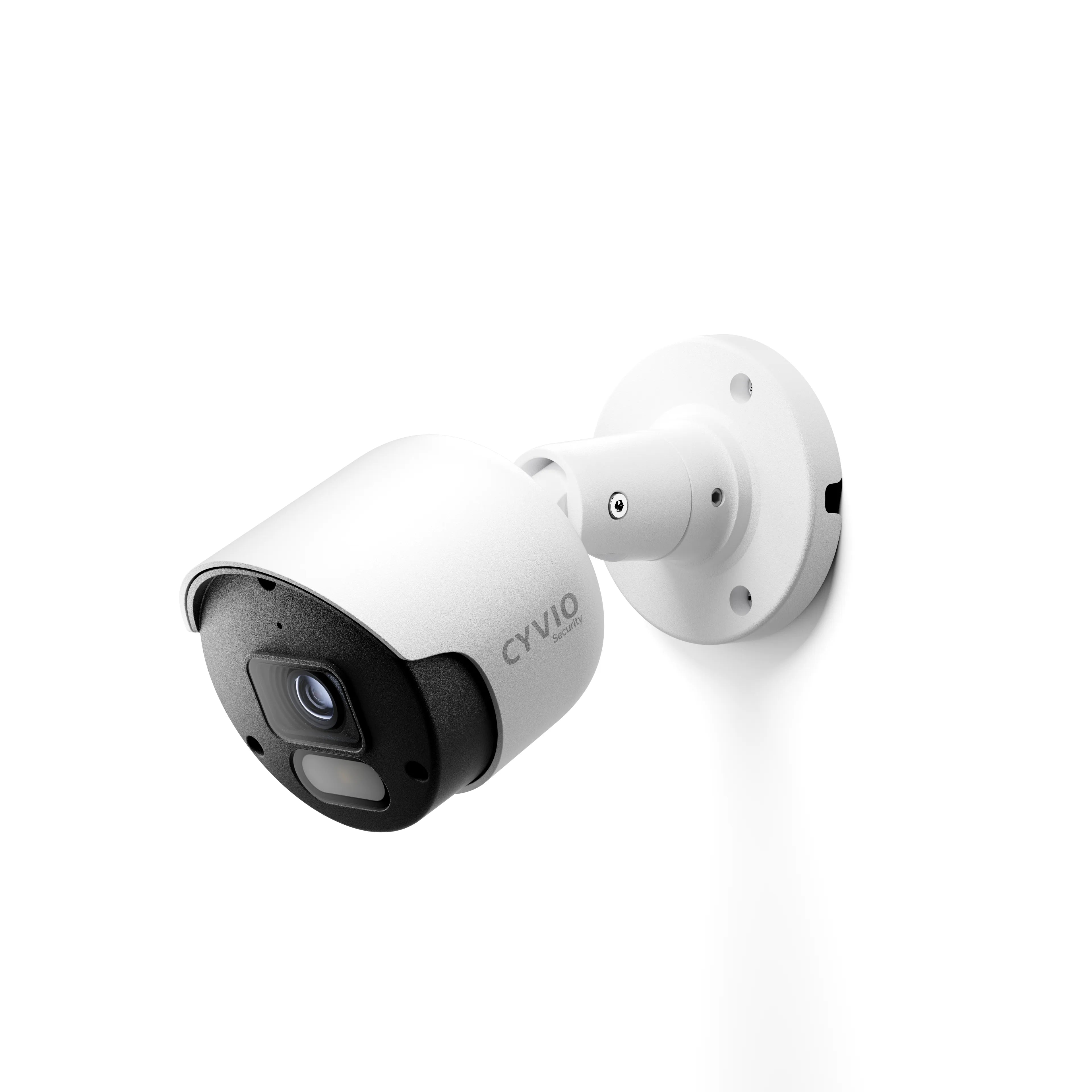
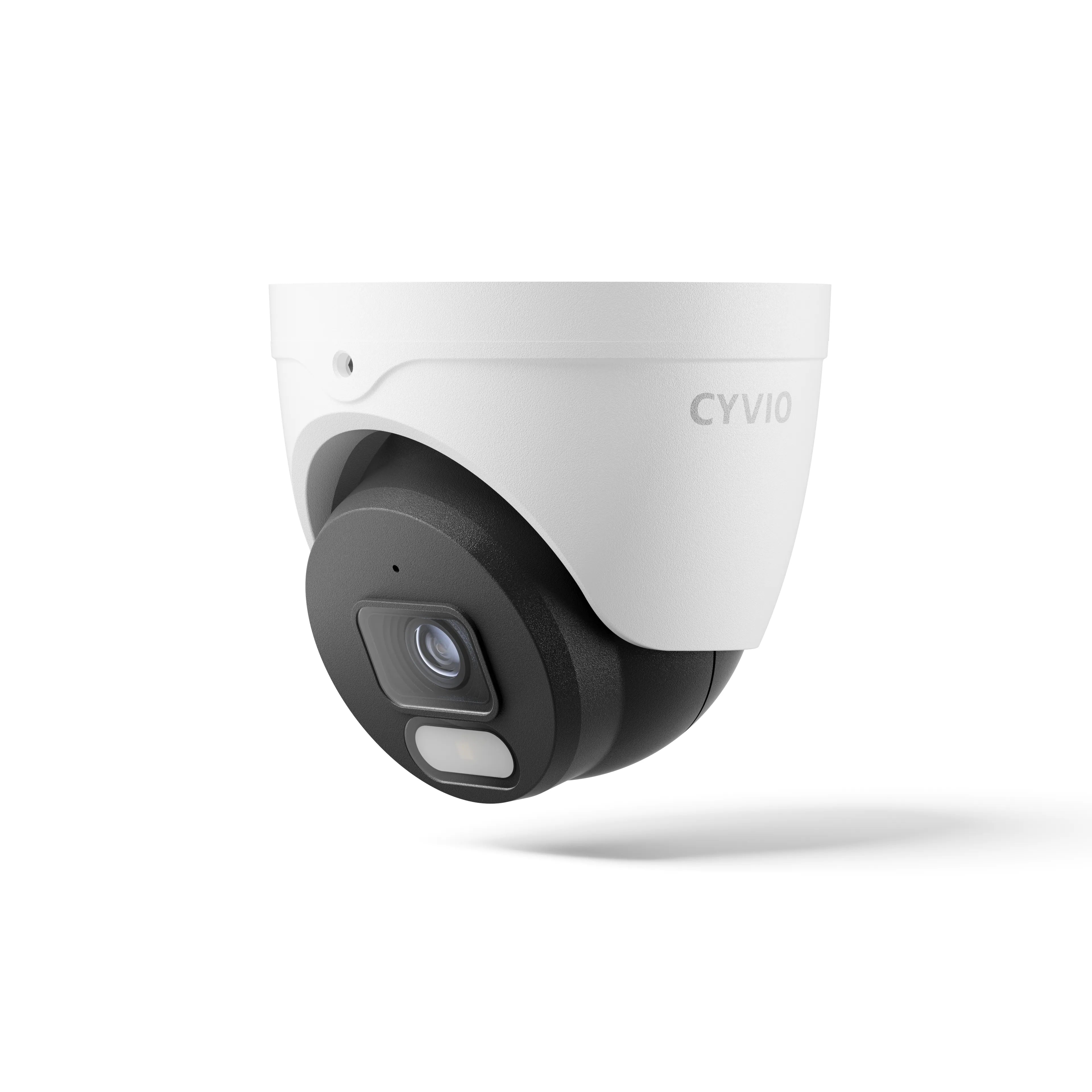
CYVIO N2834D PoE Dome Security Camera System fully adopts H.265 video encoding for more efficient storage and smoother streaming. This ensures that users benefit from the latest compression technology without needing complex configuration or technical knowledge. From installation to daily operation, the system is designed to automatically optimize video performance under different network and lighting conditions.

1. Image Quality Benefits
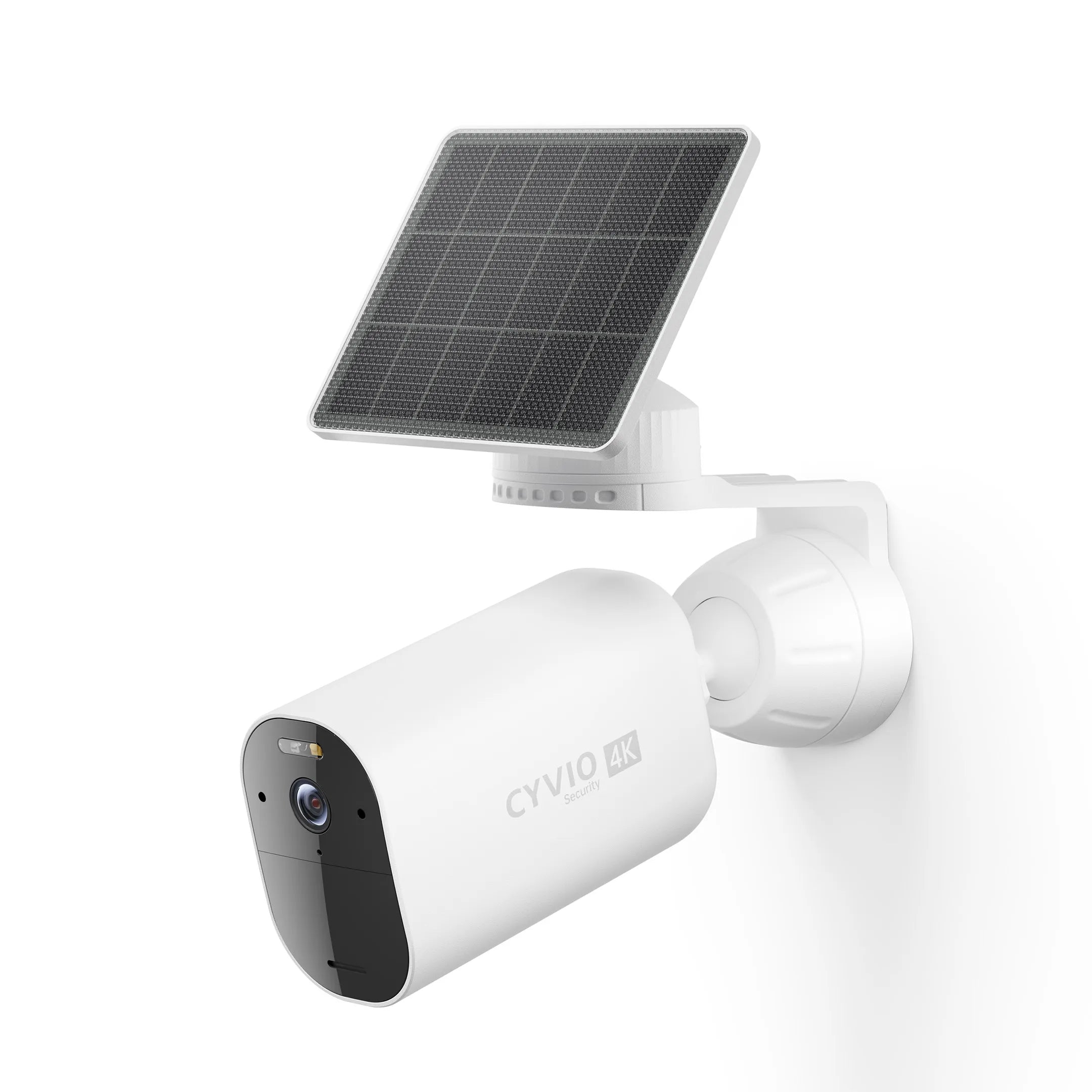
CYVIO cameras powered by H.265 deliver noticeably higher image quality in real-world conditions. Facial features remain clear, object outlines are more accurate, and motion blur is significantly reduced even when subjects move quickly across the frame. This improvement becomes especially obvious at night or in low-light environments, where traditional compression methods often introduce noise and artifacts. With H.265, CYVIO cameras — including the N2834D 4K PoE security system, which supports human and vehicle detection — are able to preserve critical visual details, ensuring that important information remains usable for both real-time monitoring and later review.

2. Storage and Cost Optimization
One of the most immediate benefits users experience with CYVIO’s H.265 implementation is the dramatic reduction in storage requirements. Under the same recording conditions, video files typically occupy up to 50% less space compared to older encoding standards. With the CYVIO N2834D PoE Security System, featuring pre-installed 3.5’’ 2TB HDD storage and expandable up to 16TB(not included), fewer hard drives are needed, NVR systems can retain footage for much longer periods, and overall hardware investment is significantly reduced. As a result, professional-grade surveillance becomes more affordable not only for large enterprises, but also for small businesses and residential users.

3. Network and Remote Access Performance
H.265 also greatly improves network performance and remote access experience. CYVIO camera systems can stream high-definition video smoothly over mobile networks, while remaining stable even on limited broadband connections. Users are able to view multiple camera feeds simultaneously without noticeable buffering or delays, making it possible to monitor properties from anywhere in the world with minimal data usage. This level of efficiency is particularly valuable for remote sites, multi-location businesses, and users who rely on mobile devices for daily monitoring.

In real-world usage, CYVIO users experience clearer images, smoother remote viewing, longer recording history, and lower hardware costs. Whether monitoring a home, office, warehouse, or retail store, H.265 enables reliable security performance under real network conditions.
Conclusion: A Smarter Standard for a Smarter World
H.265 is more than just a new codec. It represents a fundamental shift in how video is processed, transmitted, and stored. By reducing data requirements while improving visual quality, it allows security systems to scale efficiently in an increasingly connected world.
For users, this means clearer images, lower costs, and better long-term reliability. For brands like CYVIO, it provides the technical foundation for building future-proof security products. And for the industry as a whole, H.265 marks the transition from traditional video recording to truly intelligent surveillance.
FAQ – H.265 Video Encoding in CYVIO Security Systems
Q1: What is H.265 video encoding, and how is it different from H.264?
H.265, also known as High Efficiency Video Coding (HEVC), is the next-generation video compression standard. Compared to H.264, it provides roughly 50% better compression efficiency at the same image quality. This means video files are smaller, storage costs are lower, and high-resolution video streams more smoothly, especially in security surveillance applications.
Q2: How does H.265 improve image quality in CYVIO cameras?
H.265 uses advanced coding techniques to preserve details even at low bitrates. CYVIO cameras using H.265 deliver clear facial features, accurate object outlines, reduced motion blur, and stable performance in low-light or nighttime conditions. Dynamic scenes are smoother, making it easier to capture critical information in real-world surveillance.
Q3: Will using H.265 reduce storage requirements?
Yes. Video recorded with H.265 typically takes up about half the storage space compared to H.264 at the same quality. This allows longer retention periods on the same hard drives and reduces the number of NVR slots or disks needed, lowering overall hardware costs.
Q4: Does H.265 require more processing power?
H.265 encoding and decoding are more complex than H.264, but CYVIO products include hardware and firmware optimizations to handle this efficiently. Users do not need to configure or upgrade devices manually—H.265 runs seamlessly out of the box.
Q5: Can H.265 improve remote viewing performance?
Absolutely. H.265 reduces the required network bandwidth, allowing high-definition video to stream smoothly over mobile networks or limited broadband. Multi-channel live viewing is also supported without buffering, making remote monitoring reliable and efficient.
Q6: Do I need technical knowledge to use H.265 on CYVIO systems?
No. H.265 is fully supported and pre-configured in CYVIO products. Users do not need to adjust encoding settings manually; the system automatically optimizes performance based on network conditions, lighting, and motion in the scene.