









NVR Local Storage vs Cloud Storage: Which Is Better for Security Camera Systems?


In any security camera system, storage is the foundation that determines whether critical footage can be preserved, reviewed, and used when needed most. Cameras may capture important events, but without a reliable storage solution, those recordings can easily become inaccessible, lost, or compromised.
Today, two primary storage options dominate the surveillance market: cloud storage and NVR local storage. Cloud storage is often promoted for its convenience and remote accessibility, while NVR local storage remains the preferred choice for professional security applications due to its superior reliability, security, and long-term cost efficiency.
For homeowners, business owners, warehouses, farms, offices, and commercial facilities, choosing the right storage method can significantly impact the effectiveness of an entire surveillance system. This article compares NVR local storage and cloud storage across key categories and explains why local recording continues to be the most trusted solution for modern security camera systems.
Understanding the Difference Between Cloud Storage and NVR Local Storage
Cloud storage works by uploading recorded footage through the internet to remote servers operated by a third-party provider. Users can then access recordings through a web portal or mobile application from virtually anywhere.
NVR (Network Video Recorder) local storage operates differently. Video footage is transmitted directly from cameras to a local NVR device, where recordings are stored on installed hard drives. The entire recording process occurs within the local network, allowing users to maintain complete ownership and control of their surveillance data.
While both methods provide video storage capabilities, their approaches to security, reliability, and ownership differ dramatically.
NVR Local Storage vs Cloud Storage: Side-by-Side Comparison

|
Comparison Factor |
Cloud Storage |
NVR Local Storage |
Key Advantage |
|
Data Security & Privacy |
Video footage is transmitted over the internet and stored on third-party servers. Security depends on the cloud provider's infrastructure, account protection measures, and access controls. |
Video data remains within the local network and is stored directly on the NVR. Users maintain full ownership and control over storage settings, permissions, and security policies. |
Greater data ownership, privacy, and control. |
|
Real-Time Performance & Reliability |
Live streaming and playback rely on internet bandwidth and cloud service availability. Network congestion or service interruptions may affect remote access and video synchronization. |
Video transmission occurs within the local network with extremely low latency. Recording continues even if the internet connection is unavailable, as long as the cameras and NVR remain powered. |
More consistent performance and uninterrupted recording. |
|
Long-Term Cost Efficiency |
Typically requires recurring monthly or annual subscription fees based on storage capacity, retention period, and camera count. Additional features may incur extra charges. |
Requires an upfront investment in NVR hardware and hard drives, with no mandatory ongoing storage subscription fees. Storage can be expanded by adding additional drives when needed. |
Lower total cost of ownership over the long term. |
|
Compliance & Data Governance |
Depending on the provider and region, footage may be stored in third-party data centers, creating additional compliance considerations for some organizations. |
Organizations maintain direct control over where footage is stored, how long it is retained, and who can access it. |
Easier management of internal security and compliance requirements. |
|
Maintenance & Recovery |
Recovery processes and system availability depend largely on the cloud provider's infrastructure and support services. |
Users can directly manage backups, hardware replacement, storage upgrades, and recovery procedures without relying on third-party providers. |
Faster troubleshooting and greater operational control. |
|
Scalability for Large Deployments |
Storage costs increase as camera count, video resolution, and retention periods grow. |
Additional hard drives or storage arrays can be added as surveillance requirements expand. |
More cost-efficient for larger surveillance systems. |
|
Best Application Scenarios |
Suitable for homeowners and users seeking convenient remote access with minimal setup. |
Ideal for homes, retail stores, offices, warehouses, farms, industrial facilities, and other applications requiring continuous recording and long-term storage. |
Better suited for demanding surveillance environments. |
Why Security Professionals Prefer NVR Local Storage
The primary purpose of a surveillance system is not simply to record video—it is to ensure footage remains secure, accessible, and reliable when incidents occur.
Professional security installations prioritize data ownership, uninterrupted operation, and long-term dependability. These priorities strongly favor local storage solutions.
1.Enhanced Data Security and Privacy
Security footage often contains highly sensitive information, including personal activities, customer interactions, business operations, inventory management, and restricted-access areas.
When recordings are stored in the cloud, data must travel through public internet infrastructure before reaching remote servers. Although encryption technologies provide protection, internet-connected systems remain potential targets for cyberattacks, unauthorized access attempts, account breaches, and service vulnerabilities.
NVR local storage significantly reduces these risks by keeping video data within a private local network. Since footage never needs to leave the premises during recording, the attack surface is dramatically reduced.
Additionally, administrators maintain complete control over user permissions, firewall settings, access restrictions, and backup procedures. This level of control is difficult to achieve when relying on third-party cloud providers.
2.Uninterrupted Recording During Internet Outages
Internet outages happen more frequently than many users realize. Service interruptions, ISP maintenance, router failures, and network congestion can all affect cloud-based surveillance systems.
A major advantage of NVR local storage is that recording continues even if the internet connection fails.
As long as cameras remain connected to the NVR and power is available, footage continues to be captured and stored without interruption. This capability is especially important for businesses, warehouses, construction sites, farms, and remote properties where continuous surveillance is critical.
Cloud storage systems, on the other hand, may lose recording capabilities or experience synchronization issues when internet connectivity is disrupted.
3.Superior Real-Time Performance
Effective security monitoring requires instant access to live and recorded footage.
Cloud-based systems rely heavily on upload speeds and internet bandwidth. High-resolution video streams can consume significant bandwidth, especially when multiple cameras are recording simultaneously.
As camera counts increase, users may experience:
* Delayed live viewing
* Playback buffering
* Reduced video quality
* Network congestion
NVR local storage avoids these issues by processing video traffic within the local network. Because footage does not need to travel to external servers before playback, users benefit from faster access, smoother viewing, and lower latency.
This is particularly important for 4K surveillance systems where large video files demand high transmission efficiency.
4.Lower Long-Term Ownership Costs
Cost is one of the most significant factors when evaluating storage options.
Cloud storage providers typically operate on recurring subscription models. Monthly or annual fees increase based on:
* Number of cameras
* Video resolution
* Retention period
* Storage capacity
* Additional backup services
While subscription costs may appear affordable initially, they accumulate substantially over time.
NVR local storage requires a higher upfront investment in hardware, but ongoing expenses are minimal. Once hard drives are installed, users own the storage infrastructure outright.
For systems requiring dozens of cameras and months of footage retention, local storage often delivers significantly lower total ownership costs over the lifespan of the system.
5.Easier Compliance and Data Control
Many industries face increasingly strict regulations regarding data protection and surveillance record retention.
Organizations in sectors such as finance, healthcare, education, government, and critical infrastructure often require direct control over surveillance footage.
Local storage simplifies compliance because:
* Data remains under the organization's control
* Retention policies can be customized
* Audit trails are easier to maintain
* Data residency concerns are minimized
With cloud storage, users may have limited visibility into where data is physically stored or how infrastructure is managed.
For businesses operating in regulated industries, maintaining local control often becomes a compliance necessity rather than a preference.
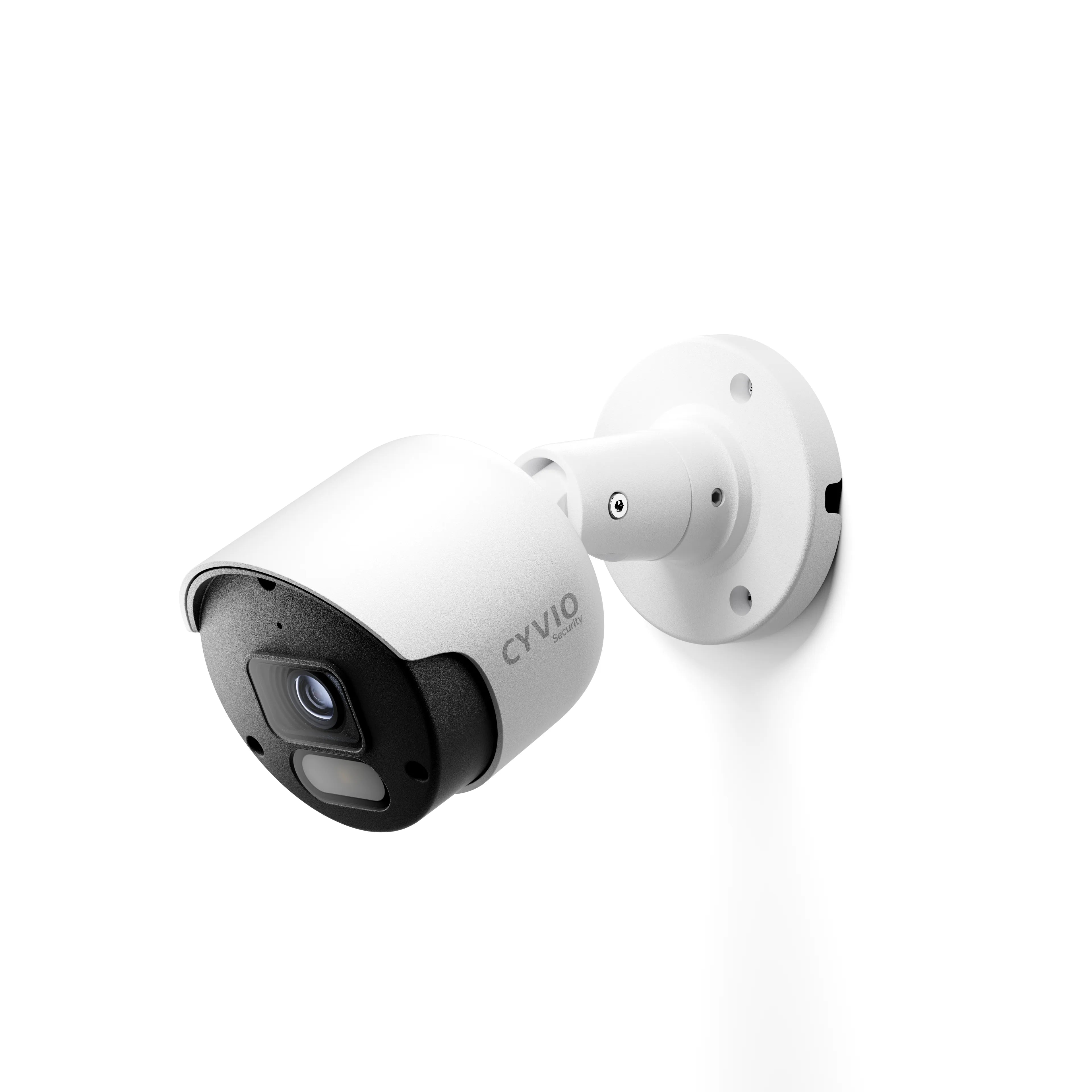
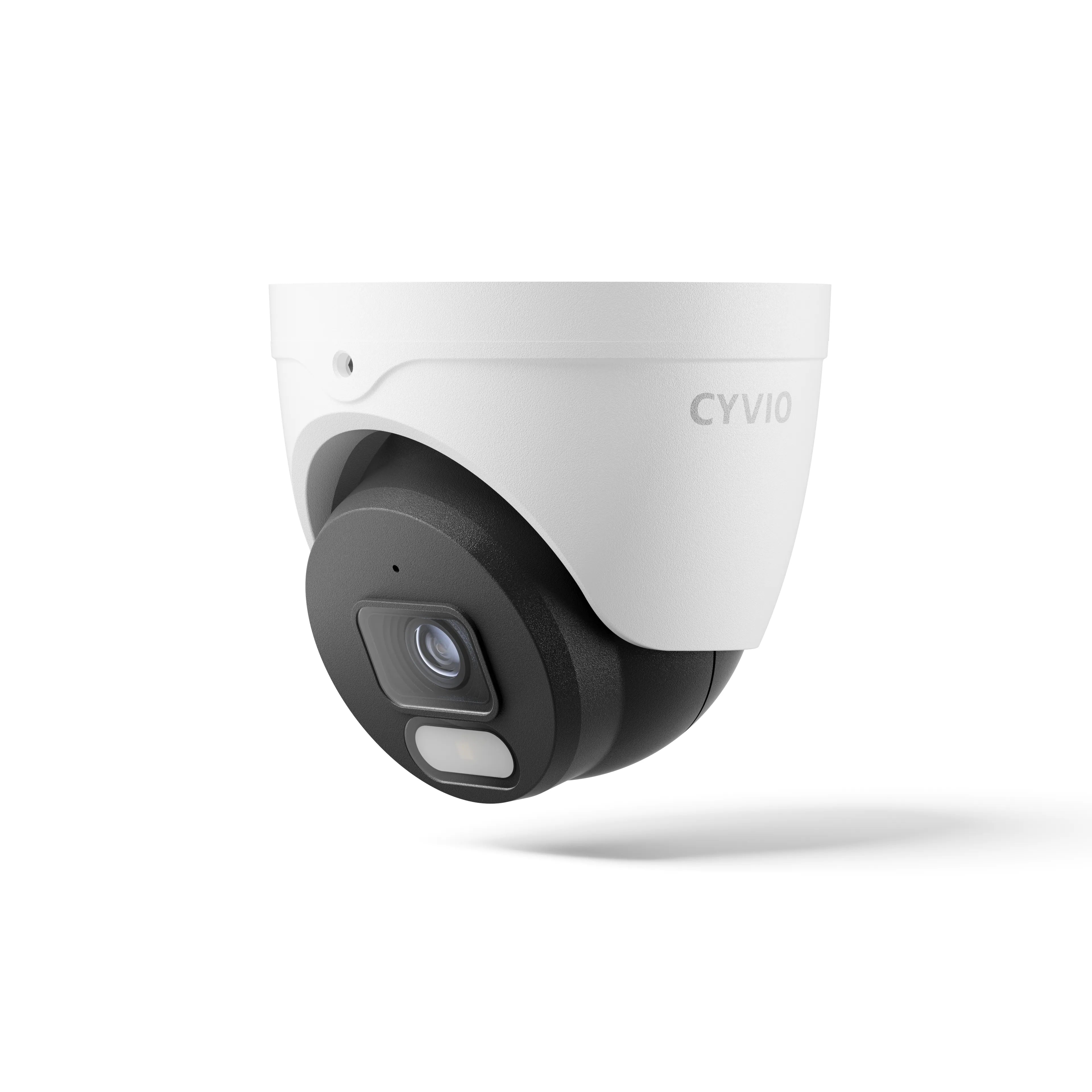
Recommended Solution: CYVIO N2838 4K PoE Security Camera System
For users seeking maximum reliability and security, the CYVIO N2838 4K PoE Security Camera System combines the advantages of local storage with the proven stability of PoE technology.

Unlike purely wireless camera systems that can be affected by signal interference, the N2838 utilizes Power over Ethernet (PoE), allowing both power and data transmission through a single network cable.

This design offers several important benefits.
First, wired transmission provides highly stable connectivity with minimal latency and virtually no signal interference. Critical monitoring locations such as entrances, cash registers, driveways, warehouses, and access points remain protected around the clock.
Second, the system supports flexible deployment options, making it suitable for homes, offices, retail stores, workshops, and other small-to-medium-sized properties.
Third, all footage is stored locally through the NVR, eliminating recurring cloud subscription fees while ensuring complete ownership of recorded video.
The N2838 also features:
* 4K Ultra HD video resolution
* Full-color night vision
* 24/7 continuous recording
* Local NVR storage
* No monthly fees
* Reliable PoE connectivity
* Remote viewing capabilities
* AI human and vehicle detection alerts
By combining high-performance surveillance with secure local recording, the N2838 delivers a practical and cost-effective solution for users who prioritize reliability and long-term value.
Final Thoughts
The debate between cloud storage and local storage ultimately comes down to priorities.
Cloud storage offers convenience and easy remote access, making it suitable for some basic residential applications. However, when security, reliability, privacy, compliance, and long-term cost efficiency become critical factors, NVR local storage consistently proves to be the superior choice.
For homeowners and businesses that depend on uninterrupted surveillance, local recording provides greater control, stronger data protection, lower long-term costs, and improved operational reliability.
As security threats continue to evolve, maintaining ownership of surveillance data is becoming increasingly important. For that reason, NVR local storage remains the preferred solution for professional-grade security camera systems.
At CYVIO, we prioritize data security, privacy, and reliability. That's why our security camera systems are built around NVR local storage, giving users full ownership of their recordings without monthly cloud storage fees. Whether for homes, farms, or businesses, CYVIO delivers dependable 24/7 surveillance while keeping your footage securely under your control.
Frequently Asked Questions (FAQ)
1.Is local storage safer than cloud storage for security cameras?
In most cases, yes. Local storage keeps video footage within your private network, reducing exposure to internet-based threats and providing greater control over data access and protection.
2.Can NVR systems record without internet?
Yes. NVR systems can continue recording even when the internet is unavailable, provided the cameras and NVR remain powered and connected.
3.Does cloud storage require a subscription?
Most cloud-based security camera services charge monthly or annual subscription fees based on storage capacity, retention periods, and advanced features.
4.What are the benefits of PoE security camera systems?
PoE systems provide power and data through a single Ethernet cable, offering stable connectivity, simplified installation, reduced interference, and reliable performance.
5.Is local storage more cost-effective than cloud storage?
For long-term use, especially in multi-camera systems, local storage is typically more cost-effective because it eliminates recurring subscription fees.
6.Why is the CYVIO N2838 a good choice for local storage?
The CYVIO N2838 combines 4K video quality, PoE reliability, full-color night vision, continuous recording, and local NVR storage, providing secure surveillance without monthly cloud fees.