









Protect Every Frame with AES Encryption for Security Cameras
In today’s digital world, the security of your surveillance footage is more than just a technical requirement—it is a fundamental component of personal safety, privacy, and business integrity. Whether it’s a home camera capturing precious family moments, a small business monitoring daily operations, or a large warehouse tracking inventory, your video data travels across networks and may may be stored locally, in the cloud, or both. Along this journey, without proper protection, there is always a risk that unauthorized parties could gain access to your sensitive information.

This is where AES encryption becomes essential. The Advanced Encryption Standard (AES) is a globally recognized security protocol that functions like a digital vault, ensuring your video data is protected from the moment it is captured until it is safely stored or deleted. In this article, we will explore the fundamentals of AES encryption, the differences between AES-128 and AES-256, the practical challenges of protecting surveillance data, and actionable steps you can take to ensure your system is truly secure.
Understanding the “Digital Vault”—How AES Encryption Works
Encryption is essentially the process of transforming your data into a code that is unreadable to anyone without authorization. Think of it as placing each video frame into a secure digital vault that only the right key can open. AES has become the global standard for encryption because of its reliability, efficiency, and proven security.
When a surveillance camera records video, AES encryption ensures that each frame is converted into ciphertext—a scrambled version of the original data that is meaningless without the correct key. Once the footage reaches an authorized device or storage system, the same key decrypts it back to its original, viewable form.
The strength of AES lies not in keeping the algorithm secret, but in the complexity of the keys. The standard has been tested extensively by cryptographers worldwide and is virtually impossible to break with current technology. This makes it an ideal foundation for protecting sensitive video data.

AES-128 vs. AES-256: Choosing the Right Security Level
AES encryption comes in different strengths, most commonly AES-128 and AES-256, each defined by key length and encryption complexity. Understanding the difference helps you choose the right level of protection for your system.

AES-128: Balanced Security and Performance
Strength: AES-128 uses a 128-bit encryption key. The number of possible keys is astronomical—about 3.4 × 10³⁸. Even with the most advanced supercomputers, cracking this encryption through brute force would take far longer than the age of the universe.
Best For: Home surveillance, small offices, and retail environments. AES-128 provides a strong balance between security and system performance, allowing smooth video streaming and storage without noticeable delays.
AES-256: Maximum Protection
Strength: AES-256 uses a 256-bit encryption key, offering exponentially higher security and future-proofing against advances in computational power.
Best For: High-security environments such as government facilities, financial institutions, hospitals, and critical infrastructure. AES-256 is also recommended for systems handling sensitive personal data, where compliance with privacy regulations like GDPR is mandatory.
Choosing between AES-128 and AES-256 is not just about raw strength—it’s about understanding your security needs, the sensitivity of the data, and the potential consequences of a breach.
Real-World Security Challenges for Surveillance Systems
Even the strongest encryption algorithm is only as effective as its real-world implementation. Protecting surveillance data requires attention to multiple stages of the video lifecycle, from capture to storage to playback. Below are some of the most common challenges:
1. Transmission Risk
Video footage travels across networks to your monitoring devices or cloud storage. Without encryption, this data is vulnerable to interception at routers, switches, or unsecured Wi-Fi networks. AES encryption ensures that the transmitted data is unreadable to anyone without the correct key, preventing eavesdropping and tampering.
 2. File Sharing Risk
There are many legitimate reasons to share surveillance footage—police investigations, insurance claims, or internal audits. However, exported files leave the protection of the original system and can be copied, lost, or intercepted during transfer. AES allows exported files to be encrypted with a separate, user-defined password, ensuring that only authorized parties can access them
3. Device Vulnerabilities
Surveillance devices themselves are often overlooked. Cameras and network video recorders (NVRs) store critical configuration information such as network credentials and admin passwords. If this information is not encrypted, anyone with physical access could compromise the entire system. AES-256 encryption of device data significantly reduces this risk.

4. Privacy Data Protection
Sensitive information such as faces, license plates, or other biometric data requires additional protection. Even if storage media is physically removed, AES encryption ensures that private data cannot be accessed, supporting compliance with privacy regulations and providing peace of mind.
How CYVIO Implements a Complete Encryption Protection System
Based on real-world security challenges, CYVIO has built a comprehensive and coherent encryption framework designed to protect data throughout its entire lifecycle. From the moment data is generated, through transmission and storage, every critical stage is secured with targeted encryption measures—ensuring there are no blind spots in protection.
Rather than relying on a single encryption claim, CYVIO focuses on practical, end-to-end implementation, translating AES standards into real, reliable product capabilities.
Practice 1: Secure Video Transmission — Creating an Eavesdrop-Proof Communication Channel
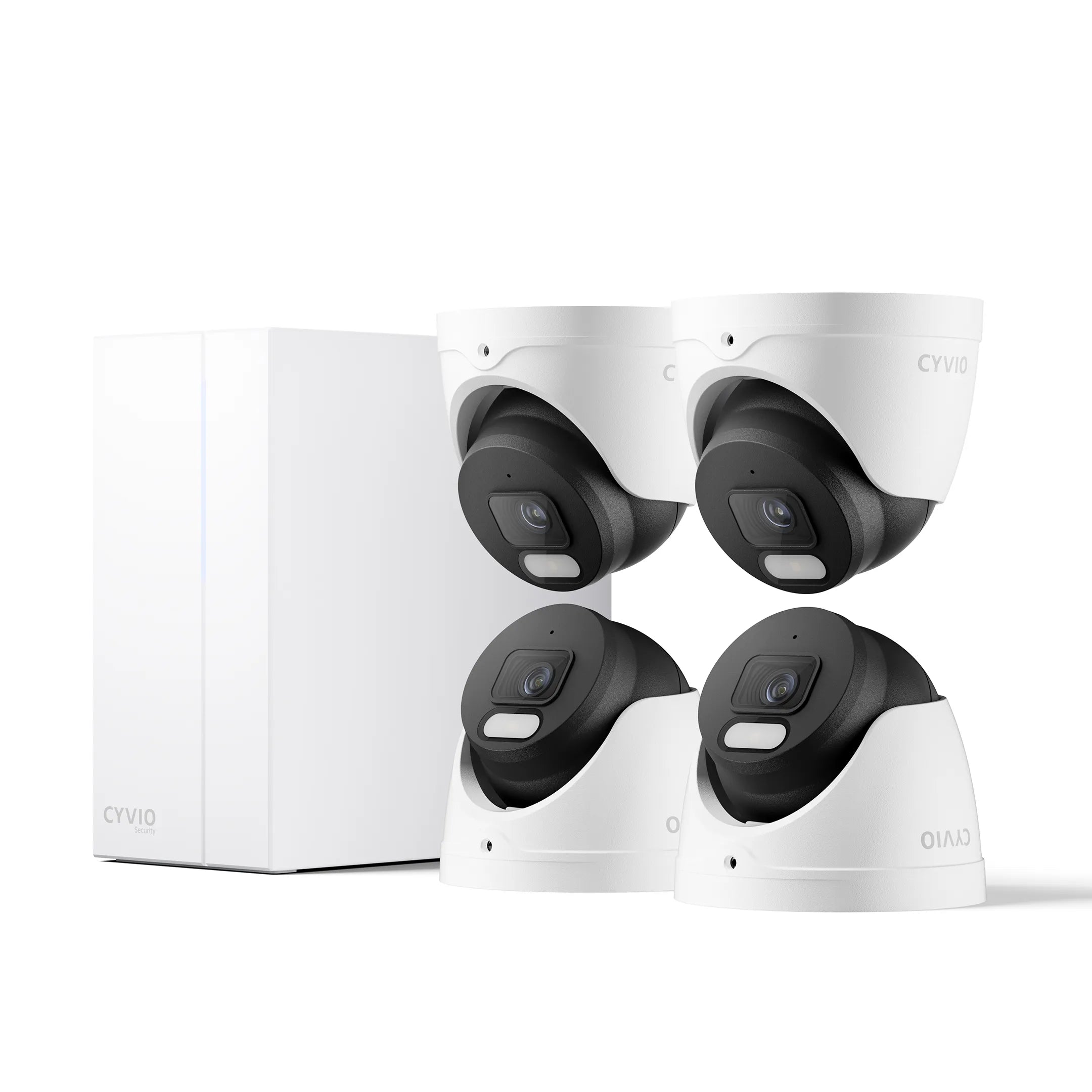
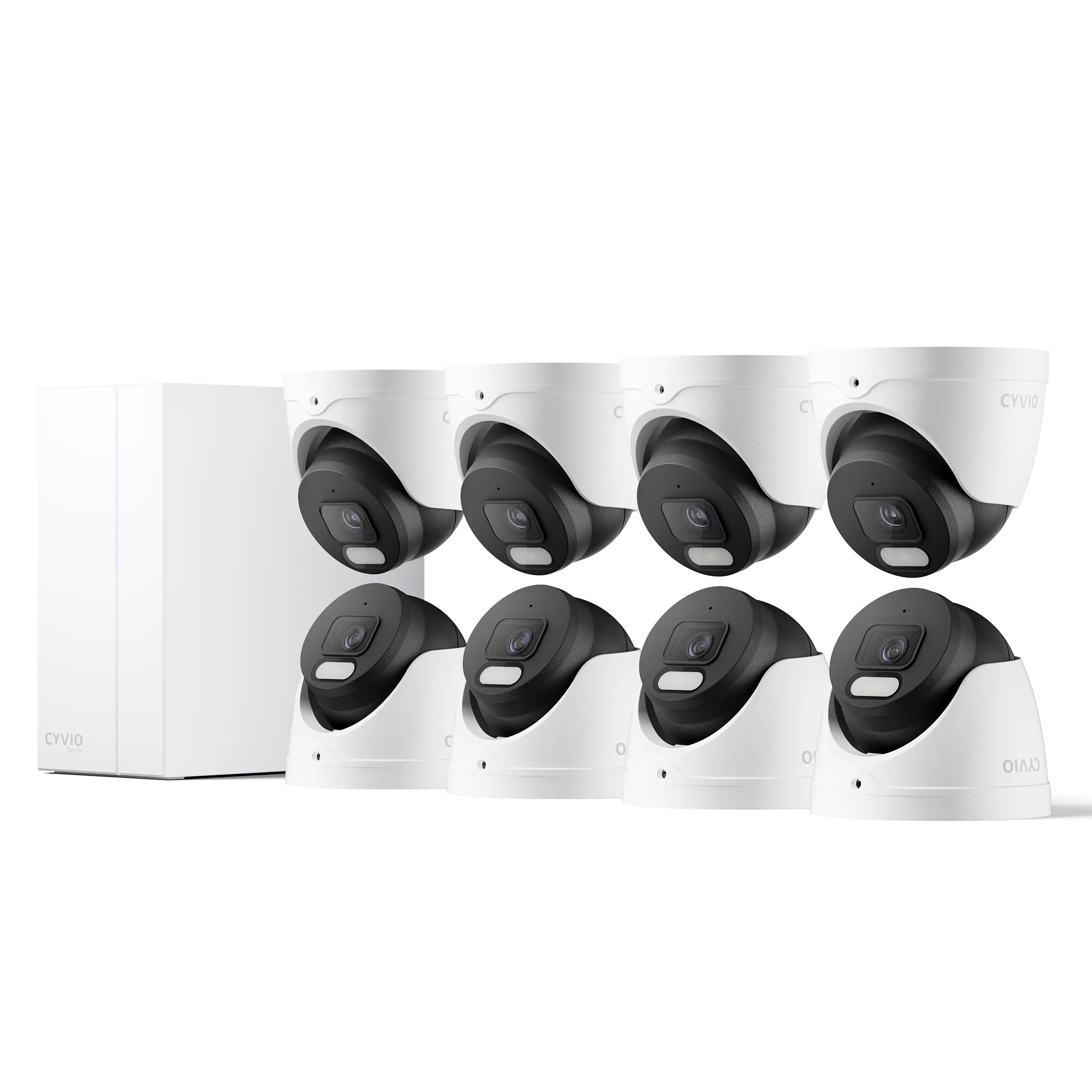
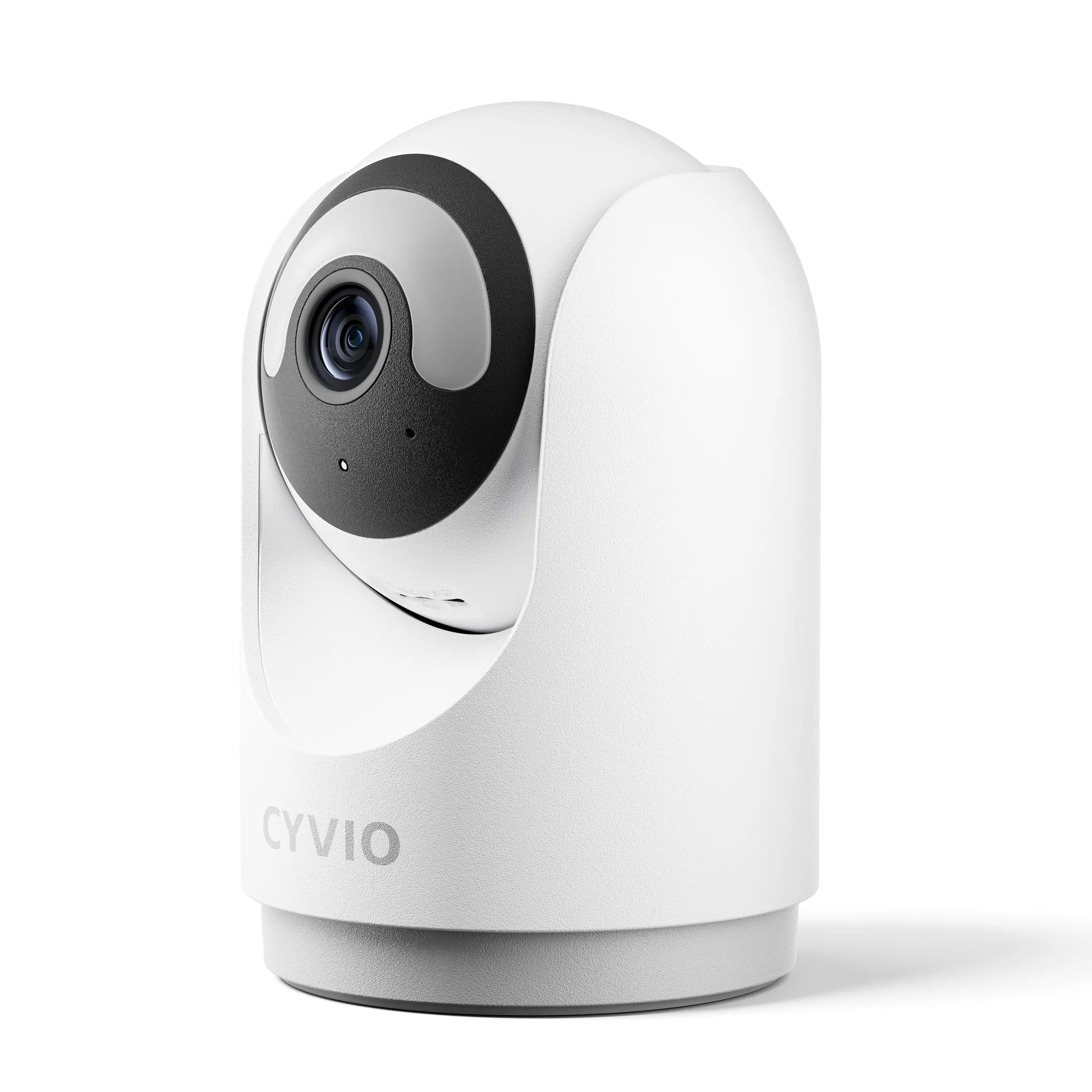
When a camera like CYVIO Indoor camera C2 captures video and transmits it over the network to your mobile phone, this journey is full of potential risks. Once connected to the CYVIO app, video data is transmitted in encrypted form across the entire network—similar to traveling through a dedicated secure tunnel.
This ensures that even if data packets are intercepted during transmission, they remain unreadable, effectively preventing any form of unauthorized viewing or network eavesdropping.

Practice 2: Secure Video Export — A Dedicated Lock for Shared Files
Encrypting exported video files is widely recognized as one of the most challenging aspects of video security. Once a file leaves the original system, its built-in protection no longer applies.
To address this, CYVIO adopts an industry-proven approach: adding an independent encryption layer to exported files. During export, users set a custom password, which is then used to apply secondary AES encryption to the video file.
As a result, even if the file is lost or intercepted during transfer, it cannot be opened by standard third-party players. Only authorized software that supports the corresponding encryption protocol can successfully decrypt and play the footage.

Practice 3: Device Configuration Protection — Reinforcing the System’s Security Foundation
The security of device configuration data is the foundation of the entire system. All critical parameters configured on CYVIO devices—such as administrator passwords and network credentials—are compressed and encrypted using AES-256 before being stored on the device.
In addition, the encryption keys used for internal device storage differ from those used for exported backups. This key separation significantly enhances security, preventing a single point of compromise from exposing the entire system.
 Practice 4: Dedicated Encryption for Privacy Data — The Highest Level of Isolated Protection
CYVIO applies the highest level of protection to biometric data such as faces and license plates. When stored on device hard drives or SD cards, this sensitive information is encrypted independently using AES-256 and kept isolated from standard video data.
Even if the physical storage media is removed, the encrypted privacy data cannot be directly accessed. This provides strong protection for sensitive personal information and helps users comply with strict data protection regulations.
Through these four practices, covering the full data lifecycle, CYVIO transforms AES encryption standards into concrete, dependable security capabilities, safeguarding user data at every detail.

Conclusion — Security That Works, So You Don’t Have To Think About It
Security should be invisible yet effective. With AES encryption built into every stage of data flow, and with end-to-end implementation in systems like CYVIO, your surveillance video becomes a protected asset rather than a potential vulnerability.
Understanding encryption helps you choose technology wisely, but the right implementation makes it work in real life. AES encryption turns complex cryptography into practical protection — not just for experts, but for everyday users.
Frequently Asked Questions (FAQ)
1. Will encryption affect live streaming or video playback?
No. CYVIO integrates encryption directly into the system design, allowing live view and playback to remain smooth and responsive without noticeable performance impact.
2. Is video data encrypted by default on CYVIO cameras?
Yes. Encryption is enabled automatically. Users do not need to activate settings or manage technical configurations to ensure their footage is protected.
3. Are downloaded or exported video files still protected?
Yes. CYVIO ensures that exported footage remains protected, reducing the risk of unauthorized access when files are stored or shared outside the app.
4. What happens if someone steals the camera or storage device?
Encrypted footage and privacy-related data cannot be directly accessed, even if the camera, SD card, or hard drive is physically removed.
5. How does CYVIO’s encryption differ from basic cloud encryption?
CYVIO uses a local storage–first design. Video data is stored locally, with encryption applied to transmission, storage, export, device configuration, and privacy-sensitive data—without relying on cloud storage.
6. Do users need technical knowledge to use encrypted cameras?
No. CYVIO’s encryption works quietly in the background, providing strong protection without adding complexity to daily use.