









Outdoor Security Camera Installation Height Guide: The Simple Trick That Dramatically Improves Surveillance Performance

Learn the best outdoor security camera installation height to capture clear faces, reduce blind spots, and improve home security. Includes front door, driveway, and backyard recommendations.
Installing an outdoor security camera seems simple—mount it, power it on, and you’re done. Yet many homeowners and small business owners discover later that their footage is disappointing: faces look distorted, license plates are unreadable, or critical areas are mysteriously missing from view.
In most cases, the issue isn’t the camera quality—it’s installation height.
Just like taking photos with your phone, perspective matters. Stand too high and you only capture the tops of heads; crouch too low and you lose situational awareness. The height at which your security camera is installed directly determines how effectively it can “see” the world.
In this guide, we’ll break down why camera height matters, the best installation heights for different scenarios, and how to find the ideal height for your specific setup—so you can dramatically improve your security coverage with one simple adjustment.

Why Security Camera Installation Height Matters
Think of your security camera as a digital guard on duty 24/7. Its mission has two core objectives:
- See wide – cover as much of the target area as possible
- See clearly – capture identifiable details such as faces and license plates
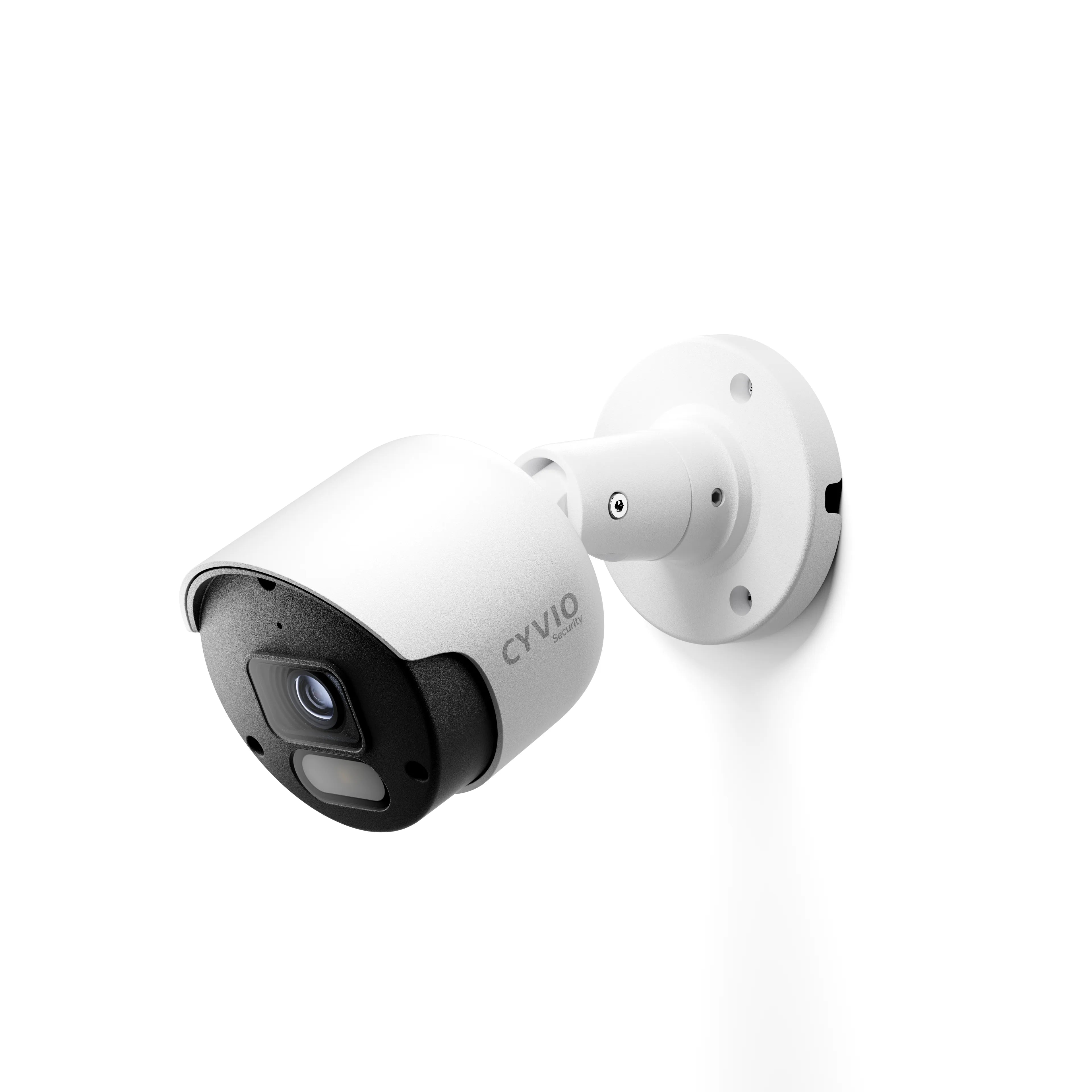
Installation height is the single most important factor in balancing these two goals. Even advanced systems like CYVIO smart PoE security cameras system kit, equipped with 4K resolution and AI-powered detection, rely on proper height to fully realize their performance potential.
1. Height Determines Viewing Angle and Perspective
Too high (above 4 meters / 13 ft)
Similar to looking down from a rooftop, the camera gains a wide overview of the area. However, steep downward angles distort facial features, making identification difficult.
Too low (below 1.5 meters / 5 ft)
Facial details are clear, but the field of view becomes narrow. Blind spots increase, and the camera is more vulnerable to tampering, blocking, or vandalism.
2. Height Directly Affects Blind Spots
All fixed cameras have a cone-shaped blind zone directly beneath them—similar to the shadow beneath a streetlight. The higher the camera is mounted, the larger this blind spot becomes.
This is why installing a camera directly above a doorway is often a mistake. When someone approaches the door, they may disappear into the blind zone just as they get closest.
Wide-angle lenses, like those used in CYVIO outdoor cameras, help reduce blind spots—but correct height and tilt remain essential.
Recommended Outdoor Camera Installation Heights (By Scenario)
As a general rule, the ideal outdoor camera installation height is between 2.5 and 3.5 meters (8–11.5 ft). This range keeps the camera out of easy reach while maintaining excellent image clarity.

Below are optimized recommendations for common use cases.
1. Front Door / Main Entrance
Recommended height: 2.5–3 meters (8–10 ft)
- Creates a natural downward angle that captures faces clearly
- Reduces the chance of vandalism or obstruction
- Ideal for package monitoring and visitor identification
When paired with CYVIO AI-powered face recognition cameras, this height allows the sensor and algorithms to accurately detect and identify visitors, triggering personalized alerts.
Installation tip:
Mount the camera on a side wall or door frame rather than directly overhead. Tilt it downward slightly to cover steps, packages, and approach paths.
2. Backyard or Private Yard
Recommended height: 3–3.5 meters (10–11.5 ft)
- Higher placement provides wider coverage and fewer corner blind spots
- Maintains identifiable footage when subjects approach the house
- Ideal for monitoring fences, gates, and open spaces
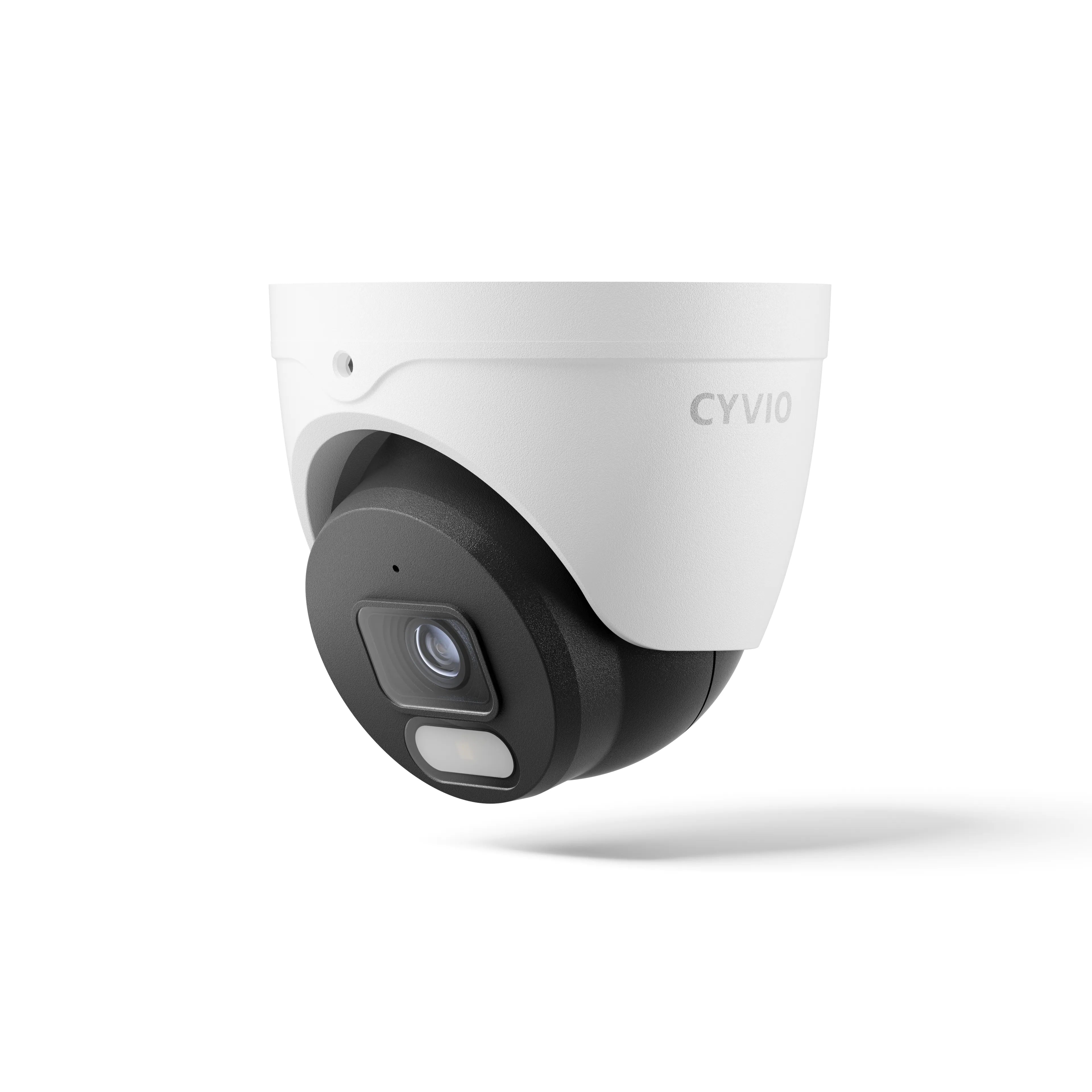
With CYVIO PoE Dome 4K ultra-HD cameras system, even footage captured from 3.5 meters remains sharp enough to identify people and activities across the yard. Full-color night vision ensures visibility in low-light conditions.
3. Small Retail Store (Entrance & Checkout Area)
Recommended height: 2.8–3.2 meters (9–10.5 ft)
- Clearly captures customer faces upon entry
- Provides visibility inside and just outside the store
- Balances theft prevention with active visual deterrence
CYVIO smart cameras support AI detection, and zone-based alerts, which perform most accurately at this height—helping retailers improve both security and operations.
4. Driveway, Garage, or Parking Area
Recommended height: 2.8–3.5 meters (9–11.5 ft)
- Elevated angle reduces vehicle obstruction
- Improves consistency in license plate recognition
- Covers multiple parking spaces effectively
CYVIO security cameras with vehicle detection perform best at these heights, especially when combined with proper camera tilt and lighting control.
How to Determine the Perfect Camera Height for Your Property
You don’t need professional tools to plan like an expert. Follow these three practical steps.
Step 1: Define Your Primary Monitoring Goal
Ask yourself:
- Do I need to clearly capture facial details?
- Do I need to detect vehicle activity?
- Do I want wide-area activity monitoring?
CYVIO offers models designed for each monitoring need—from clear facial coverage to wide-area surveillance—so choosing the right camera goes hand in hand with choosing the optimal installation height.
Step 2: Measure the Monitoring Distance
Measure the horizontal distance between the camera location and the key target area (door, driveway, gate).
Pro rule of thumb:
Install the camera at approximately half the horizontal distance.
- Example: Target area is 6 meters (20 ft) away → install camera at ~3 meters (10 ft)
This geometry balances clarity and coverage effectively.
Step 3: Test Before Permanent Installation
Before drilling holes:
- Temporarily mount or hold the camera at the planned height
- View the live feed through the mobile app
- Walk through the monitored area
Check:
- Face clarity
- Blind spot size
- Coverage range
CYVIO’s intuitive mobile app makes real-time testing fast and accurate.
Key Best Practices for Optimal Results
Golden height range: 2.5–3.5 meters (8–11.5 ft)
- Lean lower for facial detail
- Lean higher for area coverage
Adjust the tilt angle:
Even with the correct height, tilt the camera downward 10–30 degrees to center the target zone.
Avoid mounting directly overhead:
Side-wall installation with a controlled downward angle almost always performs better.
Test day and night footage:
Lighting conditions change dramatically. CYVIO’s adaptive image sensors and smart illumination handle backlight and low-light scenarios, but testing ensures optimal results.
Final Thoughts: Small Adjustment, Big Security Upgrade
Correct installation height transforms a security camera from a passive recorder into an effective, intelligent guardian. When combined with reliable hardware like CYVIO smart security cameras, proper placement ensures you get the clarity, coverage, and confidence you expect from your surveillance system.
A few centimeters can be the difference between guessing and knowing—between blurry footage and actionable evidence.
Install smart. Install at the right height. And let your security system truly work for you. CYVIO is a trusted brand specializing in complete security solutions for homes and small businesses.
Frequently Asked Questions (FAQ)
1. What is the best height to install an outdoor security camera?
The ideal outdoor security camera installation height is 2.5 to 3.5 meters (8–11.5 feet). This range provides a balance between wide area coverage, clear facial visibility, and protection against tampering.
2. How high should a security camera be to clearly capture faces?
For clear facial details, install the camera at around 2.5–3 meters (8–10 feet). At this height, the downward angle remains natural, reducing facial distortion while keeping the camera out of easy reach.
3. Can a security camera be installed too high?
Yes. Installing a camera above 4 meters (13 feet) often results in steep viewing angles that distort facial features and increase blind spots directly below the camera, making faces hard to see clearly.
4. Is it okay to mount a camera directly above a door?
Mounting directly above a door is not recommended. Cameras installed this way often lose sight of visitors as they step closer. A side-wall installation with a slight downward tilt delivers better coverage and fewer blind spots.
5. What is the best camera height for driveway?
For driveways or parking areas, the recommended installation height is 2.8–3.5 meters (9–11.5 feet). This height minimizes vehicle obstruction.
6. Does camera height affect night vision performance?
Yes. Incorrect height can cause glare, shadows, or overexposure at night. Cameras like CYVIO outdoor security cameras, with adaptive sensors and smart illumination, perform best when installed at the recommended height and properly angled.
7. What angle should a security camera be tilted downward?
Most outdoor security cameras perform best when tilted 10–30 degrees downward, depending on installation height and monitoring distance. This ensures the target area stays centered in the field of view.
8. How can I test the best installation height before mounting permanently?
Before final installation, temporarily hold or mount the camera at the planned height and view the live feed via the CYVIO mobile app. Walk through the monitored area to check facial clarity, blind spots, and coverage range.