









How AI Reduces False Alerts from Leaves, Wind, and Shadows in Outdoor Security Cameras

Outdoor security cameras are designed to keep watch when you are not around, but that does not mean every alert you receive is important. A windy afternoon can trigger notifications because tree branches are moving. A cloud passing over the sun can suddenly change the brightness of the entire scene. Even shadows from leaves may look like movement to a traditional motion detection camera.

These false alerts may seem harmless at first, but they can quickly become frustrating. If your phone keeps sending notifications for trees, shadows, or changing sunlight, you may eventually stop checking them. That creates a bigger problem: an important alert could be ignored simply because you have become used to unnecessary notifications.
This is one reason modern outdoor security cameras are moving beyond basic motion detection. Instead of reacting to every change in the image, AI-powered cameras can analyze what is actually happening in the scene and focus on events involving people or vehicles.
So, how does AI reduce false alerts caused by wind, leaves, and changing light? And what can you do to make your outdoor security camera more accurate?
Why Do Outdoor Security Cameras Send False Alerts?
To understand how AI reduces false alerts, it helps to understand why they happen in the first place.
Traditional motion detection works mainly by comparing changes between frames. When pixels in part of the image change, the camera may interpret that change as motion. This approach is useful for detecting activity, but it does not necessarily understand what caused the change.
For example, imagine a security camera watching your backyard. The camera sees a tree in the background, and a strong wind causes the branches to move. From the camera's perspective, many pixels are changing continuously. A basic motion detection system may interpret those changes as activity and send an alert.
The same thing can happen when sunlight passes through moving leaves. Bright spots can appear and disappear rapidly, while shadows move across the ground. A cloud can also block the sun and cause the entire image to become darker for a moment.
In these situations, nothing dangerous is actually happening. The scene is simply changing.
Outdoor environments are especially challenging because cameras have to deal with constantly changing conditions, including wind, vegetation, sunlight, rain, shadows, insects, and camera vibration. When several of these factors happen at the same time, false alerts can become even more frequent.
Common Causes of False Alerts in Outdoor Security Cameras
1.Moving Leaves and Branches

Trees, bushes, and other vegetation are among the most common sources of false alerts.
When wind moves leaves and branches back and forth, the camera sees repeated movement in the same area. The movement can be small and irregular, with no clear direction or stable shape.
A basic motion sensor camera may not be able to tell whether this movement comes from a person walking through the yard or a branch moving in the wind. If the movement exceeds the camera's sensitivity threshold, an alert may be triggered.
This is especially noticeable when a camera is pointed directly at a large tree or dense shrub.
2.Changing Sunlight and Moving Shadows

Light changes can be just as problematic as physical movement.
Sunlight passing through leaves can create flickering bright spots on the ground. As the sun moves or clouds pass overhead, shadows can shift across a driveway, patio, or garden.
Although these changes do not involve a physical object entering the monitored area, they can still produce significant differences between video frames. A conventional motion detection system may interpret these differences as movement.
This is why a security camera that performs well in a controlled indoor environment can behave differently when installed outdoors.
3.Camera Vibration

The camera itself can also become a source of false alerts.
If a camera is mounted on a lightweight bracket, fence, pole, or wall that moves in strong wind, the entire image may shift slightly. Instead of only part of the scene changing, almost everything in the frame can move.
When camera vibration occurs at the same time as moving branches or changing shadows, the amount of visual change becomes even greater. This can make it more difficult for a basic motion detection camera to determine whether there is a real event.
How AI Reduces False Alerts
The biggest difference between traditional motion detection and AI-powered detection is that AI can analyze more than simply whether something moved.
Instead of asking only, "Did the image change?", an AI security camera can analyze the content of the scene and determine whether the detected activity is associated with a relevant target.
This creates several layers of filtering.
Background Filtering Helps Remove Small, Repetitive Changes

The first layer is basic image and background analysis.
Outdoor scenes often contain areas that change repeatedly without representing a security event. Leaves may move in the same part of the image every time the wind blows. Shadows may appear in predictable areas throughout the day.
By analyzing the scene over time, the camera can treat certain recurring background changes differently from unexpected activity.
Small, scattered movements that do not form a meaningful target can therefore be filtered before they become an alert.
This does not mean that the camera simply ignores movement. Instead, background behavior becomes part of the decision-making process.
AI Detection Helps Separate People and Vehicles from Environmental Movement

The next layer is AI-based object detection.
Rather than treating every moving pixel as equally important, AI-powered security cameras can analyze visual patterns and determine whether the activity corresponds to a person or vehicle.
For example, a tree may move significantly during a windy day, but the camera can determine that the movement comes from vegetation rather than a person. Likewise, changing shadows may alter the brightness of an area without creating a person or vehicle in the scene.
This is particularly useful for outdoor security cameras because yards, driveways, entrances, and property boundaries often contain environmental elements that are constantly moving.
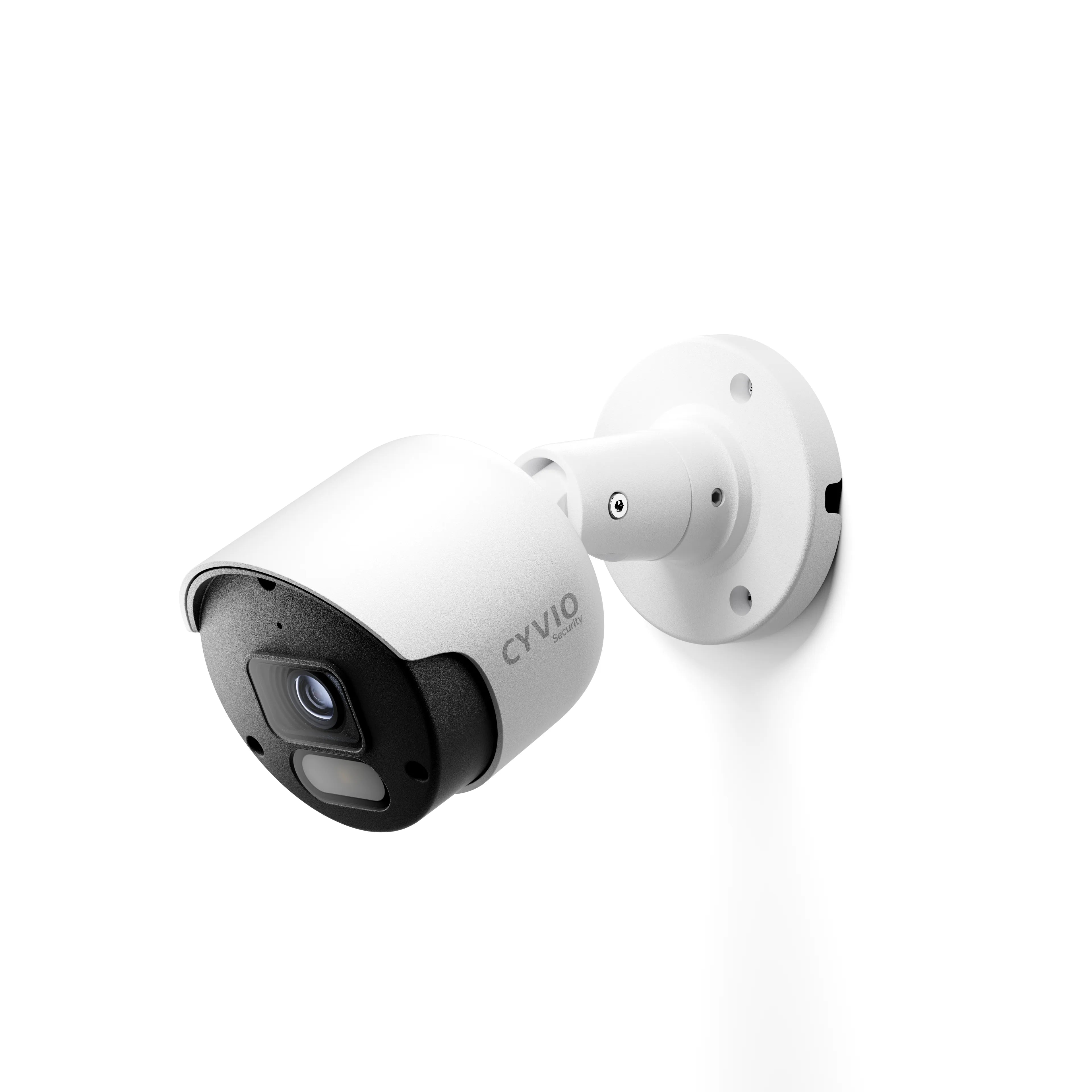
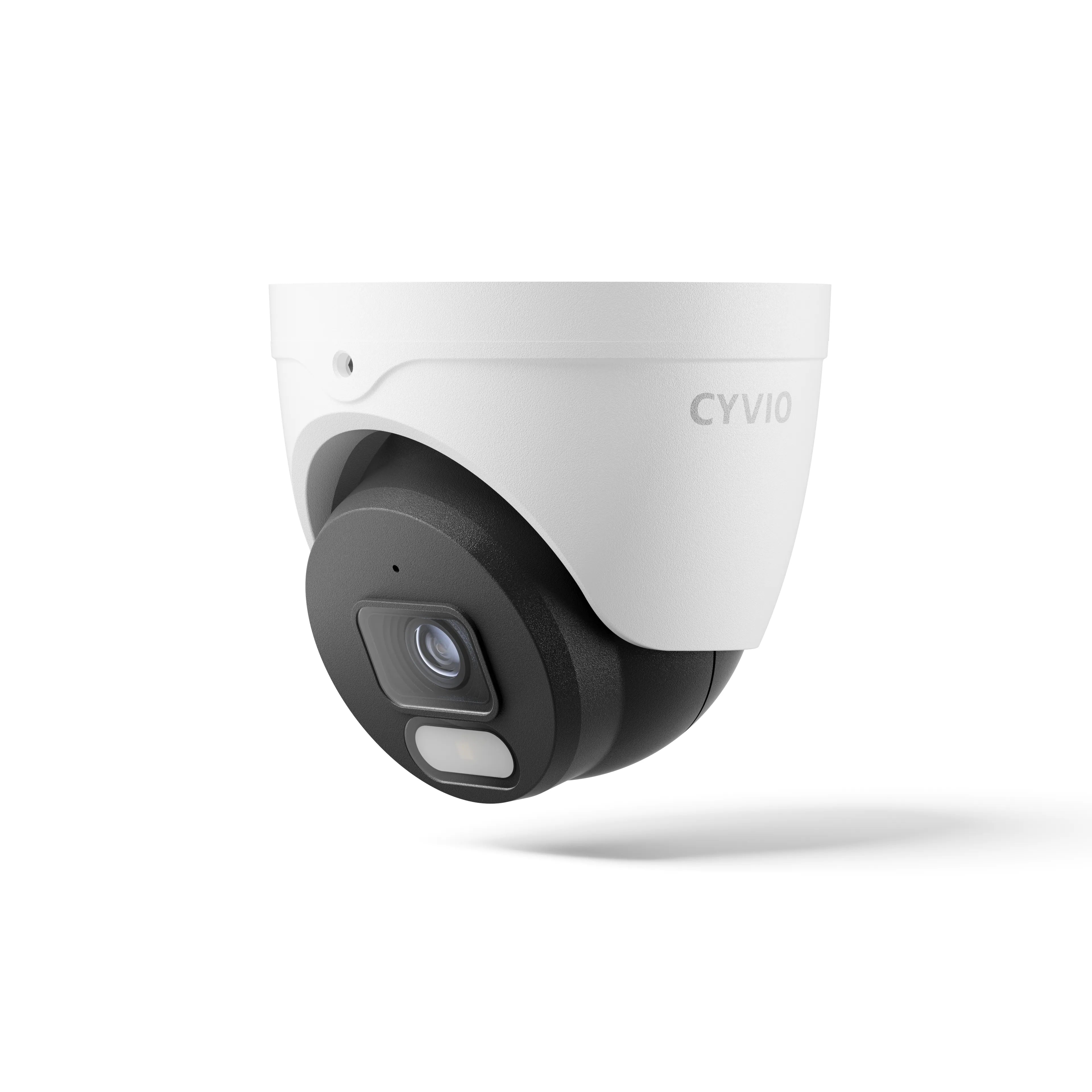
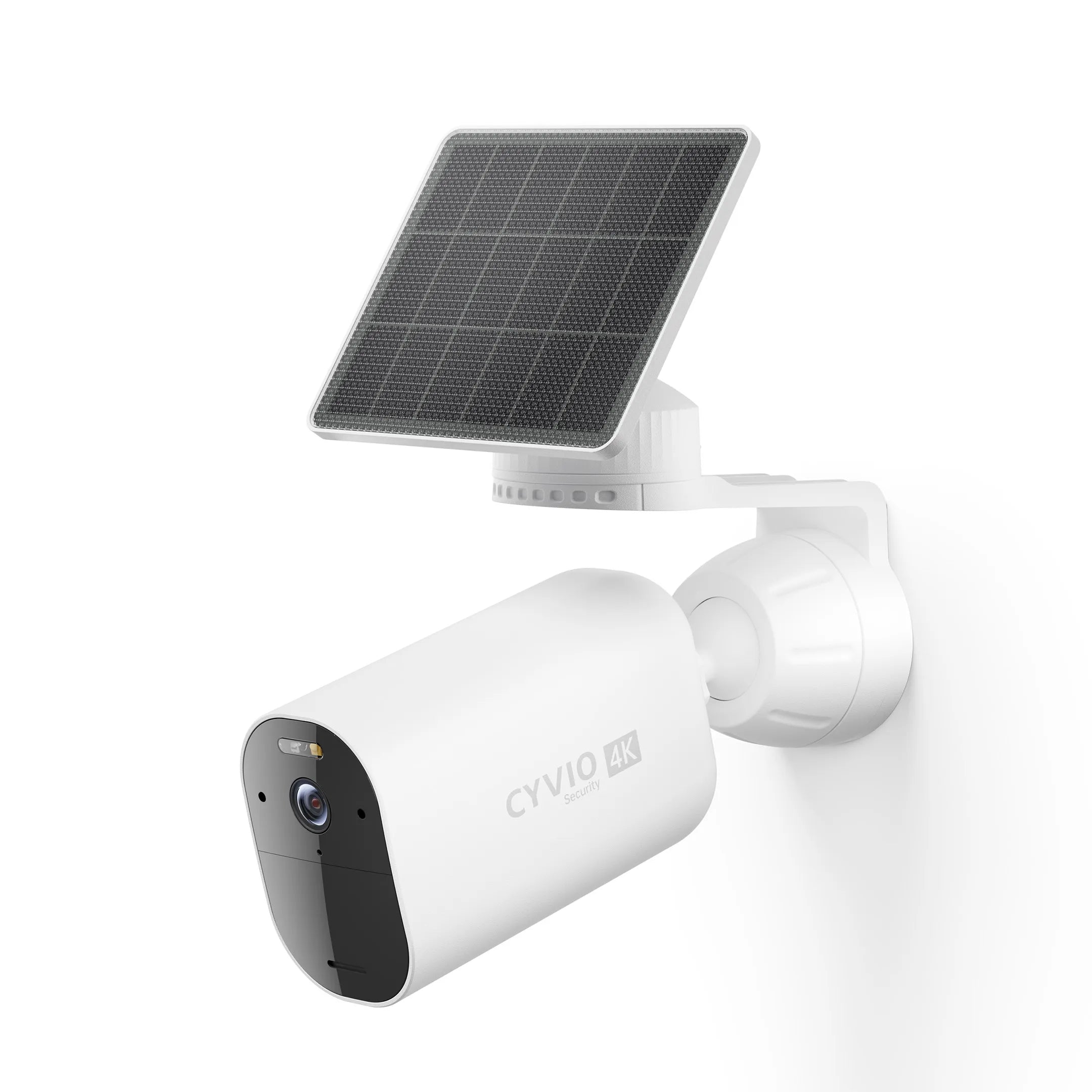
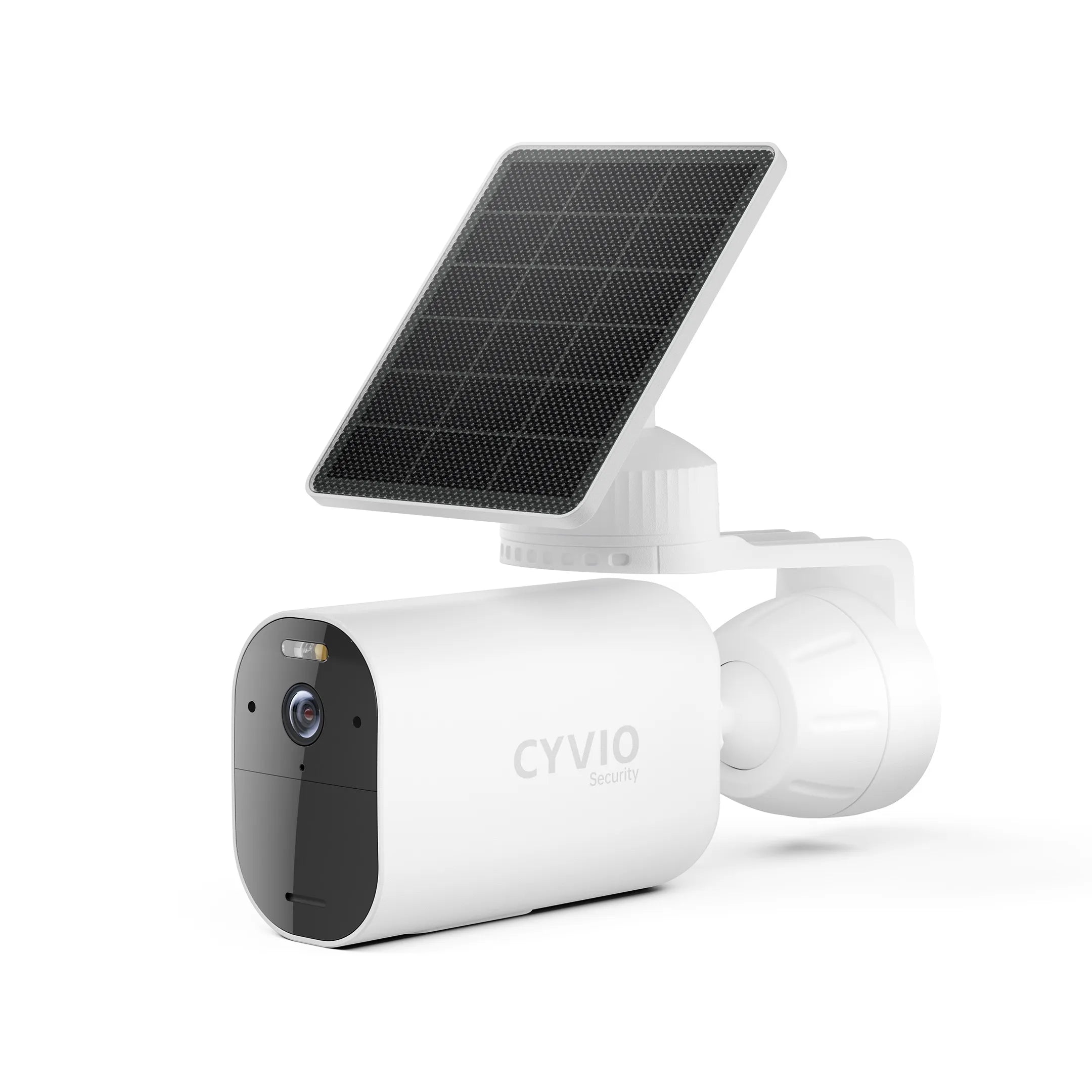
CYVIO uses AI human and vehicle detection to help reduce false alerts. The CYVIO B221 4K wireless solar security camera, for example, combines AI person and vehicle detection with a PIR sensor and is designed to reduce false alerts caused by shadows and changing light.
Multi-Frame Analysis Helps Reject Short-Lived Changes

Another important factor is time.
A single frame does not always provide enough information to determine what is happening. A brief flash of sunlight, a moving leaf, or a small branch may create a shape that looks unusual for only an instant.
A more advanced detection system can analyze multiple frames instead of making a decision based on one moment.
A person walking toward a door usually appears across a sequence of frames and follows a continuous movement path. In contrast, a brief light reflection or a small flicker caused by leaves may disappear almost immediately.
By considering how an event develops over time, the camera can reduce the chance that a short-lived visual change will become a false alert.
PIR Sensors Add Another Layer of Verification

Some outdoor security cameras combine visual AI with a PIR sensor.
PIR, or passive infrared, sensors detect changes in infrared radiation associated with heat-emitting objects such as people. When used together with AI detection, the two technologies can provide complementary information.
For example, visual analysis may detect movement in the scene, while the PIR sensor provides additional information about whether a person-sized heat source is present.
This type of hardware-and-software combination can be especially useful for battery-powered and solar-powered outdoor security cameras, where reducing unnecessary activations can also help improve overall efficiency.
CYVIO's B221 uses PIR together with AI person and vehicle detection, providing an additional layer of filtering for outdoor monitoring.
How to Reduce False Alerts on Your Outdoor Security Camera
Even with AI detection, installation and camera settings still matter. A well-designed camera can perform much better when it is positioned correctly and configured for the environment.

Turn on AI Person and Vehicle Detection
If your camera supports AI detection, use it instead of relying only on basic motion detection.
Traditional motion detection can be useful for general activity monitoring, but AI person and vehicle detection is better suited to situations where you only want notifications for specific types of activity.
For example, if your goal is to monitor a driveway, you may care about a person approaching the property or a vehicle entering the area—not every movement from nearby trees.
Use Detection Zones
Detection zones are another practical way to reduce unnecessary alerts.
If a large tree occupies part of your camera's field of view, you may not need to monitor every movement within that area. Depending on your camera and app, you can adjust the detection area so that important locations receive more attention.
For a home, this could mean focusing detection on a front door, driveway, gate, walkway, or garage entrance while excluding areas dominated by vegetation.
This approach is often more effective than simply increasing or decreasing sensitivity across the entire image.
Avoid Setting Motion Sensitivity Too High
Higher sensitivity does not always mean better security.
If the sensitivity is set too high, even small environmental changes may trigger an event. This can be particularly noticeable in yards with trees, bushes, flags, or other objects that move in the wind.
A moderate sensitivity level is often a better starting point for outdoor environments. You can then adjust it based on the actual conditions around your property.
Avoid Pointing the Camera Directly at the Sun
Camera placement has a major impact on image quality and detection performance.
Whenever possible, avoid positioning the lens directly toward the sun. Strong sunlight can create glare, reflections, and rapidly changing brightness levels, especially when sunlight passes through leaves.
A slightly downward-facing installation angle can help reduce direct sunlight entering the lens while keeping important areas such as doors, paths, and driveways within view.
Use Event Confirmation and Cooldown Settings
If your security camera provides event confirmation, smart filtering, or notification cooldown settings, these features can help prevent repeated alerts from the same short-lived event.
For example, a tree moving continuously in the wind should not cause your phone to receive dozens of notifications within a few minutes.
The goal is not simply to make the camera detect more movement. The goal is to make each notification more meaningful.
Why AI Detection Matters for Outdoor Security
False alerts are more than just an inconvenience. They can affect how people actually use their security cameras.
When a camera sends too many unnecessary notifications, users may eventually start ignoring them or disabling alerts altogether. At that point, even a camera with good hardware may provide less practical protection.
AI detection helps address this problem by making the camera's detection logic more selective.
Instead of treating every movement as equally important, an AI security camera can focus on relevant targets such as people and vehicles. When combined with technologies such as background filtering, multi-frame analysis, and PIR sensing, this can create a more reliable approach to outdoor monitoring.
The goal is not to eliminate every possible false alert. Outdoor environments are unpredictable, and no security camera can guarantee zero false alerts.
The goal is to reduce unnecessary alerts while maintaining reliable detection of important activity.
CYVIO B221: AI Detection for Smarter Outdoor Monitoring
For users who need a flexible solution for outdoor areas, the CYVIO B221 4K solar-powered wireless camera combines several features designed for convenient and intelligent monitoring.
The B221 supports 4K video, color night vision, AI person and vehicle detection, and PIR-based detection. Its solar-powered and wireless design also makes it suitable for outdoor locations where running traditional cables may be inconvenient.
The combination of AI detection and PIR technology can help reduce unnecessary alerts caused by environmental factors such as changing shadows and lighting conditions.
With these features working together, the B221 can provide a more practical solution for monitoring areas such as yards, walls, and other outdoor spaces.
Final Thoughts
No outdoor security camera can completely eliminate every false alert. Outdoor environments are constantly changing, and wind, vegetation, sunlight, shadows, and weather can all affect what a camera sees.
However, modern AI detection can make a significant difference.
Instead of reacting to every change in the image, an AI-powered camera can combine visual analysis, object detection, time-based analysis, and, in some systems, PIR sensing to determine whether an event is actually worth your attention.
For homeowners, the result is simple: fewer unnecessary notifications and more useful alerts when something important happens.
When installing an outdoor security camera, combine smart AI detection with sensible camera placement, appropriate sensitivity, detection zones, and regular settings adjustments. The goal is not to make your camera react to everything. It is to make sure it reacts to the things that matter.
FAQ
1.Why does my outdoor security camera keep detecting leaves?
Moving leaves and branches can create large changes between video frames. Basic motion detection may interpret these pixel changes as movement, even when there is no person or vehicle present. AI person and vehicle detection can help filter out vegetation-related activity.
2.Can AI security cameras reduce false alerts?
Yes. AI detection can analyze the content of a scene instead of responding only to movement. When combined with features such as detection zones and PIR sensing, it can reduce alerts caused by environmental movement such as leaves, shadows, and changing light.
3.Why do shadows trigger security camera alerts?
Shadows can change the brightness and appearance of an area of the video. Traditional motion detection may interpret these visual changes as movement. AI-based detection can analyze whether an actual person or vehicle is present before sending an alert.
4.Does PIR reduce false alerts on security cameras?
PIR can provide an additional layer of information by detecting changes in infrared radiation associated with heat-emitting objects. When combined with AI detection, PIR can help a security camera make more reliable decisions about whether an event involves a person.
5.Should I use motion detection or AI detection?
For outdoor monitoring, AI person and vehicle detection is generally more useful when you want alerts for specific types of activity. Basic motion detection can still be useful for broader activity monitoring, but it may generate more alerts from environmental movement.
6.How can I stop my security camera from detecting trees?
Try moving the camera away from large trees or bushes, adjusting the detection zone to exclude areas dominated by vegetation, and lowering motion sensitivity if it is set too high. If available, use AI person and vehicle detection instead of basic motion detection.
7.What is the best way to reduce false alerts from outdoor security cameras?
Start with AI person and vehicle detection, then optimize the camera's installation angle, detection zones, and sensitivity. Avoid pointing the camera directly toward the sun and use PIR or other smart detection features when available.
8.Can weather cause security camera false alerts?
Yes. Wind, rain, moving vegetation, changing sunlight, and other environmental conditions can create visual changes that trigger basic motion detection. AI detection and appropriate camera settings can help reduce these unnecessary alerts.