









Wireless Security Camera Buffering: 2.4GHz vs 5GHz WiFi Guide

If your wireless security camera keeps buffering, freezing, or randomly going offline, you are not alone. Many homeowners install a wireless security camera expecting smooth, uninterrupted surveillance, only to face laggy live feeds, delayed alerts, or poor video quality.
In most cases, the problem is not the camera itself — it is WiFi interference.
A wireless security camera depends heavily on a stable internet connection to deliver smooth video streaming, motion detection notifications, and remote access. However, WiFi signals are constantly competing with walls, electronic devices, neighboring networks, and physical distance. Understanding how different WiFi frequencies work — especially 2.4GHz vs 5GHz — can dramatically improve your camera’s performance.
In this guide, we will explain the differences between wireless camera WiFi bands, identify the most common causes of interference, and show practical ways to improve your connection for a smoother security experience.
Understanding Wireless Security Camera WiFi Frequencies
Most wireless security cameras use one of two WiFi frequency bands: 2.4GHz or 5GHz. Some advanced models support dual-band WiFi, allowing automatic switching between both frequencies depending on signal conditions.
You can think of these WiFi bands as different roads for internet traffic. One offers wider coverage but slower speeds, while the other delivers faster performance but over shorter distances.
2.4GHz WiFi: Better Range, More Interference
The 2.4GHz band is the most common frequency used in wireless security cameras, especially for outdoor wireless security cameras.
Its biggest advantage is coverage. The signal travels farther and penetrates walls more effectively, making it ideal for locations such as garages, backyards, driveways, porches, or long hallways where cameras are installed far away from the router.
For larger homes or properties with multiple walls, 2.4GHz often provides a more reliable connection than 5GHz because it can maintain signal strength over longer distances.
However, this convenience comes with a tradeoff.
The 2.4GHz band is heavily crowded. Many everyday devices use the same frequency, creating network congestion and signal interference. As a result, users may experience buffering, delayed notifications, poor image quality, or random disconnections.
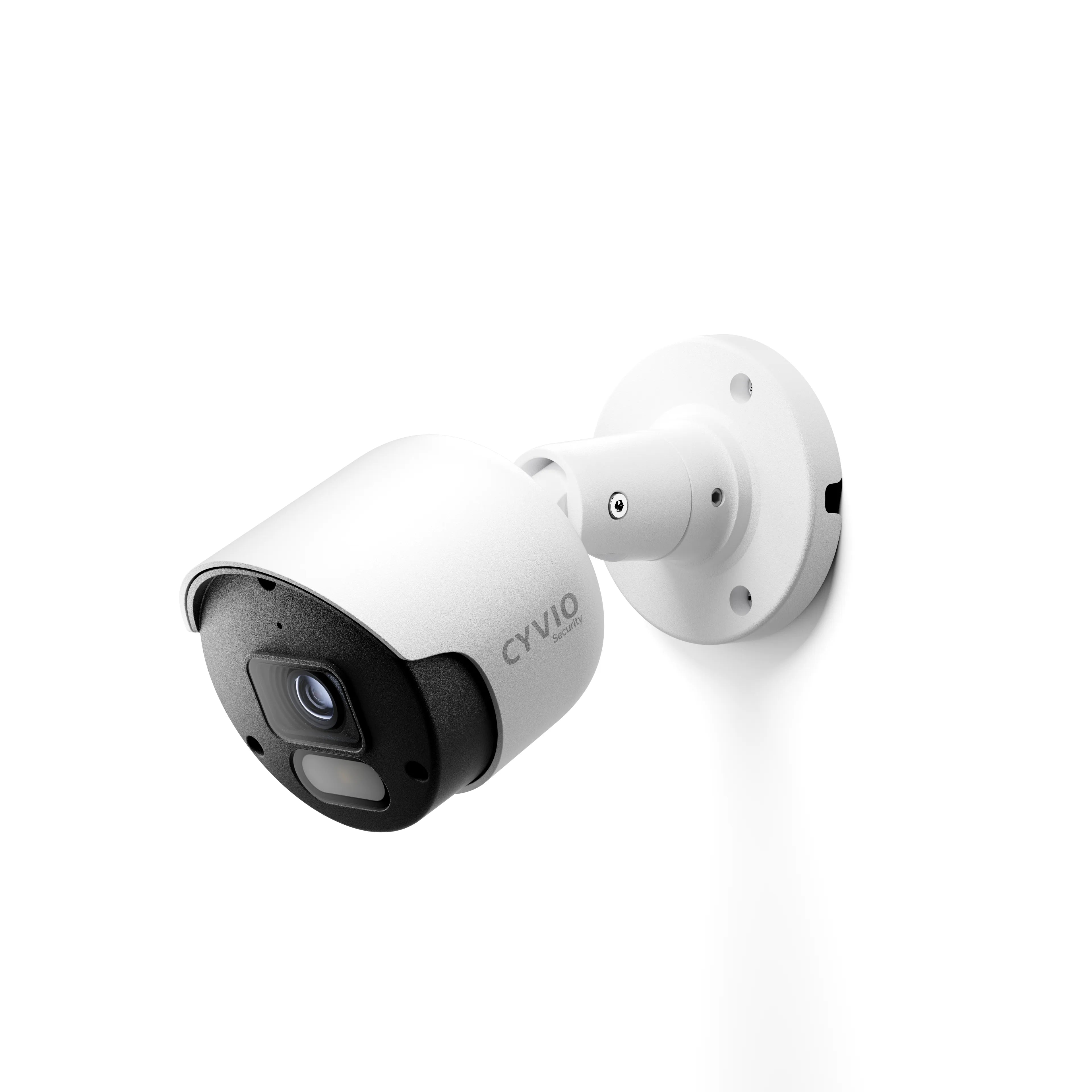
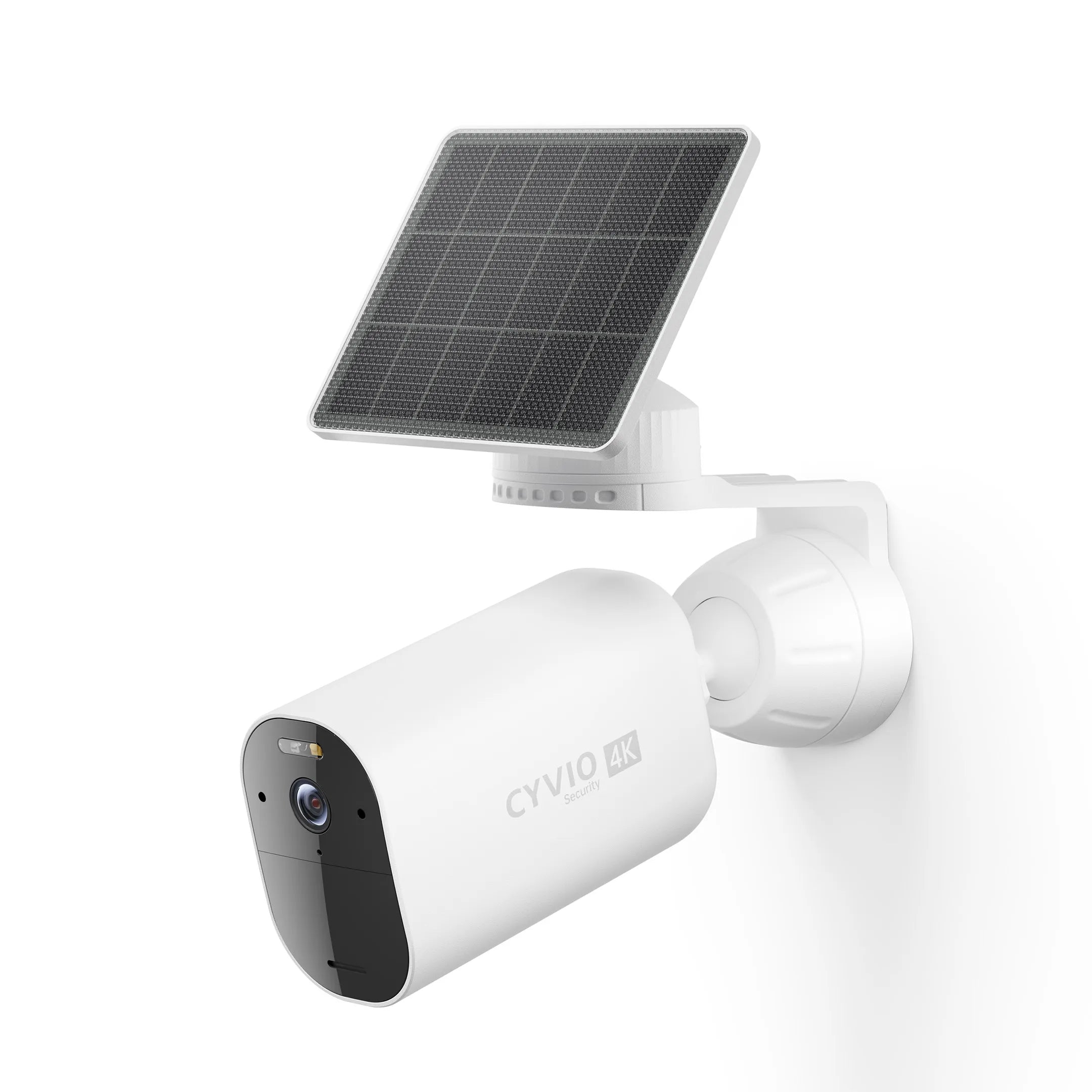
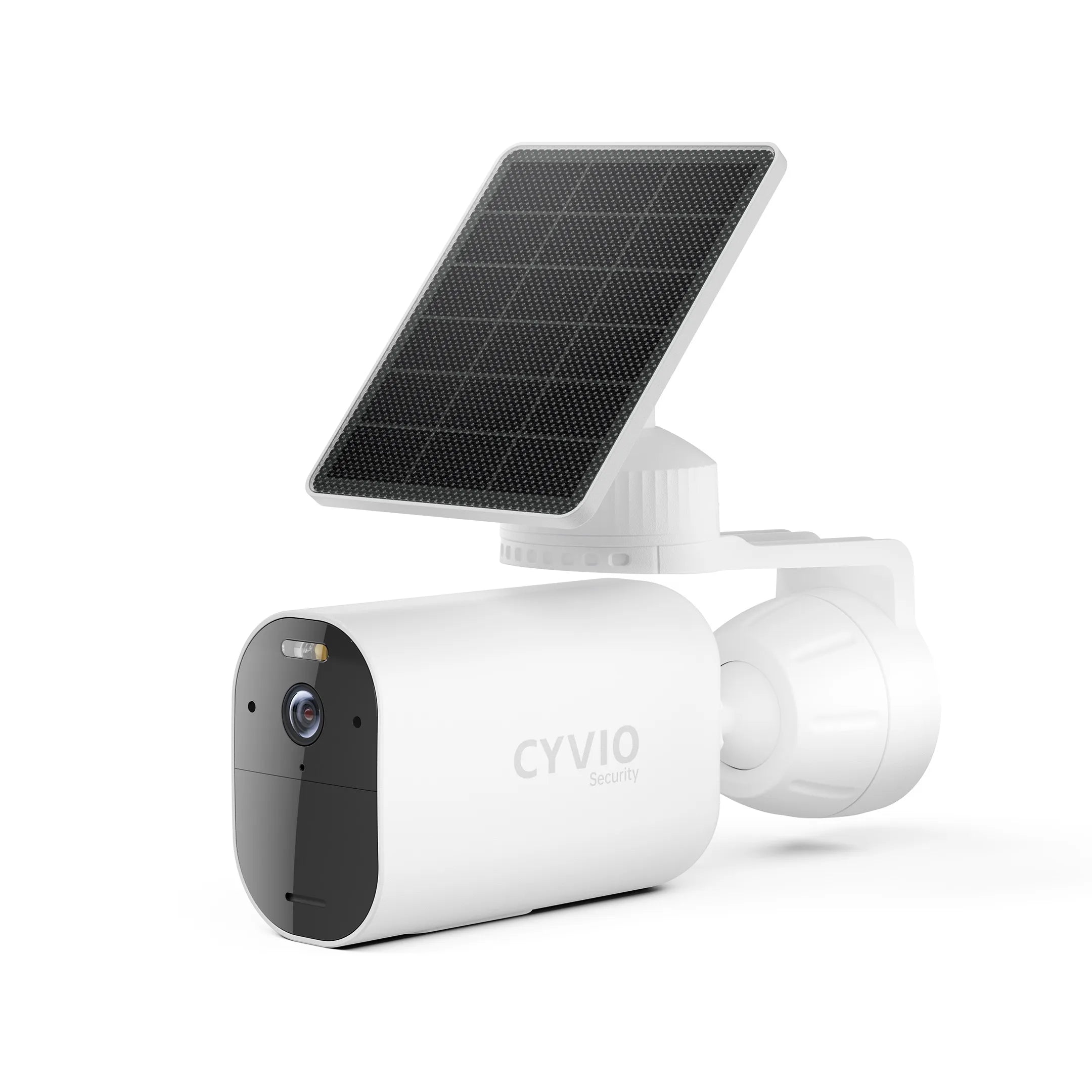
For outdoor surveillance where stable coverage matters more than extreme speed, 2.4GHz remains a practical solution. Cameras like the CYVIO B220/B221 outdoor battery-powered security cameras are designed to perform reliably in these outdoor environments.

5GHz WiFi: Faster Speeds, Lower Congestion
The 5GHz frequency band is becoming increasingly popular in modern and high-resolution wireless security cameras.
Compared with 2.4GHz, 5GHz provides significantly faster data transmission and lower latency. This makes it especially useful for 2K or 4K video streaming, where large amounts of data need to be transferred smoothly without lag.
Because fewer household devices use 5GHz, it usually experiences less signal congestion. In many homes, switching a camera from 2.4GHz to 5GHz can instantly improve streaming stability and video quality.
However, faster does not always mean better.
The main limitation of 5GHz is weaker range and poorer wall penetration. Thick walls, metal surfaces, or long distances can weaken the signal dramatically. If your router is too far from the camera, the connection may become unstable or disappear entirely.
For indoor surveillance setups where the camera is relatively close to the router and there are minimal obstacles, 5GHz is often the better choice.
Dual-Band WiFi Cameras: The Best of Both Worlds
Many newer security cameras now support dual-band WiFi (2.4GHz + 5GHz).
Instead of forcing users to choose a single band, dual-band cameras intelligently adapt to the environment. They can prioritize 5GHz for speed and image quality when the signal is strong, while switching to 2.4GHz for stronger coverage when the router is farther away.
This flexibility makes dual-band cameras one of the best options for modern smart homes.
For example, the CYVIO C2 WiFi PT Camera supports intelligent WiFi switching, helping users maintain stable connectivity without manually changing network settings.

If you want fewer connection issues and more reliable monitoring, investing in a dual-band WiFi camera is often worth the extra cost.
What Causes WiFi Interference in Wireless Security Cameras?
WiFi interference is one of the biggest reasons a security camera keeps disconnecting or buffering.
In simple terms, interference happens when too many signals compete for the same wireless space or when physical barriers weaken transmission.
The type of interference depends largely on whether your camera is using 2.4GHz or 5GHz WiFi.
Common 2.4GHz Interference Sources
Because the 2.4GHz band is widely used, it is more vulnerable to congestion.
One major culprit is household electronics.
Microwave ovens are surprisingly disruptive because they emit signals close to the 2.45GHz frequency during operation. If your router is placed near a microwave, temporary network instability is common.
Other everyday devices can also interfere, including:
- Bluetooth speakers
- Wireless headphones
- Wireless keyboards and mice
- Baby monitors
- Cordless phones
- Certain USB 3.0 devices
Another common issue comes from neighboring WiFi networks.
In apartment buildings or dense neighborhoods, dozens of routers may be broadcasting on overlapping channels. Since the 2.4GHz spectrum has only a few non-overlapping channels, overcrowding can quickly reduce performance.
Physical obstacles also matter. Concrete walls, brick structures, metal cabinets, and reflective surfaces can weaken signal quality and increase instability.
Common 5GHz Interference Sources
Although 5GHz WiFi interference is less severe, it still faces challenges.
The biggest limitation is physical obstruction.
Because 5GHz signals use shorter wavelengths, they struggle to pass through walls and solid objects. Even one thick wall can noticeably reduce signal strength.
Distance is another important factor. Beyond approximately 30 feet (around 10 meters), performance may start dropping, especially if obstacles exist between the router and camera.
Some routers also use Dynamic Frequency Selection (DFS), which automatically changes channels when radar frequencies are detected. While rare in residential settings, this can occasionally cause temporary interruptions.
How to Improve Wireless Security Camera WiFi Signal
Fortunately, most WiFi problems can be solved without replacing your entire system.
Improving camera performance often comes down to choosing the right frequency, optimizing router settings, and reducing environmental interference.
1.Choose the Right WiFi Frequency
One of the easiest fixes is using the right frequency band.
If your camera is installed near the router — such as inside a living room, hallway, or office — choose 5GHz for faster and smoother streaming.
If the camera is mounted farther away, such as in a backyard, driveway, or detached garage, 2.4GHz usually provides more reliable coverage.
For homes with mixed environments, a dual-band WiFi camera offers the best balance between performance and range.
2.Optimize Router Settings
Your router configuration can significantly affect camera performance.
For 2.4GHz networks, manually choosing less crowded channels can reduce interference. Channels 1, 6, and 11 are generally the best options because they do not overlap.
For 5GHz, lower-interference channels such as 36, 40, 44, or 48 often provide better performance.
Bandwidth settings also matter. A 20MHz channel width on 2.4GHz usually delivers greater stability, while 80MHz bandwidth on 5GHz can improve speed for high-resolution streaming.
You can also use tools like WiFi Analyzer apps to identify network congestion around your home.
3.Keep Firmware Updated
Many users overlook software updates.
Old firmware can contain WiFi compatibility issues or performance bugs. Regular updates often improve connection stability, motion detection accuracy, and overall reliability.
Checking updates for both your router and camera system should be part of routine maintenance.
For CYVIO users, firmware updates can typically be managed through the CYVIO App or CYVIO CVMS Lite software.
4.Improve Device Placement
Physical placement matters more than many people realize.
Keep your router elevated and centrally located whenever possible. Avoid placing it behind furniture, inside cabinets, or next to major electronics.
Your camera should ideally maintain a relatively direct path to the router with fewer obstacles in between.
Try to avoid positioning wireless devices near:
- Microwave ovens
- Bluetooth hubs
- Metal shelves
- Thick concrete walls
In larger homes, installing a Mesh WiFi system or additional access point can greatly improve signal coverage for surveillance devices.
5.When WiFi Is Not Enough: Consider PoE Security Cameras
Sometimes, no amount of optimization solves the issue.
In homes with extremely thick walls, heavy wireless congestion, or long installation distances, switching to a PoE security camera system may be the smarter solution.
PoE (Power over Ethernet) cameras use a single Ethernet cable for both power and data transmission, eliminating WiFi interference entirely.
Compared with wireless systems, PoE setups offer:
- More stable video transmission
- Lower latency
- Better reliability for 24/7 recording
- Stronger support for 4K surveillance
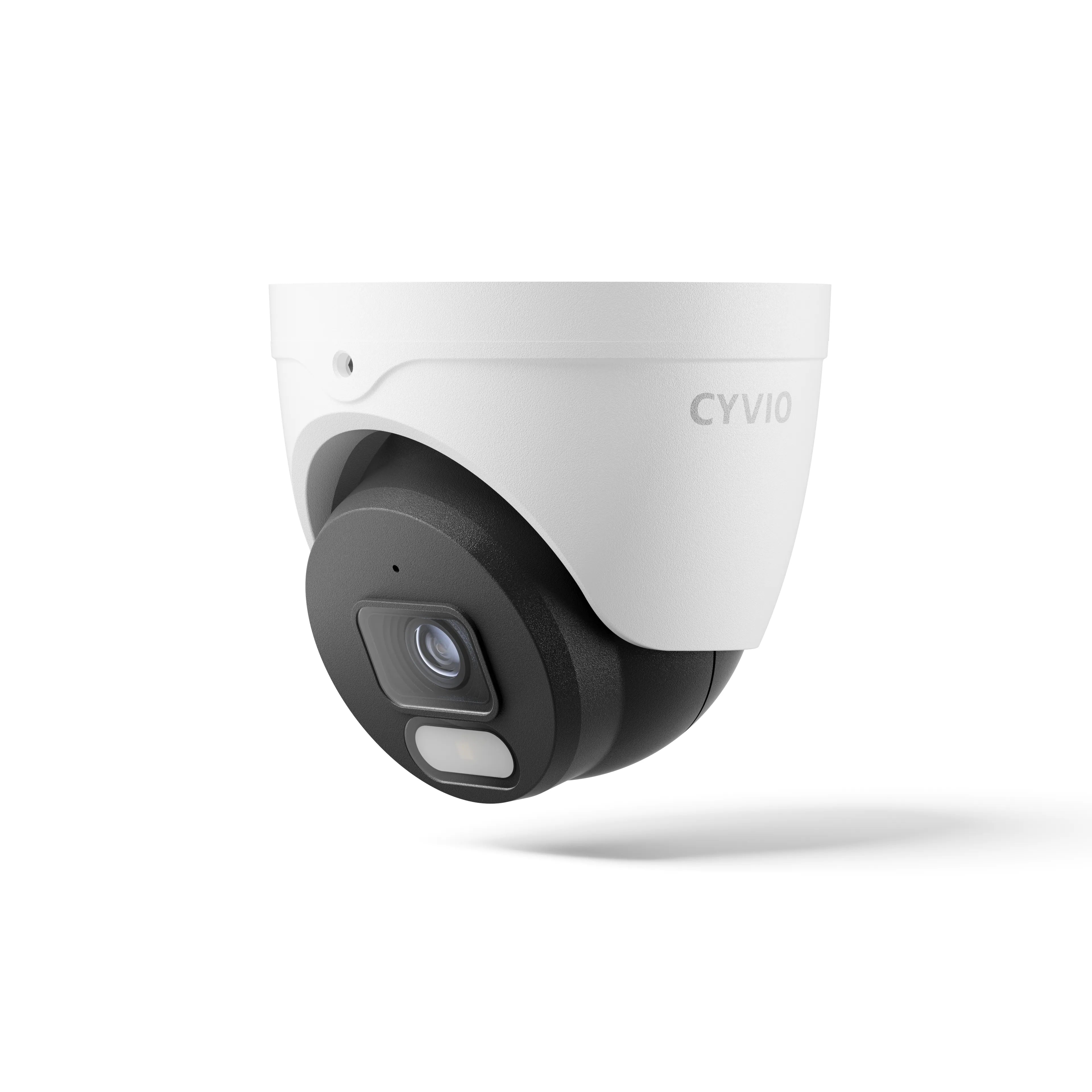
For users needing maximum stability, systems such as the CYVIO N2834D/N2838D 4K PoE Security Kit can provide uninterrupted performance without wireless limitations.

If rewiring is difficult, alternatives like powerline adapters can also help extend network connectivity using your home’s electrical wiring.
Final Thoughts
WiFi interference does not have to ruin your home security experience.
The key is understanding how your wireless environment works.
If your priority is long-range coverage, 2.4GHz WiFi remains the better choice. If you want smoother high-definition streaming with lower congestion, 5GHz is ideal for nearby cameras. For the best balance between performance and flexibility, a dual-band wireless security camera is often the smartest investment.
Simple improvements such as adjusting router placement, optimizing channels, updating firmware, or reducing interference sources can significantly improve performance.
And if wireless instability continues, switching to a PoE security camera system may provide the long-term reliability you need.
Reliable surveillance starts with a reliable connection.
FAQ
Why does my wireless security camera keep buffering?
Buffering is usually caused by weak WiFi signals, network congestion, interference from nearby devices, or insufficient internet bandwidth. Choosing the correct WiFi frequency and improving router placement often solves the problem.
Is 2.4GHz or 5GHz better for wireless security cameras?
It depends on your setup. 2.4GHz offers better range and wall penetration, making it ideal for outdoor cameras. 5GHz delivers faster speeds and lower interference for nearby indoor cameras.
Can walls interfere with security camera WiFi?
Yes. Thick concrete, brick walls, metal surfaces, and furniture can weaken WiFi signals, especially on the 5GHz band.
Should I get a dual-band WiFi camera?
Yes, if possible. A dual-band WiFi camera provides more flexibility and can switch between 2.4GHz and 5GHz for better stability and performance.
When should I switch from WiFi to PoE security cameras?
If your wireless camera frequently disconnects despite troubleshooting, or if your property has heavy interference and thick walls, a PoE security camera system may offer a more reliable long-term solution.