









900MHz Solar Security Camera System for Long-Range Surveillance | CYVIO N1814

In modern security surveillance, especially for outdoor, remote, and off-grid environments, three factors determine system performance more than anything else: transmission stability, coverage range, and power independence. Traditional wireless cameras operating on 2.4GHz or 5.8GHz bands often struggle in these scenarios due to interference, limited range, and high power consumption.
By contrast, the 900MHz frequency band has emerged as a highly efficient solution for long-range, low-power, and highly stable wireless video transmission—especially when combined with solar-powered systems. This combination enables truly off-grid deployment, making it ideal for farms, ranches, construction sites, rural roads, and remote industrial zones.
One of the most representative solutions in this category is the CYVIO N1814 900MHz solar security camera system, designed to deliver stable surveillance in environments where traditional Wi-Fi or wired systems fail.
What Is a 900MHz Wireless Security Camera System?

A 900MHz security camera system refers to a wireless surveillance solution that transmits video signals using the 900MHz ISM frequency band. This band belongs to the ultra-high frequency (UHF) range and is known for its long wavelength, strong penetration ability, and low signal attenuation.
Compared with higher frequency bands like 2.4GHz and 5.8GHz, 900MHz signals travel farther, penetrate obstacles more effectively, and are less affected by environmental interference.
When integrated into a solar-powered security system, 900MHz technology enables continuous monitoring without relying on wired electricity or traditional internet infrastructure. This makes it a practical solution for off-grid surveillance scenarios where installation flexibility and reliability are critical.
Why 900MHz Solar Security Cameras Are Becoming Popular
The demand for off-grid surveillance is increasing rapidly in agriculture, infrastructure, and remote property protection. However, conventional solutions often fall short:
- Wired CCTV systems require expensive trenching and installation
- 4G cameras rely on mobile networks and recurring data costs
- 2.4GHz Wi-Fi cameras suffer from interference and short range
- 5.8GHz systems have even weaker penetration and shorter coverage
The 900MHz solar camera system solves these issues by combining three core advantages:
- First, it provides long-range transmission with minimal signal loss.
- Second, it offers strong penetration through walls, trees, and terrain obstacles.
- Third, it consumes significantly less power, making it ideal for solar energy systems.
Together, these advantages make it a highly cost-effective and scalable surveillance solution.
CYVIO N1814: A 900MHz Solar Security Camera System Built for Real-World Deployment
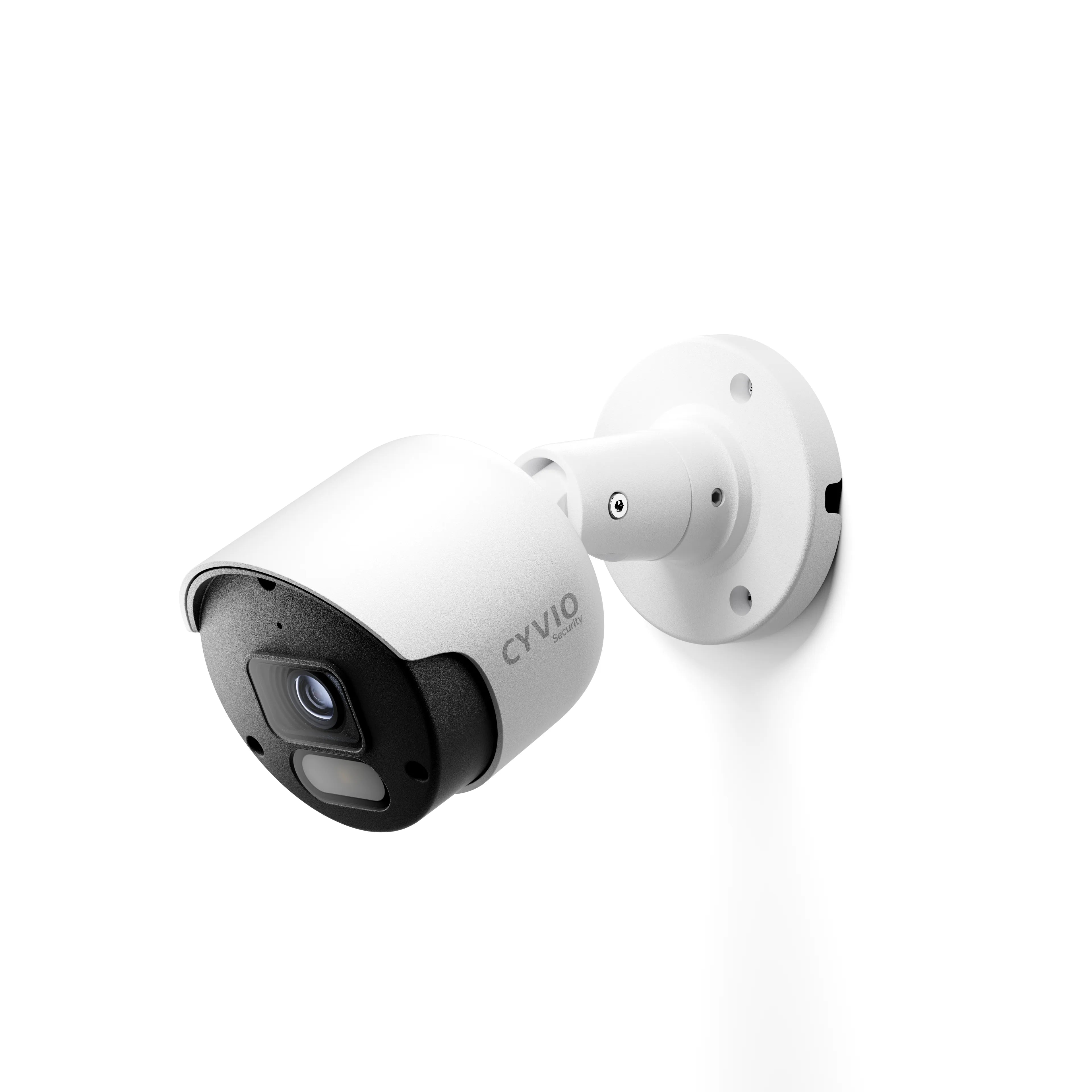
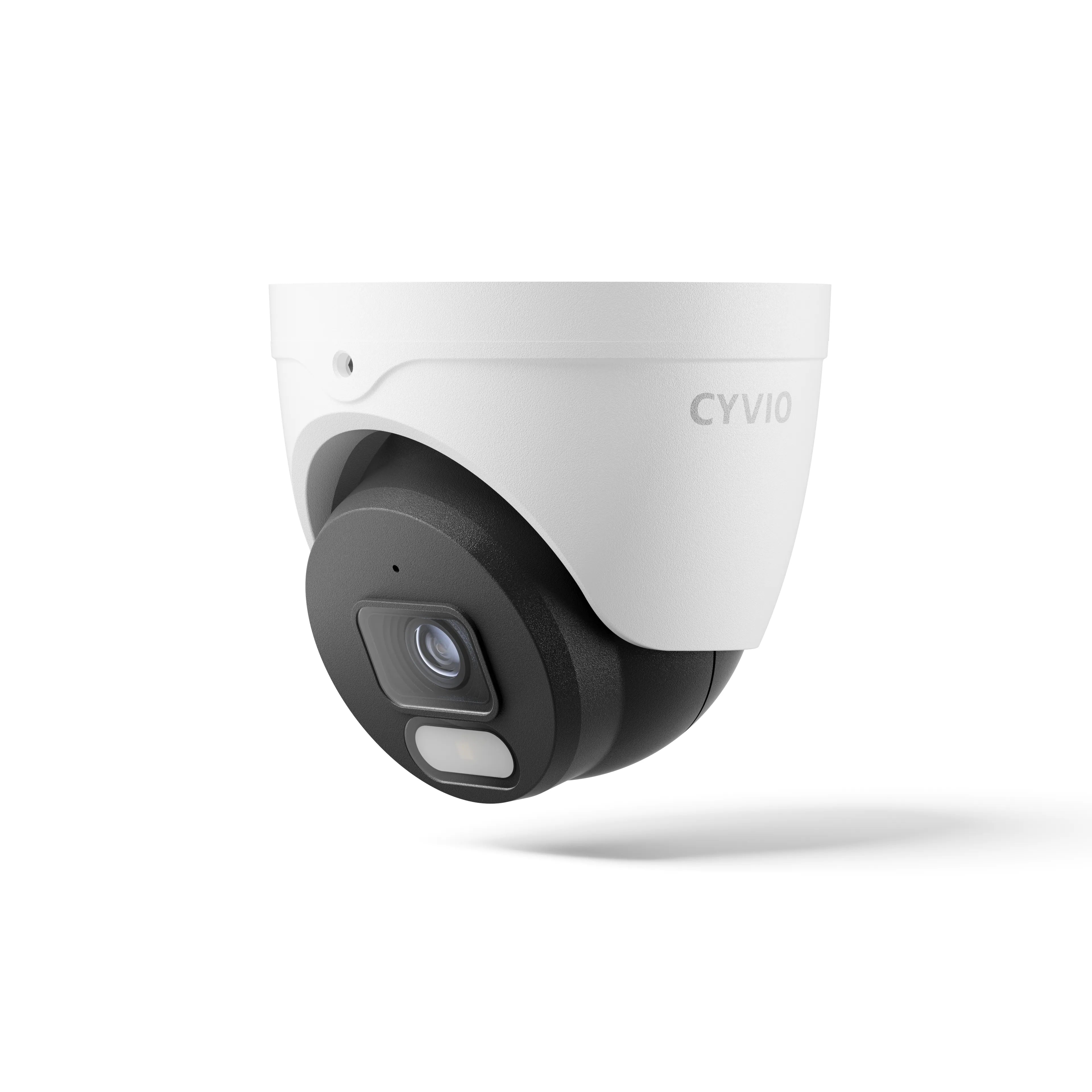
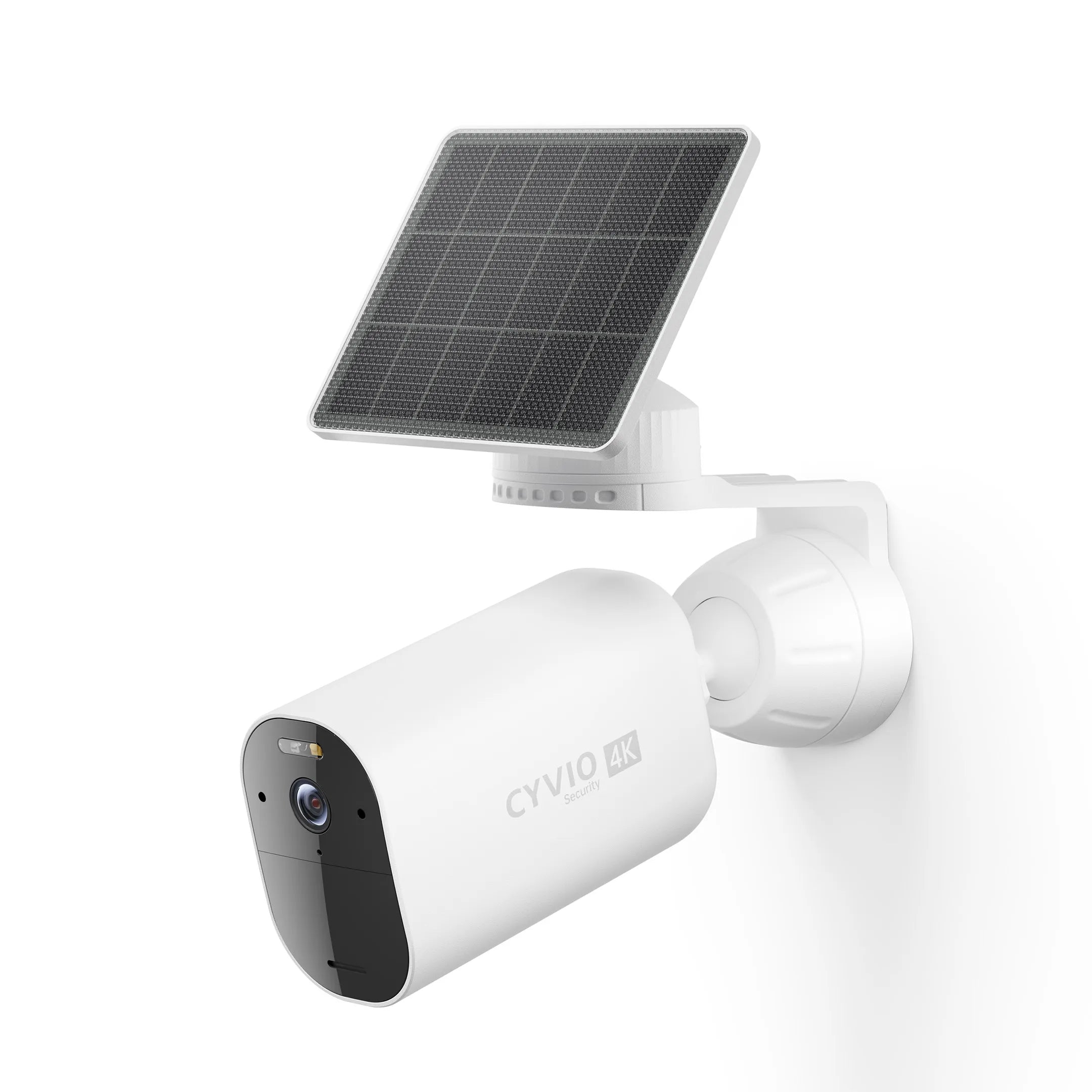
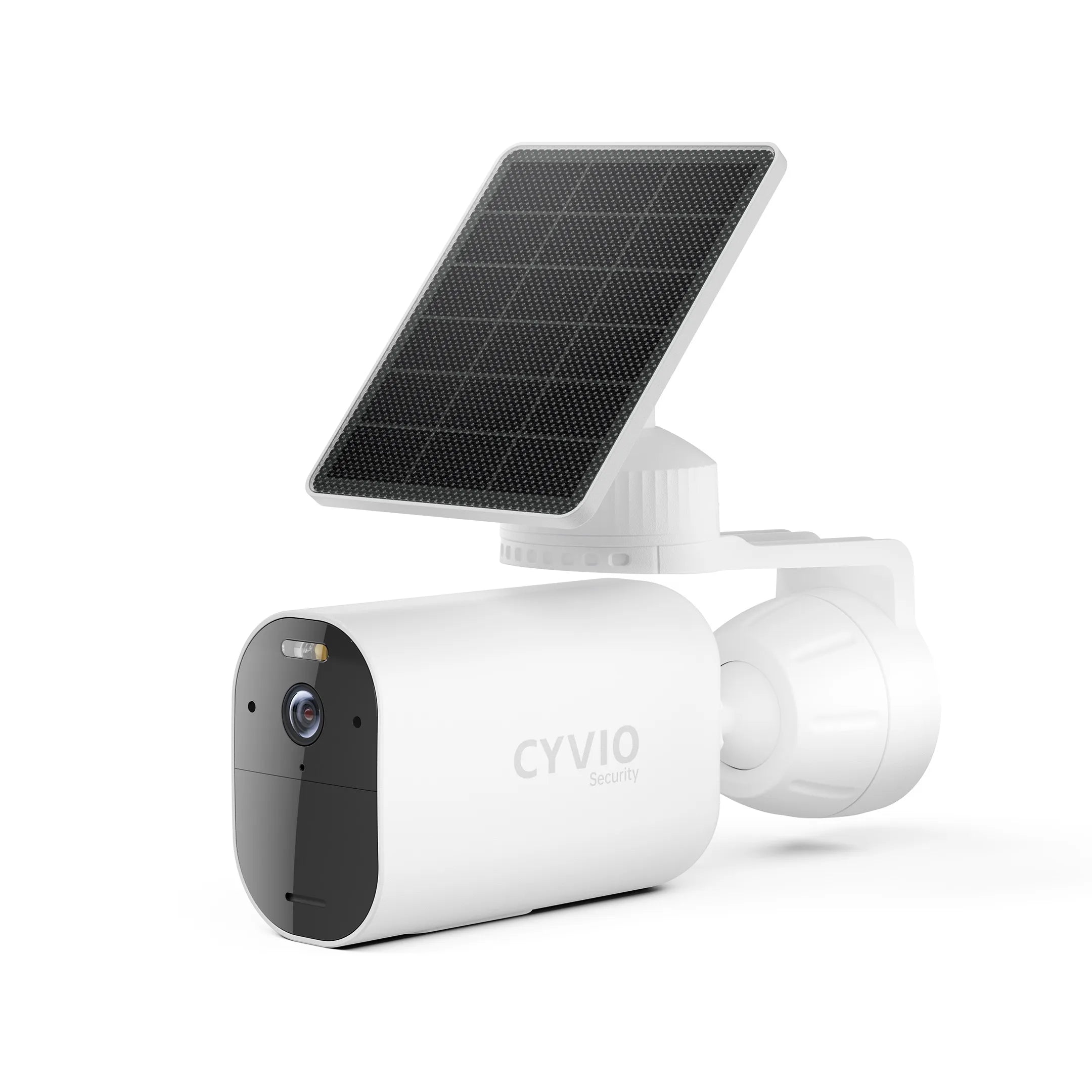
The CYVIO N1814 system is designed around a complete wireless architecture that includes 900MHz cameras, a receiving base station, high-gain antennas, and a solar power system with energy storage.

Unlike conventional consumer-grade wireless cameras, N1814 is built for long-distance, multi-device deployment in challenging environments. Its architecture focuses on stability, endurance, and cost efficiency rather than raw bandwidth.
The system is especially suitable for areas where infrastructure is limited or completely unavailable.
1.Long-Range Coverage: Fewer Devices, Larger Surveillance Area
One of the most important advantages of 900MHz technology is its extended coverage range. Because of its longer wavelength, signal attenuation is significantly lower compared to higher frequency systems.
In practical deployment scenarios, a single CYVIO N1814 base station can cover up to 700 meters in line-of-sight conditions. This means large areas such as farms, warehouses, parking lots, or rural perimeters can be monitored with fewer devices.
By comparison, 2.4GHz cameras typically cover only 100–300 meters under ideal conditions. This difference directly impacts system cost and installation complexity, as higher frequency systems require more nodes to achieve the same coverage.

2.Strong Penetration and Non-Line-of-Sight Performance
Real-world surveillance environments are rarely open and unobstructed. Walls, vegetation, terrain elevation, and urban structures often block or weaken wireless signals.
900MHz signals perform significantly better in these conditions because of their superior diffraction and penetration capabilities. They can pass through multiple concrete walls, dense trees, and complex structures with far less signal degradation.
In practical terms, this allows N1814 systems to maintain stable video transmission even in basements, underground parking areas, forests, or hilly terrain where higher frequency systems often fail.
This non-line-of-sight capability is a major reason why 900MHz systems are increasingly preferred for outdoor and industrial security applications.
3.Superior Anti-Interference Stability
Modern environments are saturated with wireless devices. The 2.4GHz band, in particular, is heavily congested with Wi-Fi routers, Bluetooth devices, microwaves, and other consumer electronics.
This congestion leads to signal interference, video lag, frame drops, and connection instability in traditional wireless cameras.
The 900MHz band is much less crowded, offering a cleaner and more stable transmission environment. As a result, systems like N1814 experience significantly fewer interruptions and maintain more consistent video quality.
This stability is especially important for security applications where continuous monitoring is essential.
4.Ultra-Low Power Design for Solar Integration
Power efficiency is another critical factor in off-grid surveillance systems. Solar-powered cameras must operate continuously under varying weather conditions while relying on limited energy storage.
The N1814 system is optimized for low-power transmission protocols. During active operation, power consumption remains below 0.5W, while standby consumption can drop as low as 0.1W.
This low energy demand allows the system to operate efficiently with compact solar panels and battery storage. In practical usage, a few hours of sunlight can support several days of continuous operation.
In contrast, higher frequency systems consume significantly more energy, often requiring larger solar panels or more frequent maintenance.

5.Balanced Bandwidth for Security Needs
While 900MHz does not offer the extremely high data rates of 2.4GHz or 5.8GHz systems, this is not a disadvantage in security applications. The 900MHz band typically delivers a maximum throughput of around 15–30Mbps, which is more than sufficient for surveillance use cases.
Most surveillance video—such as 1080p HD streaming—requires only 4–8 Mbps of bandwidth. The 900MHz system comfortably supports this requirement while avoiding unnecessary energy consumption.
By prioritizing stability and efficiency over excessive bandwidth, N1814 ensures continuous recording, smooth live viewing, and reliable motion detection alerts without performance waste.
Combined with local base station storage (e.g., built-in 64GB), the system supports reliable recording without heavy reliance on cloud storage, helping reduce ongoing subscription costs.
6.Ideal Use Cases for 900MHz Solar Camera Systems
The CYVIO N1814 system is particularly suitable for scenarios where traditional systems struggle:
- Agricultural monitoring such as farms and ranches
- Remote infrastructure including pipelines, borders, and mining sites
- Rural road and perimeter security
- Large outdoor industrial zones
- Temporary construction site surveillance
- Community or small business security upgrades
In all these environments, the combination of solar power and 900MHz transmission provides a unique balance of coverage, reliability, and cost efficiency.
7.Cost Efficiency Compared to 4G and Wi-Fi Systems
One of the biggest advantages of the N1814 system is long-term cost reduction.
Unlike 4G cameras, which require ongoing SIM card data fees, 900MHz systems operate independently of mobile networks. This eliminates monthly operational costs entirely.
Compared to wired systems, installation costs are also significantly lower due to the absence of trenching and cabling.
Over time, the total cost of ownership becomes substantially lower, making it a more sustainable solution for large-scale deployments.
Conclusion: Why 900MHz Solar Security Cameras Are the Future of Off-Grid Surveillance
The rise of 900MHz solar security camera systems reflects a clear shift in surveillance technology priorities—from maximum bandwidth to maximum reliability, efficiency, and deployment flexibility.
The CYVIO N1814 solar battery powered camera system demonstrates how this technology can be practically applied to solve real-world security challenges. By combining long-range wireless transmission, strong penetration capability, ultra-low power consumption, and solar energy independence, it delivers a robust solution for environments where traditional systems fail.
For users seeking a stable, cost-effective, and truly off-grid surveillance solution, 900MHz systems represent one of the most practical and future-proof choices available today.
As a security-focused brand, CYVIO continues to develop reliable solar-powered surveillance systems designed for long-range, off-grid environments.
FAQ
1. What is a 900MHz solar security camera system?
It is a wireless surveillance system that uses the 900MHz frequency band for long-range video transmission and solar panels for independent power supply, eliminating the need for wired electricity or internet infrastructure.
2. How far can a 900MHz camera transmit?
In open line-of-sight environments, systems like CYVIO N1814 can transmit up to around 700 meters, significantly farther than most 2.4GHz or 5.8GHz systems.
3. Does 900MHz work through walls and trees?
Yes. 900MHz signals have strong penetration and diffraction ability, allowing them to pass through multiple walls, vegetation, and complex terrain better than higher frequency systems.
4. Is 900MHz better than 2.4GHz for security cameras?
For long-range and outdoor surveillance, yes. 900MHz offers better stability, range, penetration, and lower power consumption, while 2.4GHz offers higher bandwidth but weaker real-world reliability.
5. Do 900MHz solar cameras require internet or SIM cards?
No. Systems like CYVIO N1814 operate using local wireless transmission and base station storage, eliminating the need for Wi-Fi or cellular data plans.
6. What are the best use cases for 900MHz solar cameras?
They are ideal for farms, rural areas, construction sites, industrial zones, and any off-grid environment requiring long-range, stable surveillance without infrastructure dependency.