









Can Security Cameras See Through Windows? What You Need to Know About Monitoring Through Glass

Installing a security camera indoors and pointing it through a window can seem like a simple solution for monitoring a driveway, front door, backyard, parking area, or storefront. It keeps the camera protected from rain, snow, dust, and direct sunlight while avoiding the need for outdoor wiring.
But there is one important question: Can a security camera actually see clearly through glass?
The short answer is yes—but not always.
During the daytime, a security camera can usually capture a usable image through ordinary window glass when there is enough natural light. At night, however, the situation can change dramatically. Reflections from the glass, infrared illumination, indoor lights, dirt on the window, and the camera's detection method can all affect image quality.
For this reason, installing a security camera behind a window is not simply a matter of placing the camera near the glass and pointing it outside. Understanding how glass affects security camera performance can help you decide whether this setup is suitable for your home or whether an outdoor camera would be a better option.

Can a Security Camera See Through Glass?
Yes, a security camera can record through glass because ordinary glass allows visible light to pass through. If the window is clean and the outdoor scene is well lit, the camera can generally capture the area outside without major problems.
This is why a camera placed behind a window may work reasonably well during the day. The image sensor receives enough visible light from outdoors, and the camera does not necessarily need to rely on infrared illumination.
However, the glass itself still introduces several factors that can reduce image quality. Dust, fingerprints, water droplets, condensation, scratches, and other marks on the window can reduce contrast and make fine details less clear. Double-pane or laminated glass may also introduce subtle reflections or ghosting in some situations.
The biggest challenge usually appears after sunset.
When outdoor light becomes weaker, a security camera may switch to infrared night vision or another low-light mode. This is where the relationship between the camera and the glass becomes much more complicated.
Why Does a Security Camera Look Worse Through Glass at Night?
The main problem is reflection.
Many night vision security cameras use infrared light to illuminate a dark scene. When the camera is installed outside, the infrared light travels directly toward the monitored area. But when the camera is inside and the window is between the camera and the outdoor scene, some of that infrared light can hit the glass and bounce straight back toward the lens.
The result can be a bright haze, white spots, glare, or a large washed-out area across the image.
In severe cases, the reflection can become so strong that the camera struggles to capture useful details outside the window. Instead of seeing the driveway or yard clearly, you may end up seeing a reflection of the window itself.

CYVIO's own guidance notes that most security cameras cannot see clearly through windows at night because infrared light can reflect from the glass and cause glare or blurry footage.
This is also why simply buying a higher-resolution camera does not necessarily solve the problem. A 4K or 5MP camera can provide more image detail, but if strong reflected light is covering the lens, those additional pixels cannot restore the missing information.
Indoor Light Can Create Another Problem
Infrared reflection is not the only issue.
Suppose your room is brightly lit while the area outside is dark. The window can act like a mirror, reflecting lamps, televisions, computer screens, furniture, or even people moving inside the room back toward the camera.
The camera may then capture both the outdoor scene and the indoor reflection at the same time.
This can make it difficult to see someone approaching the house or a vehicle entering the driveway. The darker the outdoor environment and the brighter the indoor environment, the more noticeable this effect can become.
That is why a camera that looks perfectly fine through a window during the afternoon can suddenly produce disappointing footage after dark.
What Other Factors Affect Security Camera Footage Through a Window?
Glass reflection is the most obvious problem, but several smaller factors can also affect the final image.
The condition of the glass matters. A window covered with dust, rain droplets, fingerprints, or condensation can scatter light and reduce contrast. Under strong lighting, even a small amount of dirt can become visible in the recording.
The distance between the camera and the glass also matters. In general, keeping the camera lens as close to the window as practical can reduce the amount of indoor space and reflection visible in the frame. However, the camera should still be positioned securely and kept perpendicular to the glass as much as possible.
The type of glass can also influence results. Double-pane, tinted, laminated, or specially coated windows may produce different optical effects from ordinary single-pane glass. These differences do not necessarily make monitoring impossible, but they can make the image less predictable.
There is also the issue of movement detection.
Some security cameras use different technologies for detecting activity. A camera that relies on visible-image analysis can still monitor activity through a window, while a PIR sensor works differently. Because glass blocks much of the infrared radiation used by passive infrared sensors, a PIR-based detection system may not work properly when the sensor is located behind a window.
In other words, a camera may still produce video through the glass while some detection functions do not perform as expected.
How to Use a Security Camera Behind Glass More Effectively
If you have no choice but to install a camera indoors and monitor an outdoor area through a window, several practical adjustments can make the setup more usable.
First, place the lens as close to the glass as reasonably possible. This reduces the amount of interior space around the camera that can appear as reflections. Keep the camera facing straight through the window rather than at a sharp angle.
Second, keep the window clean. Remove dust, fingerprints, water marks, and condensation regularly. A clean pane of glass will not eliminate reflections, but it can prevent additional haze and bright spots from making the image worse.
Third, pay close attention to indoor lighting at night. Turning off unnecessary lights near the window can significantly reduce reflections. If a television or bright monitor is positioned close to the window, its light can also appear in the footage.
The camera's infrared night vision is another important setting. If the camera allows IR illumination to be disabled, turning it off can prevent the camera's own infrared light from reflecting back from the glass.
In this situation, an external light source outside the window can be more useful. For example, a porch light or motion-activated outdoor light can illuminate the monitored area with visible light while keeping the camera's infrared illumination from hitting the glass.

CYVIO's current night vision guidance similarly recommends avoiding installation behind glass when possible. If outdoor installation is not practical, disabling IR and using an external light source may help depending on the camera and environment.
Finally, do not judge the setup only from the live preview. Record some footage and review it later, especially after sunset. Compression, backlighting, fast movement, and changes in exposure may not be obvious when watching a short live preview but can become much more noticeable in recorded video.
When Should You Install the Camera Outside Instead?
For many outdoor monitoring situations, placing the camera outside the window is the more straightforward solution.
If you need to monitor a front door, driveway, backyard, parking area, warehouse entrance, or storefront 24/7, installing the camera where it has a direct view of the monitored area avoids many of the optical problems caused by glass.
The camera can use its infrared or color night vision system without having the illumination reflected back from a window. Its lens also has a clearer optical path, while detection and other camera functions can operate without the additional limitation of the glass.
Installation does not necessarily mean exposing the camera directly to harsh weather. A location under an eave, porch, covered entrance, or other sheltered exterior area can provide protection from direct rain and sunlight while still giving the camera an unobstructed view.
CYVIO's product range includes indoor WiFi cameras as well as outdoor PoE, battery-powered, and solar-powered security cameras, allowing the installation method to match the environment rather than forcing one camera type into every situation.
For example, the CYVIO C2 is designed as an indoor WiFi security camera with 5MP resolution, PTZ functionality, and AI detection features. Its multiple night vision modes are intended for indoor monitoring environments.
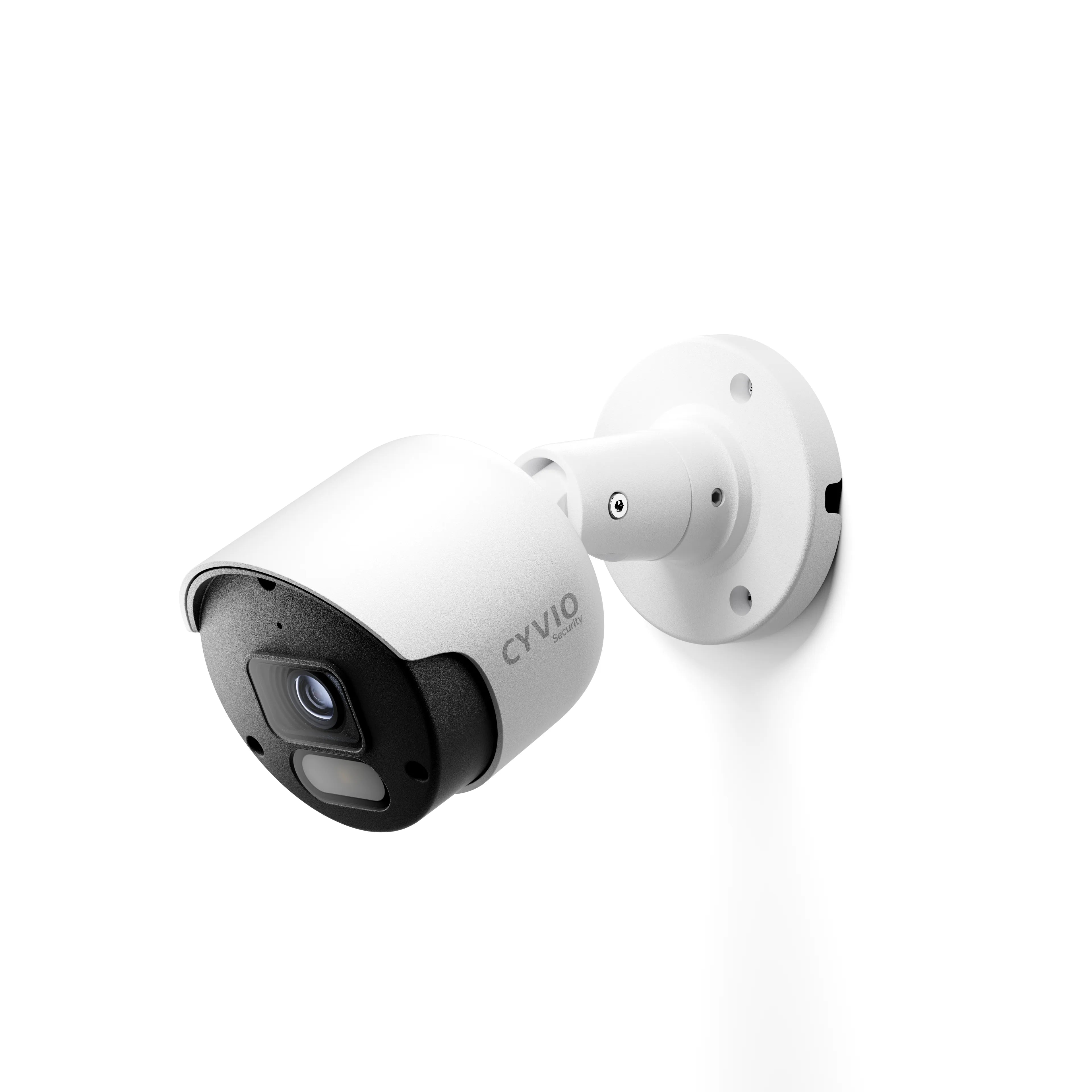
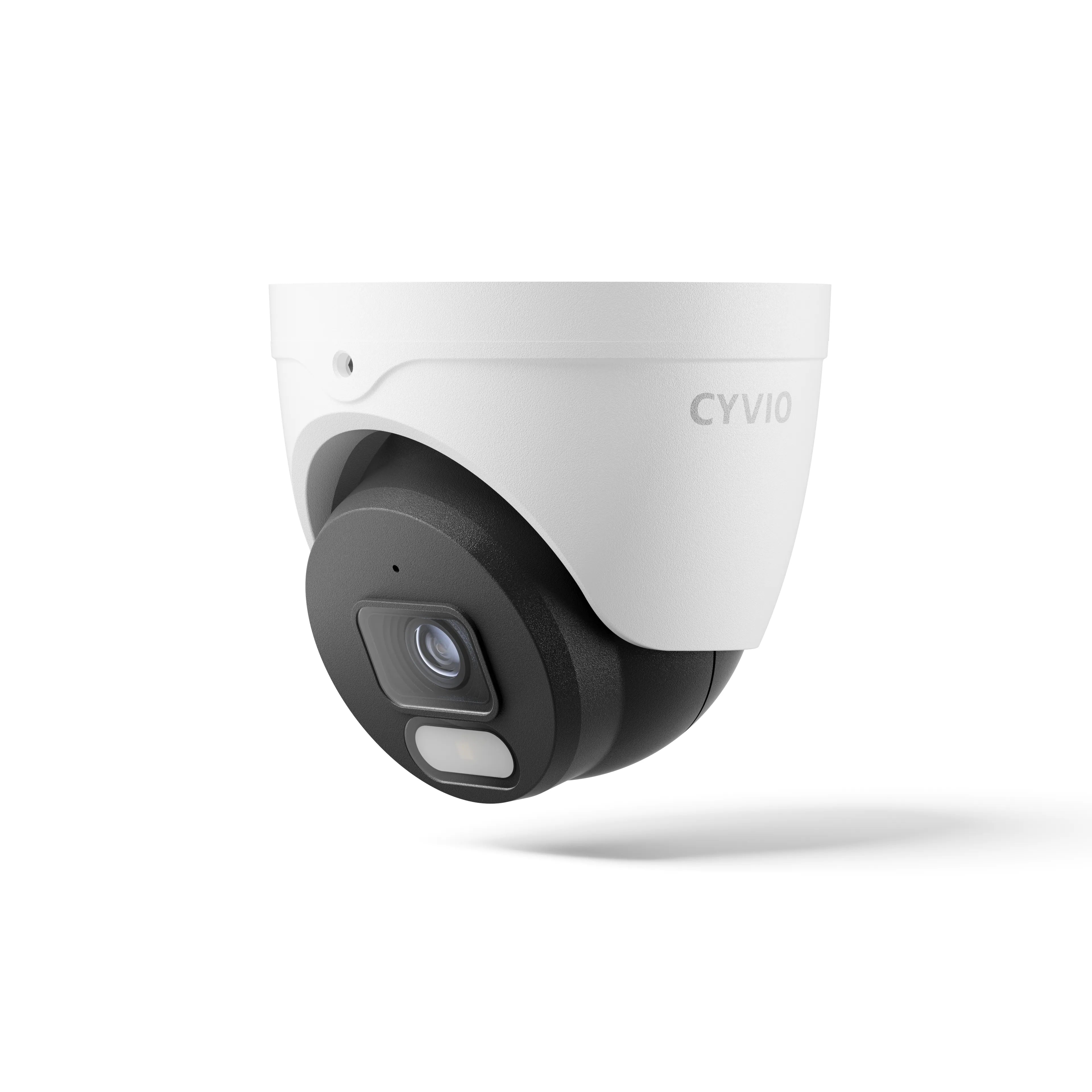
For outdoor locations where running network cables is practical, CYVIO also offers PoE security camera systems. Models such as the N2834 use PoE for both network connectivity and power and are designed for outdoor monitoring.
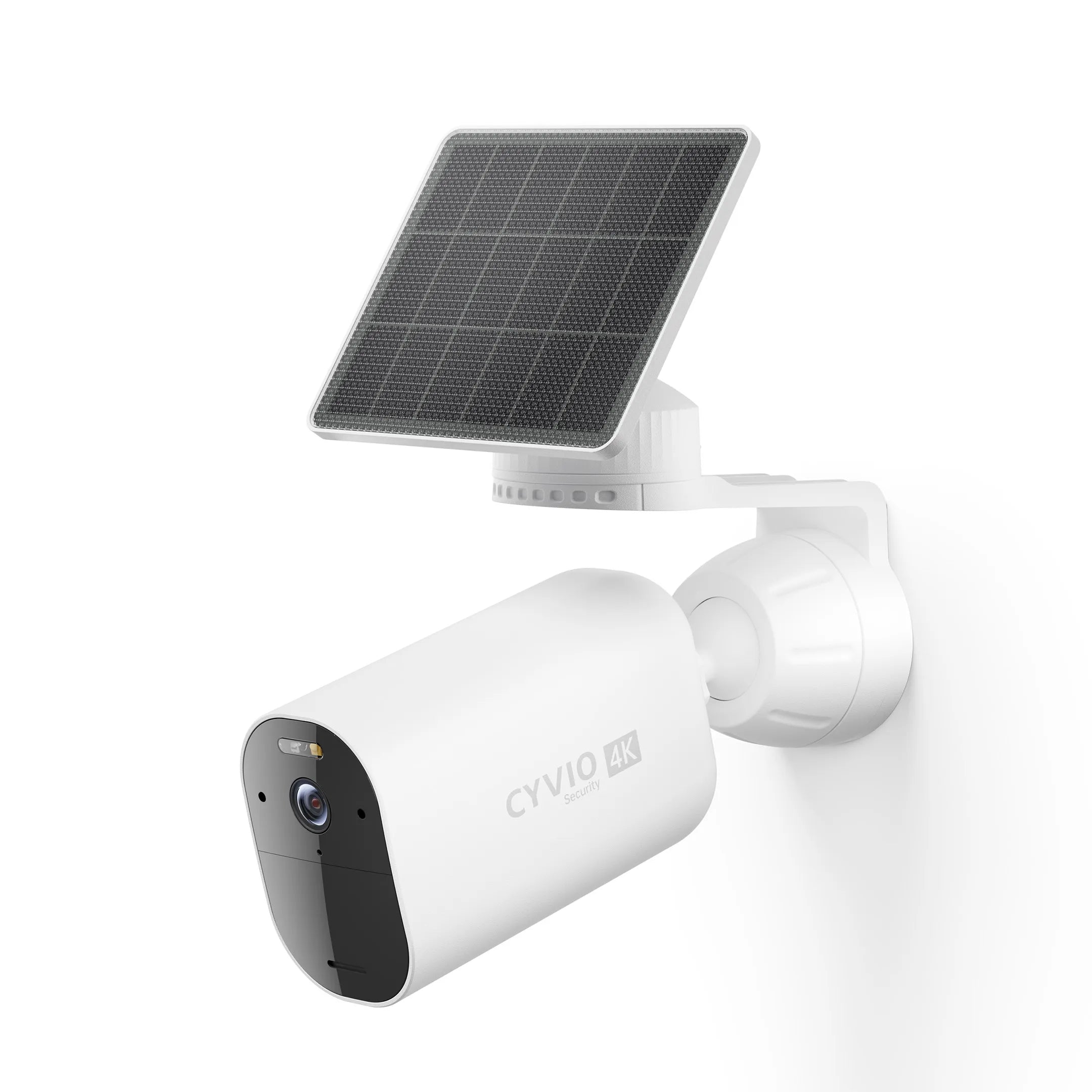
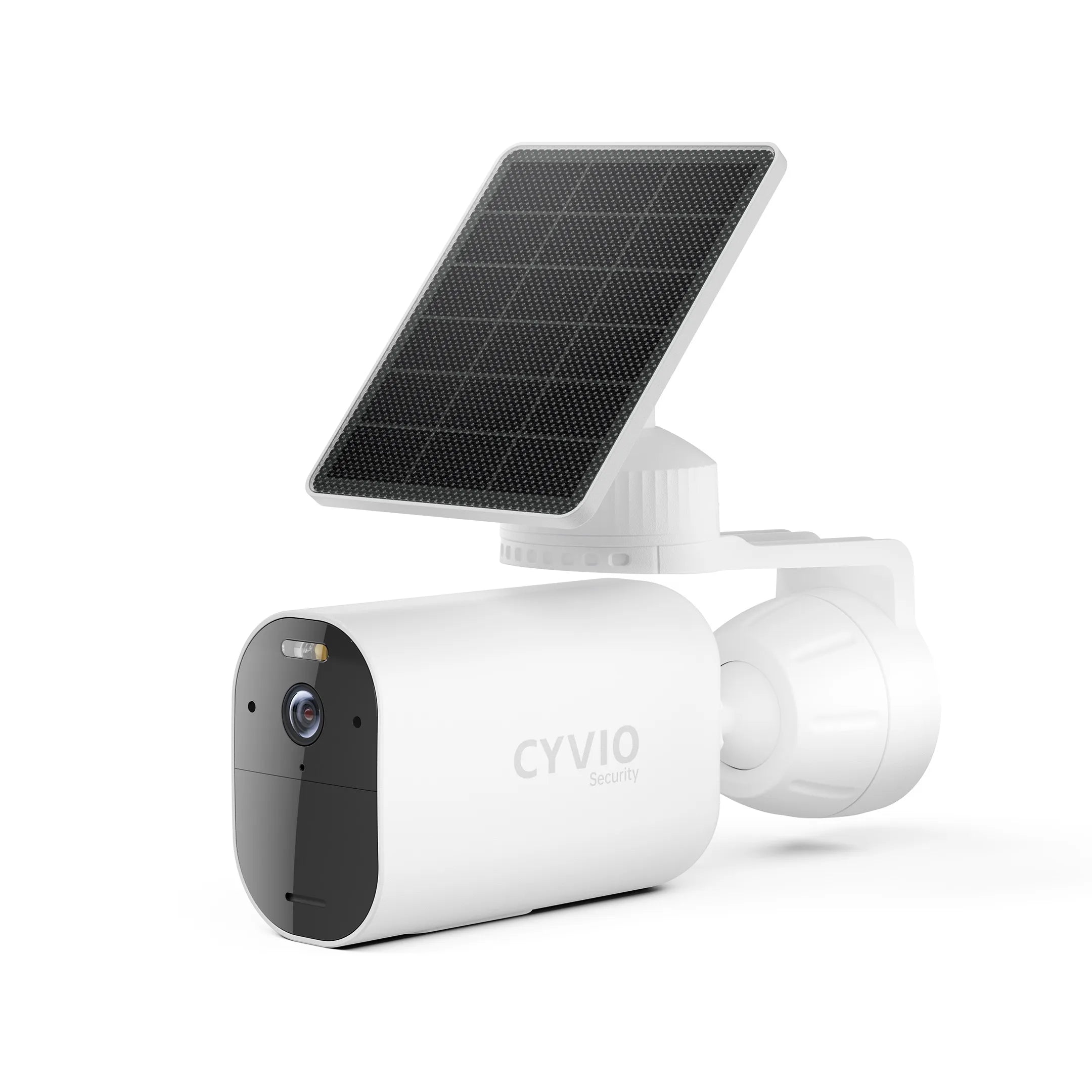
For locations where wiring is difficult, CYVIO's battery and solar-powered cameras provide another approach. The B221, for example, combines wireless connectivity, battery power, and color and infrared night vision for outdoor use.
The important point is not that one type of security camera is always better than another. The right choice depends on where the camera needs to be installed and what you expect it to monitor.

How to Choose the Right Security Camera System: A Look at CYVIO
CYVIO is an innovative security brand focused on privacy and data protection. Its product lineup covers indoor PTZ cameras, PoE security camera systems, WiFi cameras, battery-powered cameras, and solar-powered cameras, providing solutions for a wide range of monitoring environments. The brand is committed to protecting user privacy through features such as local storage, no required subscription, and no mandatory cloud connection, giving users greater control over their security footage and personal data.
For homes and small businesses that need stable, long-term recording, the CYVIO 4K PoE security camera system is a practical choice for fixed outdoor installations. PoE technology allows a single Ethernet cable to transmit both data and power, making installation simpler while providing a stable connection for continuous operation. This makes a PoE system particularly suitable for monitoring locations such as front doors, backyards, and driveways where 24/7 surveillance is needed.

For outdoor locations where running cables is difficult, wireless and solar-powered solutions such as the CYVIO N1812 and N1814 can provide greater installation flexibility.
These cameras feature built-in solar panels and a 11,600mAh rechargeable battery, along with long-range wireless connectivity. This makes them suitable for monitoring areas such as yards, garages, or locations that are far from a building's available power supply.

For indoor home monitoring, the CYVIO C2 is designed to meet the needs of everyday household surveillance. It supports both 2.4GHz and 5GHz WiFi connectivity and combines AI-powered detection with 360° PTZ human tracking, allowing it to cover a wider indoor area. Whether you want to keep an eye on elderly family members, monitor pets, or add an extra layer of everyday home security, the C2 provides flexible coverage for a variety of indoor monitoring needs.

The key to choosing the right security camera system is not simply selecting the camera with the highest resolution or the most features. Instead, consider the environment where the camera will be installed, the area that needs to be monitored, the available power and network conditions, and whether you need continuous recording or more flexible installation.
CYVIO's different camera solutions are designed around these practical differences. A wired PoE system can be suitable for fixed outdoor locations that require stable 24/7 recording, while wireless or solar-powered cameras can make installation easier in areas where wiring is inconvenient. For indoor spaces, a PTZ WiFi camera can provide flexible coverage without requiring the same outdoor protection or cabling infrastructure.
Just as importantly, camera placement can have a major impact on real-world performance. As discussed earlier in this article, placing an indoor camera behind a window to monitor an outdoor area can introduce problems such as infrared reflection, glare, and reduced nighttime image quality. If reliable outdoor monitoring is required, installing a camera designed for outdoor use directly at the monitoring point can provide a clearer view and avoid many of these issues.
In the end, the right security camera system should be selected according to the actual monitoring environment and your specific needs. By considering camera type, connectivity, power supply, night vision, storage, and installation conditions together, you can build a surveillance setup that provides reliable coverage without paying for features you do not need.
Final Thoughts: Can Security Cameras See Through Windows?
So, can a security camera see through a window?
Yes. During the daytime, a security camera can often capture a reasonably clear image through ordinary glass. The challenge is that the same setup can become much less effective at night.
Infrared illumination can reflect from the glass, indoor lights can appear as mirror-like reflections, and dirt or condensation can further reduce image quality. Certain detection technologies, such as PIR sensing, may also be affected by the presence of glass.
If you only need occasional daytime monitoring, placing a camera behind a window may be a practical solution. But if you need reliable 24/7 monitoring, clear nighttime footage, or detailed evidence from a driveway, entrance, or other outdoor area, installing the camera outside the glass is generally a more suitable setup.
The most important lesson is simple: camera placement can matter just as much as camera specifications. Choosing the right installation environment from the beginning can help you get much more from your security camera, whether you are monitoring your home, business, driveway, yard, or another important area.
FAQ
1.Can a security camera see through a window?
Yes. A security camera can record through ordinary glass, particularly when there is sufficient visible light. However, reflections, dirt, condensation, and the type of glass can affect image quality.
2.Can a night vision security camera work through glass?
It can, but infrared night vision may create strong reflections when the camera is positioned behind a window. This can result in glare, haze, or a washed-out image.
3.How can I stop my security camera from reflecting off the window?
Place the camera lens as close to the glass as practical, keep the window clean, reduce indoor lighting near the window, and disable the camera's IR illumination if the camera supports this setting. An external light source outside the window may also help.
4.Can a security camera detect people through glass?
Image-based detection may still work through glass, but performance depends on the camera, lighting, image quality, and the type of detection technology being used. PIR-based detection can be affected because glass blocks much of the infrared radiation used by the sensor.
5.Should I put my security camera inside or outside the window?
For reliable outdoor monitoring, installing the camera outside the window is generally more practical because it eliminates most glass-reflection problems and gives the camera a direct view of the monitored area.
6.Can a security camera see through double-pane glass?
It can record through double-pane glass, but additional reflections or optical distortion may affect image clarity. Results depend on the type and construction of the glass as well as lighting conditions.
7.Why does my camera look clear during the day but blurry at night?
The difference is often caused by night vision and lighting conditions. When the camera activates infrared illumination, the IR light may reflect from the glass back toward the lens. Indoor lights can also create reflections that are much more noticeable when the outdoor scene is dark.