









WiFi vs. PoE vs. WiFi HaLow Security Cameras: Which One Is Right for You?

Choosing a security camera is no longer simply about deciding between indoor and outdoor models. Today, the way a camera connects to the network and receives power can have just as much impact on the overall experience. For homeowners, business owners, and property managers, three options are especially common: dual-band WiFi security cameras, PoE security cameras, and WiFi HaLow security cameras.

At first glance, the differences may seem straightforward. WiFi cameras are convenient, PoE cameras use Ethernet cables, and WiFi HaLow cameras are designed for longer wireless distances. In practice, however, each technology solves a different installation problem.
A WiFi camera may be ideal for a living room or small shop, while a PoE security camera system can make more sense for a property that needs stable 24/7 recording. For a large farm, long driveway, or remote outdoor area where running Ethernet cables is difficult, WiFi HaLow can offer a different approach.
There is no single connection method that is right for every property. The better choice depends on installation distance, wiring availability, power conditions, obstacles, network stability, and how the camera will be used. This guide explains the differences between WiFi, PoE, and WiFi HaLow security cameras and shows how CYVIO's product lineup fits these different scenarios.
1. What Are the Differences Between WiFi, PoE, and WiFi HaLow Security Cameras?
1.1 Dual-Band WiFi Security Cameras: Simple Installation for Everyday Monitoring

Dual-band WiFi security cameras typically connect to a home or business network through 2.4GHz and 5GHz WiFi. Unlike wired PoE cameras, they do not require an Ethernet cable between the camera and router or NVR. As long as the camera has a suitable power source and a stable wireless connection, installation can be relatively quick.
This makes WiFi particularly convenient for indoor monitoring. A homeowner can place a camera in a living room, nursery, hallway, or home office without opening walls or running new network cables. It is also useful for small businesses that need to add a camera without significantly changing the existing wiring.
One advantage of dual-band WiFi is flexibility. The 5GHz band generally provides higher bandwidth over shorter distances, while 2.4GHz can offer better coverage through typical household obstacles. Modern WiFi security cameras can also combine wireless connectivity with features such as PTZ control, AI detection, automatic tracking, two-way audio, and local storage.
However, wireless convenience also comes with limitations. WiFi performance can be affected by walls, appliances, nearby wireless networks, and the distance between the camera and router. A camera that works perfectly when installed close to the router may behave differently after being moved to another room or outside the house.
For that reason, conventional WiFi security cameras are generally better suited to shorter-distance installations where the wireless signal remains strong and consistent.
1.2 PoE Security Cameras: Wired Stability for Continuous Surveillance

PoE, or Power over Ethernet, takes a different approach. A single Ethernet cable can carry both network data and power to the camera, eliminating the need for a separate power adapter at the camera location.
This is one of the main reasons PoE security camera systems are widely used for homes, stores, offices, factories, garages, and other locations where continuous surveillance is important. Once Ethernet cabling is installed, the connection does not depend on the same type of wireless signal conditions that affect WiFi cameras.
PoE can also simplify outdoor installations. Instead of running both a network cable and a separate power cable to a camera, one Ethernet connection can handle both jobs. When combined with a PoE NVR or PoE switch, multiple cameras can be managed as part of a centralized security camera system.
Another important advantage is consistency. For applications requiring 24/7 recording, multiple cameras, or high-resolution video, a wired connection can provide a more predictable network environment.
The trade-off is installation. PoE requires Ethernet cabling, so it is much easier to install during construction or renovation. Retrofitting an already finished property can require additional cable routing and installation work.
In other words, PoE is less about convenience during installation and more about creating a stable, long-term surveillance infrastructure.
1.3 WiFi HaLow Security Cameras: Long-Range Wireless Connectivity for Outdoor Areas

WiFi HaLow is designed for a different problem: connecting devices over much longer distances while maintaining low-power wireless communication.
Based on the IEEE 802.11ah standard, WiFi HaLow operates in the sub-1GHz range rather than the conventional 2.4GHz or 5GHz bands used by many home WiFi devices. Its lower-frequency wireless characteristics make it particularly useful for long-range IoT and outdoor applications.
For security cameras, this can be valuable when a monitoring point is too far away for conventional WiFi but running an Ethernet cable is impractical.
Large yards, farms, orchards, long driveways, detached buildings, gates, and property boundaries are examples where WiFi HaLow can make sense. The technology is also well suited to battery-powered and solar-powered cameras because long-range wireless connectivity can be combined with low-power hardware.
CYVIO's HaLow products are designed around this use case. The company's B301, for example, uses 900MHz-class HaLow WiFi and is rated for transmission distances of up to 700 meters in open, interference-free conditions. It is also designed as a wire-free, solar-compatible security camera solution.
The important point is that the advertised transmission distance is a network range under specified conditions, not a guarantee that the same distance will be available in every real property. Walls, trees, terrain, interference, antenna placement, and other environmental factors can affect wireless performance.
2. Which Security Camera Type Is Best for Different Scenarios?
The best security camera is usually determined by the installation environment rather than by the technology name alone.

Dual-Band WiFi: Best for Indoor and Shorter-Distance Monitoring
WiFi security cameras are a practical choice when the camera is relatively close to the router and there are not too many walls or physical obstacles between them.
Typical applications include living rooms, bedrooms, nurseries, small stores, reception areas, and other indoor spaces. They are also useful when a property has already been finished and running Ethernet cables would be inconvenient.
For example, CYVIO's C2 5MP 360° PTZ Wi-Fi Indoor Security Camera supports WiFi 6 on both 2.4GHz and 5GHz, Bluetooth pairing, 360° pan and tilt, human/vehicle/animal detection, human tracking, two-way audio, and local microSD storage.
This type of camera makes sense when users value easy installation, flexible positioning, PTZ coverage, and smart indoor monitoring.
However, conventional WiFi becomes less attractive when the camera is installed far from the router, separated by multiple thick walls, or placed in an environment with significant wireless interference.
PoE: Best for Stable, Long-Term Surveillance
PoE security cameras are particularly suitable for stores, factories, garages, villas, driveways, and other properties where Ethernet cables can be installed.
They are also a strong fit for users who want multiple cameras recording continuously. Since power and network communication travel through the same Ethernet cable, the installation can remain relatively clean while providing a dedicated wired connection.
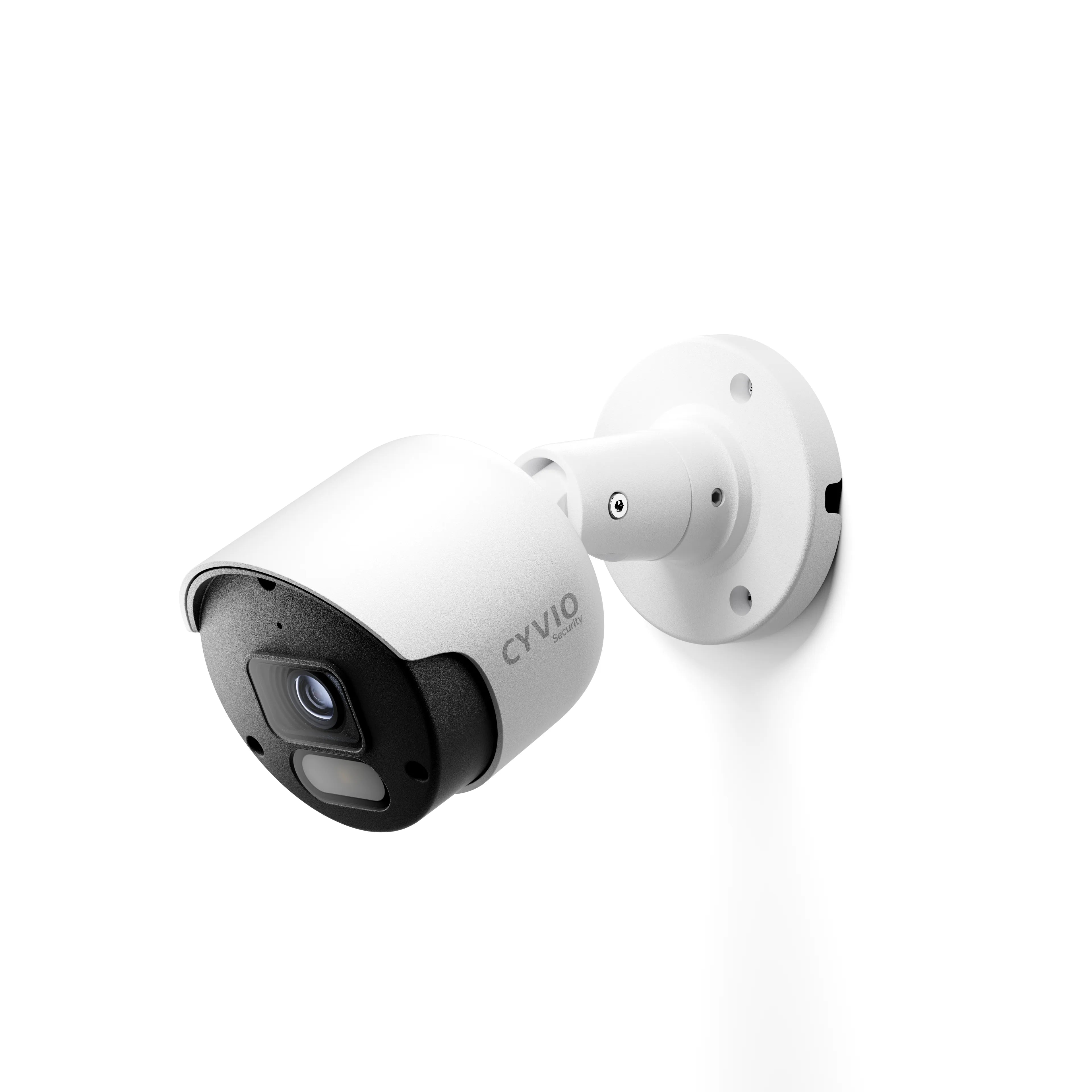
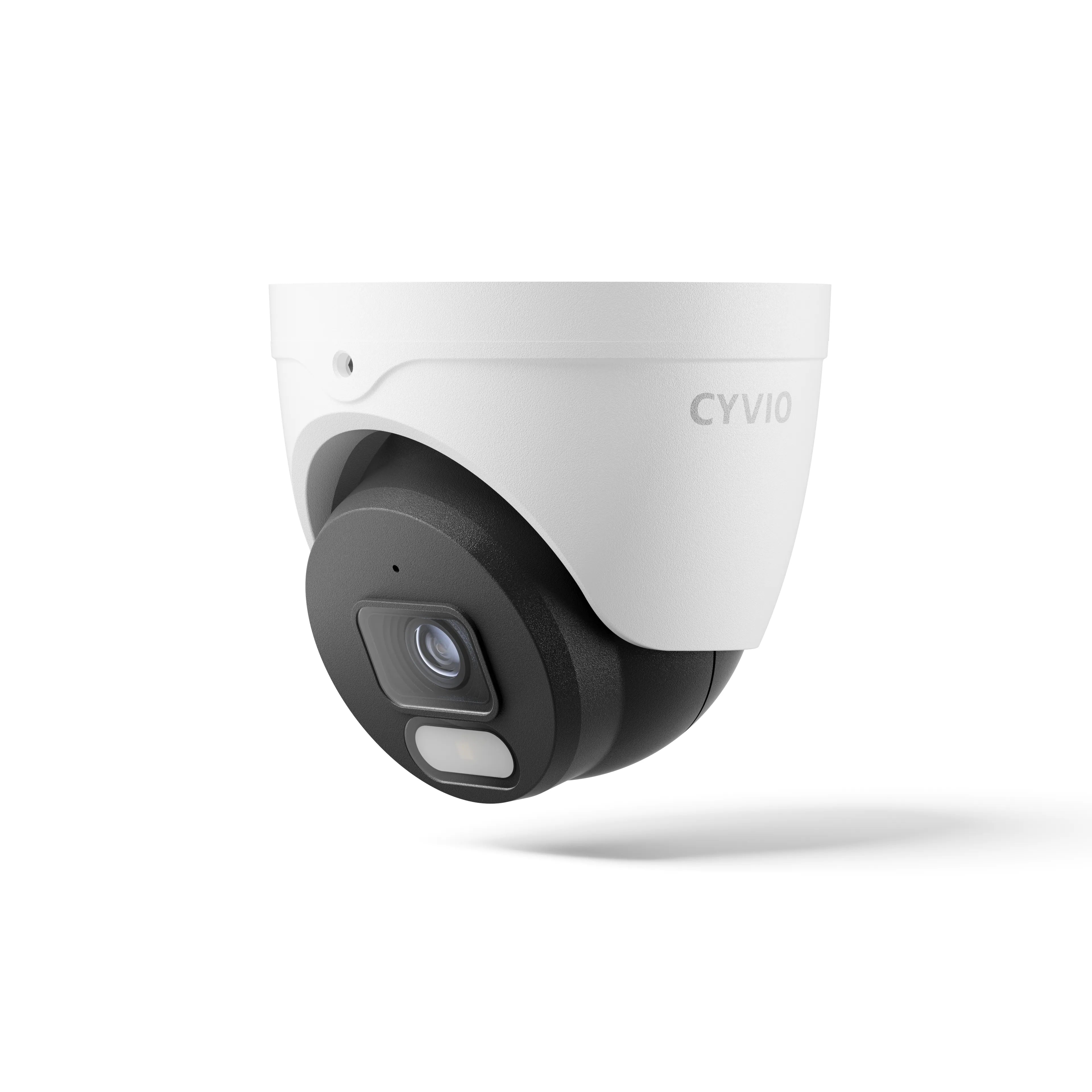
CYVIO's W301 is a good example of this approach. It is an 8MP 4K PoE bullet camera with a 2.8mm F1.6 lens, 130° field of view, 120dB WDR, built-in microphone, IP67 weather protection, and AI detection for pedestrians and vehicles. It supports PoE power and is designed as an add-on camera for compatible CYVIO PoE NVR systems.
For users planning a permanent security camera system, especially one involving several cameras and continuous recording, PoE provides a straightforward wired foundation.
The main limitation is clear: if Ethernet cabling cannot be installed, PoE may not be practical.
WiFi HaLow: Best for Large Properties and Remote Outdoor Monitoring
WiFi HaLow becomes especially interesting when the camera needs to be installed far away from the main house or network equipment.
Consider a farm where the barn is hundreds of meters from the house, or a large property where a camera needs to monitor a gate or fence line. Running Ethernet cable over that distance can be expensive or impractical, while conventional WiFi may not provide enough coverage.
This is where a long-range WiFi security camera based on HaLow can offer another option.
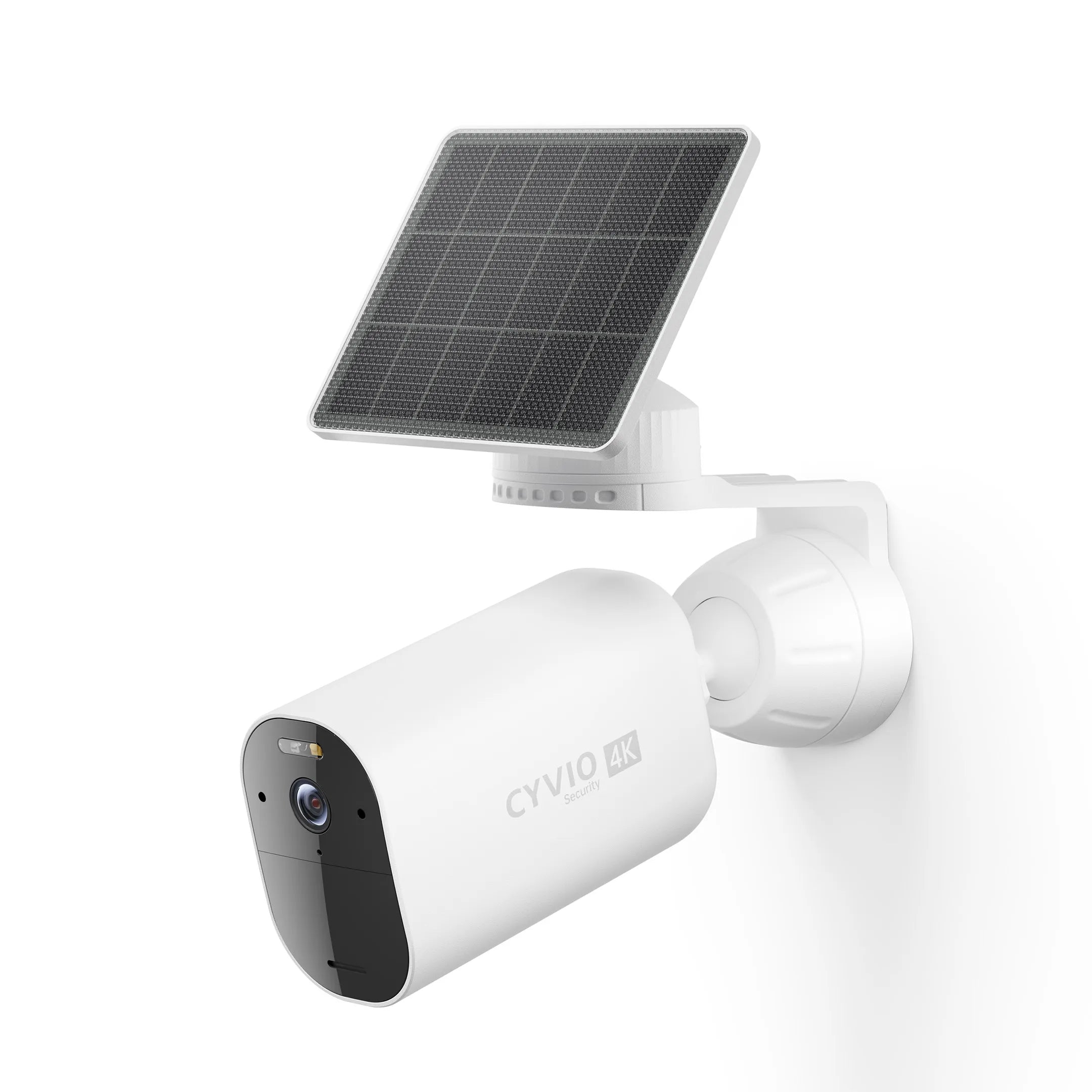
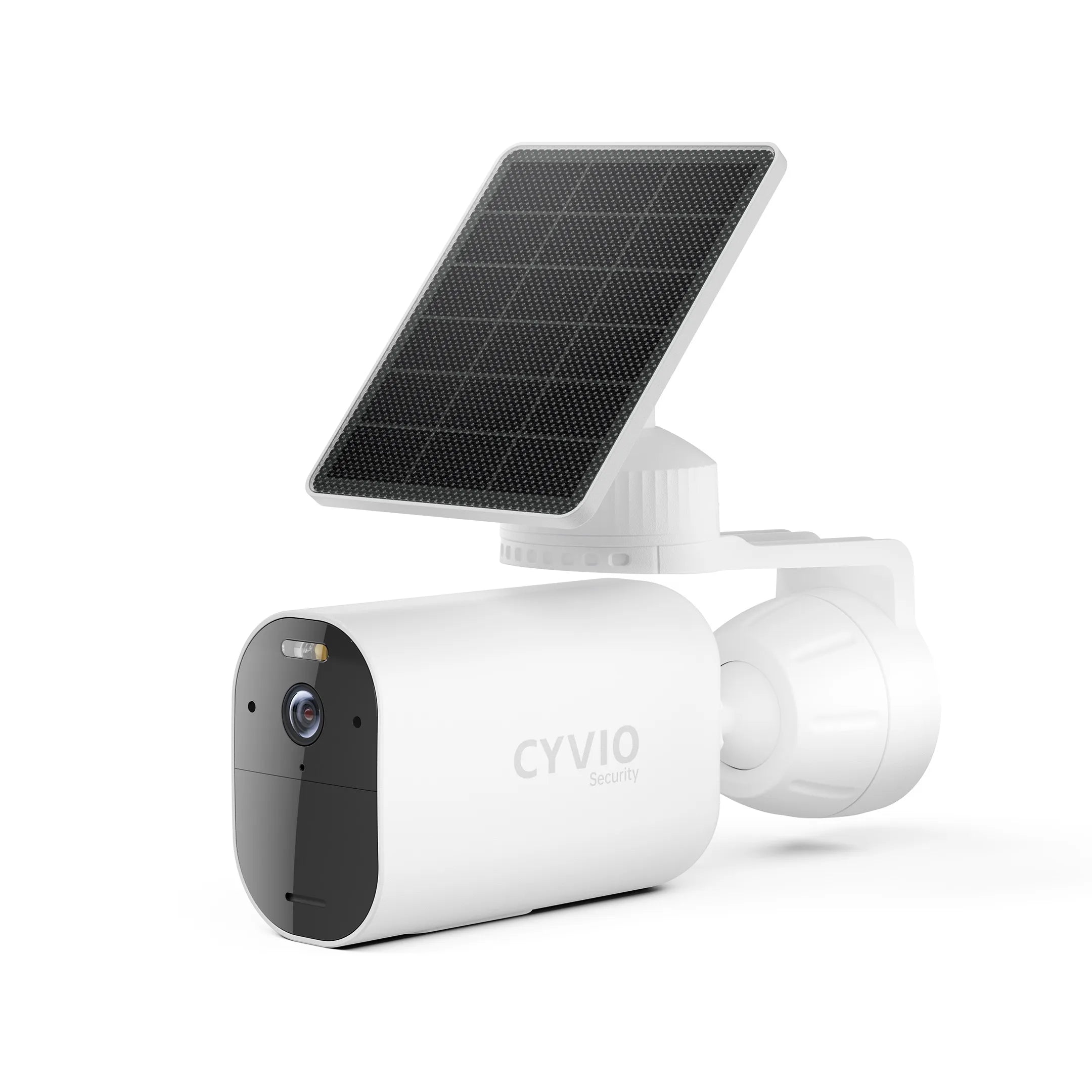
CYVIO's B301 uses IEEE 802.11ah HaLow WiFi, supports up to 700 meters of transmission distance in open conditions, and combines wireless connectivity with a 11600mAh battery and built-in solar charging. It also supports person and vehicle detection.
For outdoor properties where power and network wiring are both difficult, this combination can significantly simplify installation.
At the same time, HaLow is not intended to replace every conventional WiFi or PoE camera. Its strength is long-range wireless connectivity, particularly for remote and outdoor locations.
3. How Should You Choose a Security Camera Based on Your Needs?
Instead of starting with the camera model, start with the installation conditions.

Can You Run an Ethernet Cable?
If Ethernet cabling is practical, a PoE security camera system is worth considering, especially when stable connectivity and continuous recording are priorities.
If running cable is difficult or impossible, wireless options become more relevant. For shorter distances, conventional WiFi may be enough. For longer outdoor distances, WiFi HaLow can be a better fit.
How Far Is the Camera From the Router or Main System?
Distance matters because wireless signal strength changes with the environment.
A camera installed in the same room or a nearby room may work well with conventional dual-band WiFi. A camera located at the edge of a property, behind several walls, or surrounded by trees may require a different wireless approach.
For remote outdoor installations, HaLow is specifically designed to extend wireless connectivity beyond the typical range of conventional WiFi.
What Power Source Is Available?
Power availability is another important factor.
If the camera location has a nearby power outlet, a conventional WiFi security camera can be convenient. If Ethernet can be installed, PoE can combine power and data through one cable. If there is no convenient mains power at a remote outdoor location, a battery- and solar-powered HaLow camera can reduce the need for both network and power wiring.
CYVIO's current lineup reflects these different installation requirements, with WiFi indoor cameras, PoE security camera systems, and long-range HaLow wireless products available across its product range.
What Is Your Main Security Priority?
The final question is what you actually need the camera to do.
If the priority is easy indoor installation and flexible camera movement, a dual-band WiFi PTZ camera may be appropriate.
If the priority is stable 24/7 surveillance and centralized recording, PoE is a logical choice.
If the priority is long-distance outdoor monitoring without running Ethernet or mains power, WiFi HaLow provides a different solution.
There is no universal winner. The right technology is the one that matches the physical conditions of the property.
4. CYVIO Security Camera Recommendations for Different Connection Types
After understanding the differences between the three technologies, it becomes easier to see how they translate into real products.
CYVIO offers a range of security solutions, including WiFi security cameras, PoE security camera systems, and HaLow wireless solutions. This variety allows different types of properties to choose a connectivity option that fits their specific installation needs, rather than relying on a one-size-fits-all approach.

CYVIO C2: 5MP 360° PTZ Wi-Fi Indoor Security Camera

The C2 is designed around everyday indoor monitoring. It combines 5MP video, dual-band WiFi, Bluetooth setup, 360° pan and tilt, AI detection, human tracking, two-way audio, and local microSD storage.
Its 2.4GHz/5GHz WiFi support makes it suitable for homes and small indoor spaces where running Ethernet cables is unnecessary. The camera can also switch between infrared and full-color night vision, while its PTZ design allows users to remotely adjust the viewing direction.
For bedrooms, living rooms, pet areas, nurseries, and small indoor businesses, the C2 represents the convenience-focused side of wireless security cameras.
CYVIO W301: 4K PoE Security Camera
The W301 represents the wired PoE approach.
With 8MP 4K resolution, a 1/2.7-inch image sensor, F1.6 aperture, 130° field of view, PoE power, IP67 weather protection, and AI detection for pedestrians and vehicles, it is designed for more permanent indoor or outdoor surveillance installations. Its official specifications list a 25-meter infrared distance and up to 20 meters of full-color night vision.
The W301 can also be used with CYVIO PoE NVR systems, making it suitable for users who want to build or expand a centralized wired security camera system.
CYVIO B301: Long-Range WiFi HaLow Security Camera
The B301 addresses a different installation challenge: remote outdoor surveillance.
It uses IEEE 802.11ah WiFi HaLow and provides a transmission distance of up to 700 meters in open, interference-free conditions. The camera is also battery powered and solar compatible, with an 11600mAh battery, 4K video, color and infrared night vision, two-way audio, and person/vehicle detection.
This makes the B301 particularly relevant to large yards, farms, orchards, remote gates, warehouses, and other locations where conventional WiFi or wired installation may be difficult.
Conclusion: Choose the Connection That Fits Your Property
WiFi, PoE, and WiFi HaLow are not simply three competing versions of the same security camera technology. Each one is designed around different installation conditions.
Dual-band WiFi security cameras prioritize convenience and flexibility, making them suitable for indoor monitoring and shorter wireless distances. PoE security cameras prioritize a stable wired connection and are well suited to permanent installations and continuous surveillance. WiFi HaLow security cameras focus on long-range wireless connectivity, making them particularly useful for remote outdoor areas where traditional WiFi and Ethernet cabling are difficult to use.
The best way to choose is to look at the property first: Can you run Ethernet? How far is the camera from the network equipment? Are there walls or trees in the way? Is mains power available? Do you need 24/7 recording or a wire-free installation?
Once those questions are clear, choosing between WiFi, PoE, and WiFi HaLow becomes much simpler.
CYVIO's product lineup reflects these different needs, from the compact C2 WiFi indoor camera to the wired W301 PoE camera and the long-range B301 HaLow outdoor camera. Rather than relying on one connection method for every situation, the goal is to match the right security camera system to the environment where it will actually be used.
FAQ
1. What is the difference between WiFi and PoE security cameras?
WiFi security cameras transmit video wirelessly and generally require a separate power source. PoE security cameras use an Ethernet cable to carry both network data and power. WiFi is usually easier to install, while PoE is well suited to permanent installations where wired connectivity is preferred.
2. Are PoE security cameras more reliable than WiFi cameras?
A wired PoE connection is less affected by wireless interference, so it can provide a more consistent network connection for continuous surveillance. However, the actual performance of any security camera system depends on installation quality, network equipment, cable quality, and other environmental factors.
3. What is WiFi HaLow?
WiFi HaLow is based on the IEEE 802.11ah wireless standard and is designed for long-range, low-power connectivity. It operates in the sub-1GHz range and is particularly useful for IoT devices and remote outdoor applications.
4. How far can a CYVIO HaLow security camera transmit?
CYVIO's B301 is rated for up to 700 meters of transmission distance in open, interference-free conditions. Actual range can vary depending on obstacles, terrain, interference, antenna placement, and other environmental conditions.
5. Is WiFi HaLow better than regular WiFi for outdoor security cameras?
They are designed for different situations. Regular WiFi can work well for shorter-distance installations, while WiFi HaLow is designed for longer-range and lower-power wireless applications. For large outdoor properties or remote camera locations, HaLow can provide a more suitable connectivity approach.
6. Which CYVIO camera is suitable for indoor monitoring?
The CYVIO C2 is designed specifically for indoor monitoring. It offers 5MP video, dual-band WiFi, 360° pan and tilt, AI detection, human tracking, two-way audio, and local microSD storage.
7. Which CYVIO camera should I choose for a wired security camera system?
The CYVIO W301 is an add-on 4K PoE bullet camera designed to work with compatible CYVIO PoE NVR systems. It provides 8MP resolution, PoE power, IP67 weather protection, and AI detection for pedestrians and vehicles.
8. Which connection type is best for a large property or farm?
For a large property where Ethernet cabling is difficult and conventional WiFi does not provide enough coverage, a WiFi HaLow solution can be worth considering. CYVIO's B301 is designed for long-range outdoor monitoring and can operate with battery and solar power, reducing the need for both network and power wiring.